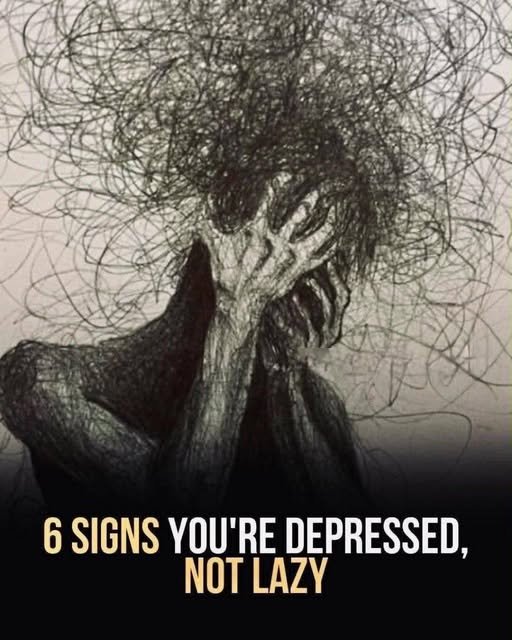
Have you ever looked at your unfinished tasks, messy room, unanswered messages, or neglected responsibilities and thought, “Why can’t I just get myself to do these things?”
Sometimes procrastination really is procrastination. But sometimes what looks like laziness from the outside may actually be a sign that someone is struggling with depression.
Depression isn’t simply feeling sad, having a bad day, or lacking willpower. It can affect energy, concentration, sleep, motivation, emotions, and the ability to handle everyday responsibilities. The World Health Organization describes depression as different from ordinary mood changes, particularly when symptoms persist for much of the day, nearly every day, for at least two weeks.
Here are six signs that may suggest something more serious than simply being “lazy.”
1. Even Simple Tasks Feel Overwhelming
One of the most misunderstood signs of depression is difficulty getting started.
Taking a shower, answering a message, washing dishes, going to work, preparing food, or getting out of bed can feel strangely difficult.
The person may know exactly what needs to be done but still feel unable to begin.
This isn’t necessarily because they don’t care. Depression can be associated with fatigue, low energy, slowed-down feelings, and difficulty carrying out normal responsibilities.
You might hear someone say:
- “I know I need to do it, but I can’t get started.”
- “Everything feels like too much.”
- “I keep putting things off even though I don’t want to.”
That difference matters.
2. Things You Used to Enjoy Don’t Feel Enjoyable Anymore
Laziness doesn’t necessarily explain losing interest in activities that once made you happy.
Depression can cause anhedonia, meaning a reduced ability to experience pleasure or interest in things you previously enjoyed.
Maybe you used to love:
- Meeting friends
- Watching your favorite shows
- Playing games
- Cooking
- Exercising
- Going outside
- Listening to music
- Spending time with family
But lately, none of it seems particularly exciting.
You may still do these activities occasionally, but they don’t provide the same sense of enjoyment.
Loss of interest or pleasure is one of the central symptoms associated with depression.
3. You’re Exhausted Even When You Haven’t Done Much
Depression-related fatigue can be confusing.
Someone may sleep for many hours and still wake up feeling exhausted. They may spend much of the day sitting or lying down, yet feel as though they’ve run a marathon.
This can create a frustrating cycle:
Low energy → fewer activities → unfinished responsibilities → guilt → more emotional exhaustion.
NIMH lists decreased energy, fatigue, and feeling slowed down among common symptoms of depression.
This is one reason telling someone to “just get up and do something” isn’t always helpful.
They may genuinely be struggling with the energy required to function normally.
4. Concentrating Becomes Surprisingly Difficult
Another sign that can easily be mistaken for laziness is difficulty concentrating.
You might sit down to complete a simple task but repeatedly lose your train of thought.
You may:
- Read the same sentence several times
- Forget what you were about to do
- Struggle to make simple decisions
- Have difficulty following conversations
- Make unusual mistakes at work
- Spend much longer completing ordinary tasks
Difficulty concentrating, remembering, and making decisions are recognized symptoms of depression.
This can be especially frustrating because the person may think, “I used to be able to do this easily. What’s wrong with me?”
The problem isn’t necessarily intelligence or discipline. Mental health symptoms can interfere with concentration and everyday functioning.
5. You’re Sleeping or Eating Very Differently
Changes in basic routines can provide another clue.
Depression can affect sleep in different ways. Some people have trouble falling asleep or wake up unusually early, while others sleep much more than usual.
Appetite can also change.
Some people lose their appetite, while others eat significantly more. Unplanned changes in weight can occur as a result.
For example, someone who used to maintain a regular routine might suddenly find themselves:
- Sleeping through much of the day
- Staying awake late at night
- Waking repeatedly
- Skipping meals
- Eating for comfort
- Losing interest in food
These changes don’t automatically mean someone is depressed, but when they occur alongside other symptoms, they deserve attention.
6. You Feel Guilty, Worthless, Hopeless, or Disconnected
Perhaps the most important difference is what’s happening emotionally underneath the behavior.
Someone who is simply procrastinating might think:
“I don’t feel like doing this right now.”
Depression may instead involve thoughts such as:
“I’m useless.”
“I’ll never get my life together.”
“Everyone would be better off without me.”
“What’s the point?”
Feelings of excessive guilt, worthlessness, helplessness, and hopelessness can occur with depression. Some people also become withdrawn or isolated from family and friends.
When a person begins interpreting everyday difficulties as proof that they are worthless or incapable, it’s important to look beyond the label of “lazy.”
Depression Doesn’t Always Look Like Sadness
One of the biggest misconceptions about depression is that everyone with depression constantly looks sad.
That’s not necessarily the case.
A person can laugh, go to work, talk to friends, or post normally on social media while struggling internally.
Depression can also present through irritability, withdrawal, fatigue, loss of interest, concentration problems, sleep changes, appetite changes, or difficulty managing responsibilities.
That’s why judging someone solely by how productive they appear can be misleading.
But Not Every Period of Low Motivation Is Depression
It’s equally important not to diagnose yourself or someone else based on a few symptoms.
Everyone experiences tiredness, procrastination, stress, sadness, poor sleep, and periods of low motivation.
Depression is generally characterized by a combination of symptoms that persist and interfere with daily functioning. NIMH notes that major depression involves symptoms occurring most of the day, nearly every day, for at least two weeks, with depressed mood or loss of interest being central features.
Other issues can sometimes produce similar symptoms, including certain medical conditions, medications, prolonged stress, sleep problems, and other mental health conditions. A healthcare professional can help determine what’s actually happening.
What Should You Do If You Recognize These Signs?
Don’t immediately label yourself as lazy, broken, or incapable.
Instead, pay attention to the pattern.
Ask yourself:
- How long have I felt this way?
- Is this affecting my work, relationships, or daily responsibilities?
- Have my sleep or eating habits changed?
- Have I lost interest in things I normally enjoy?
- Am I constantly exhausted?
- Am I experiencing strong feelings of guilt, hopelessness, or worthlessness?
If symptoms are persistent, distressing, or interfering with everyday life, consider talking with a doctor, psychologist, psychiatrist, or other qualified mental-health professional. Depression is treatable, and effective psychological treatments and medications are available depending on the individual and severity of symptoms.
A Final Reminder
Calling someone “lazy” can sometimes hide what they’re actually experiencing.
A person who can’t get out of bed, concentrate, enjoy things they once loved, or complete basic responsibilities may not simply need more motivation. They may be dealing with something that deserves understanding and professional attention.
At the same time, having one or two of these signs doesn’t automatically mean you have depression.
The important thing is to notice persistent changes rather than judge yourself by a label.
And if someone is experiencing thoughts of suicide or self-harm, they should seek immediate help from emergency services or a crisis service available in their country and tell someone they trust. Depression can become serious, but effective treatment and support are available.