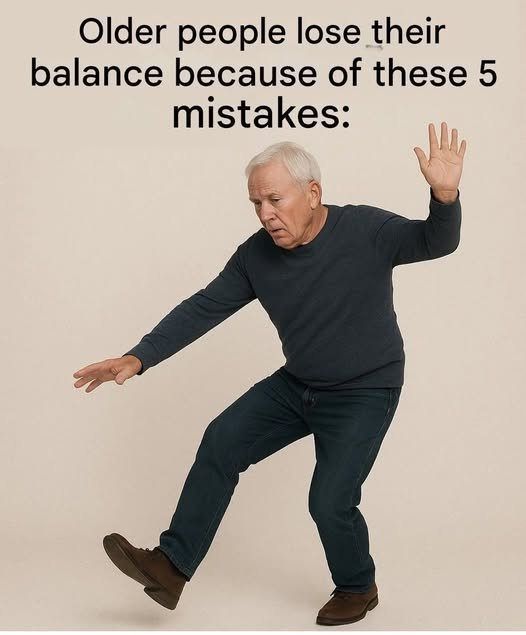
Balance naturally changes with age, but frequent unsteadiness is not simply something an older person has to accept. Falls can lead to serious injuries, loss of independence, and fear of moving around.
Sometimes the problem isn’t just aging itself. Everyday habits, medications, poor vision, unsafe footwear, and a lack of strength or balance training can all contribute to instability.
Here are five common mistakes that may increase the risk of losing balance.
1. Ignoring Changes in Vision
Good vision plays an important role in maintaining balance.
Older adults may develop cataracts, glaucoma, reduced depth perception, or other vision problems that make it harder to see obstacles, steps, uneven surfaces, or changes in floor height.
What to do
Have vision checked regularly and keep glasses prescriptions up to date.
At home, make sure hallways and stairs are well lit. Night-lights can be especially helpful when getting up to use the bathroom.
2. Wearing Unsafe Footwear
Loose slippers, backless shoes, worn-out soles, and footwear that doesn’t fit properly can make walking less stable.
Shoes with slippery soles can be particularly problematic on smooth floors.
A better choice
Look for comfortable shoes that:
- Fit securely
- Have non-slip soles
- Provide good support
- Stay firmly attached to the foot
Avoid walking around on slippery socks or loose slippers whenever possible.
3. Becoming Too Inactive
It may seem logical that resting more will prevent falls, but excessive inactivity can gradually weaken the muscles needed for stability.
Weakness in the legs, hips, and core can make standing up, climbing stairs, and recovering from a stumble more difficult.
What can help?
With appropriate medical clearance, older adults can benefit from regular activities such as:
- Walking
- Strength exercises
- Chair exercises
- Tai chi
- Balance exercises
Even simple movements practiced consistently can help maintain strength and confidence.
4. Taking Medications Without Reviewing Their Side Effects
Some medications can cause dizziness, drowsiness, low blood pressure, or problems with alertness.
The risk may be greater when someone takes several medications at the same time.
This doesn’t mean an older adult should stop taking prescribed medicine. Never stop a prescription medication suddenly without medical advice.
Instead, ask a doctor or pharmacist to periodically review all prescription medicines, over-the-counter medications, and supplements.
5. Trying to Walk Through Dizziness or Weakness
One of the most dangerous habits is trying to keep walking when suddenly feeling dizzy, lightheaded, weak, or unsteady.
Instead, stop and sit somewhere safe until the sensation passes.
If dizziness or balance problems happen repeatedly, the underlying cause should be evaluated. Possible causes include medication effects, low blood pressure, inner-ear problems, vision problems, neurological conditions, dehydration, and other medical issues.
Don’t Ignore Sudden Balance Problems
A sudden loss of balance can sometimes be a warning sign of a stroke, particularly when it occurs with other sudden symptoms.
Seek emergency medical help if sudden balance problems occur with:
- Facial drooping
- Weakness or numbness, especially on one side
- Difficulty speaking or understanding speech
- Sudden vision changes
- Severe unexplained headache
- Sudden confusion
- Significant difficulty walking
Don’t wait to see whether these symptoms disappear.
Simple Ways to Make the Home Safer
Reducing fall hazards can make a significant difference.
- Remove loose rugs or secure them properly.
- Keep stairs and walkways free of clutter.
- Install sturdy handrails on stairs.
- Use adequate lighting throughout the home.
- Add grab bars where appropriate.
- Keep frequently used items within easy reach.
- Clean up spills immediately.
- Avoid walking on wet floors.
Final Thoughts
Balance problems in older adults aren’t always unavoidable. Small changes—such as improving footwear, maintaining muscle strength, checking vision, reviewing medications, and making the home safer—can reduce some common fall risks.
Most importantly, new, worsening, or unexplained balance problems deserve medical attention rather than simply being dismissed as a normal part of getting older.