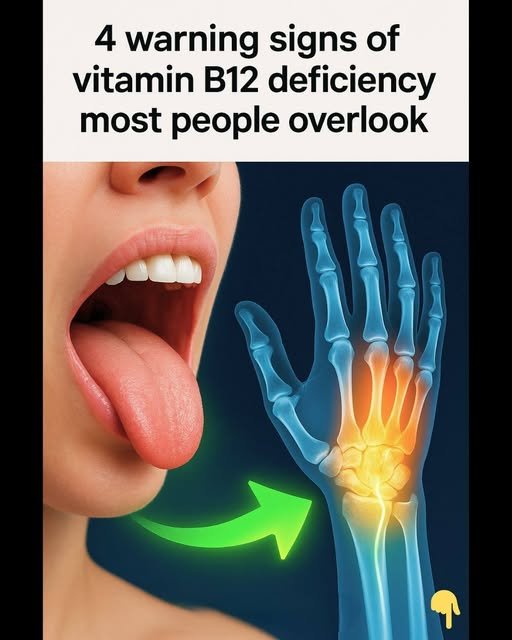
Vitamin B12 is a nutrient your body needs for healthy red blood cells, normal nerve function, and DNA production. When your body doesn’t get enough B12—or can’t absorb it properly—a deficiency can gradually develop.
The tricky part is that vitamin B12 deficiency doesn’t always announce itself clearly. Some symptoms can initially seem like ordinary tiredness, stress, or getting older. If the deficiency becomes significant and remains untreated, however, nerve problems can develop and may sometimes become permanent.
Here are four important symptoms worth paying attention to.
1. Persistent Fatigue and Weakness
Feeling tired after a busy day is normal. But persistent, unexplained fatigue can sometimes be associated with vitamin B12 deficiency.
B12 is required for normal red blood cell production. A significant deficiency can contribute to megaloblastic anemia, which reduces the blood’s ability to carry oxygen efficiently.
You may notice:
- Unusual tiredness
- Weakness
- Reduced stamina
- Shortness of breath during activity
- Feeling lightheaded
- Difficulty concentrating
However, fatigue is extremely common and has many possible causes, including poor sleep, iron deficiency, thyroid problems, infections, stress, and other medical conditions.
So fatigue alone cannot tell you that you are B12 deficient.
2. Numbness or Tingling in Your Hands and Feet
One of the more important symptoms of B12 deficiency involves the nervous system.
Some people develop a sensation described as:
- Pins and needles
- Tingling
- Numbness
- Burning
- Reduced sensation in the hands or feet
The symptoms may initially be mild and intermittent but can become more noticeable over time.
This happens because vitamin B12 is important for maintaining healthy nerve function.
Persistent numbness or tingling should not simply be blamed on a vitamin deficiency, though. Diabetes, nerve compression, certain medications, alcohol use, and other neurological conditions can cause similar symptoms.
3. Balance or Walking Problems
More advanced B12 deficiency can affect the nervous system enough to interfere with coordination and balance.
A person may feel unsteady while walking or have difficulty knowing where their feet are positioned without looking.
You might notice:
- Increased unsteadiness
- Difficulty walking
- Poor coordination
- A tendency to stumble
- Problems with balance
This symptom deserves medical attention because balance problems can have many causes, some of which require prompt treatment.
If balance problems appear suddenly—especially along with facial weakness, difficulty speaking, severe dizziness, or weakness on one side of the body—seek emergency medical care rather than assuming it is B12 deficiency.
4. Memory or Concentration Changes
B12 deficiency can sometimes be associated with neurological and cognitive symptoms.
Some people report:
- Difficulty concentrating
- Forgetfulness
- Confusion
- Mental “fog”
- Changes in mood
These symptoms can be subtle at first.
But memory problems have many possible explanations, including sleep deprivation, depression, anxiety, medications, thyroid disorders, infections, and neurological diseases.
Therefore, cognitive changes should be properly evaluated rather than automatically attributed to low B12.
Other Possible Signs of B12 Deficiency
The four symptoms above aren’t the only possible warning signs.
A deficiency can also be associated with:
- Pale skin
- A sore or swollen tongue
- Mouth ulcers
- Reduced appetite
- Weight loss
- Heart palpitations
- Vision problems
- Changes in mood
- Irritability
Not everyone develops the same symptoms, and some people with low B12 may have few obvious symptoms initially.
Who Is More Likely to Develop B12 Deficiency?
Vitamin B12 deficiency isn’t simply a problem caused by not eating enough meat.
Risk can increase in people who:
- Follow a strict vegan diet without reliable B12 supplementation
- Have certain digestive disorders
- Have undergone some gastrointestinal surgeries
- Have problems absorbing nutrients
- Are older adults
- Take certain medications for long periods, including some medicines that can affect B12 absorption
This is why the underlying cause matters.
Someone can consume B12-containing foods and still become deficient if their body isn’t absorbing the vitamin properly.
Foods That Contain Vitamin B12
Naturally occurring vitamin B12 is found primarily in animal-derived foods, including:
- Fish
- Meat
- Poultry
- Eggs
- Milk
- Yogurt
- Cheese
- Shellfish
Some breakfast cereals, plant-based milks, nutritional yeast products, and other foods may also be fortified with B12.
People following a vegan diet generally need a reliable source of vitamin B12 from fortified foods or an appropriate supplement.
How Is B12 Deficiency Diagnosed?
Symptoms alone cannot confirm a vitamin B12 deficiency.
A healthcare professional may consider your medical history, diet, medications, symptoms, and blood-test results.
Testing may include a complete blood count and measurement of vitamin B12, with additional tests sometimes used when the result is uncertain or the cause needs investigation.
If you’re experiencing persistent neurological symptoms such as numbness, tingling, or balance problems, it’s especially important to seek medical advice rather than simply taking supplements and waiting.
Don’t Take High-Dose Supplements Without a Reason
Vitamin B12 supplements are widely available, and B12 is generally considered safe at recommended doses.
However, taking supplements without determining why your levels may be low can miss the underlying problem.
For example, if poor absorption is responsible, simply changing your diet may not be enough.
A healthcare professional can help determine whether supplementation is appropriate and identify the reason for the deficiency.
When Should You See a Doctor?
Make an appointment if you have persistent unexplained fatigue, numbness or tingling, balance problems, cognitive changes, or several symptoms occurring together.
Seek urgent medical attention for sudden neurological symptoms such as:
- Sudden weakness or numbness on one side
- Trouble speaking
- Sudden loss of vision
- Severe sudden dizziness
- Sudden difficulty walking
- New severe confusion
These can be signs of a medical emergency and should not be assumed to be caused by B12 deficiency.
The Bottom Line
Vitamin B12 deficiency can affect both the blood and nervous system, and symptoms such as persistent fatigue, numbness or tingling, balance problems, and cognitive changes deserve attention when they are unexplained or persistent.
But none of these symptoms proves that you have a B12 deficiency. Several other health conditions can produce similar symptoms.
If you’re concerned, the most reliable approach is to speak with a healthcare professional and consider appropriate blood testing rather than trying to diagnose yourself from symptoms alone.
The good news is that vitamin B12 deficiency is usually treatable once it is identified—and addressing it early is particularly important when neurological symptoms are present.