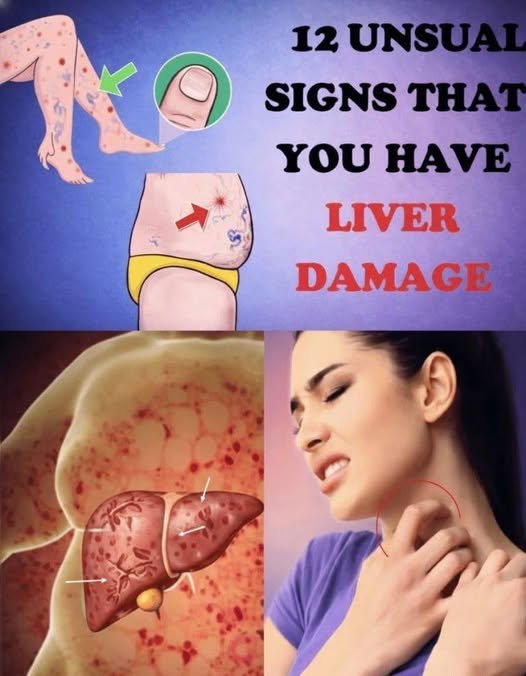
Your liver works quietly behind the scenes, performing hundreds of important jobs, including processing nutrients, helping digest food, and handling substances your body needs to remove. The surprising part is that many liver conditions cause few or no symptoms in their early stages.
When symptoms do appear, they can sometimes seem unrelated to the liver at all—such as persistent itching, swollen ankles, unusual bruising, changes in urine, or problems with concentration.
That doesn’t mean every unusual symptom is a sign of liver disease. Many of these symptoms have numerous possible causes. But when several occur together, persist, or suddenly become worse, they deserve medical attention.
Here are 12 red flags worth knowing.
1. Your Eyes or Skin Turn Yellow
One of the best-known warning signs of liver or bile-flow problems is jaundice, which causes the skin or whites of the eyes to become yellow.
It happens when bilirubin builds up in the body. Liver disease is one possible cause, although gallstones, hepatitis, pancreatitis, and other conditions can also cause jaundice.
If you notice unexplained yellowing of your eyes or skin, don’t simply wait for it to disappear. It should be medically assessed.
2. Your Skin Itches Like Crazy
Persistent itching without an obvious rash can sometimes occur with liver and bile-duct disorders.
Severe itching is recognized as a symptom of advanced liver disease and can also occur with certain conditions affecting the bile ducts.
Of course, dry skin, allergies, medications, and many other conditions can also cause itching.
But unexplained, persistent itching—especially when accompanied by yellow eyes, dark urine, or abdominal symptoms—is worth discussing with a healthcare professional.
3. Your Feet, Ankles, or Legs Start Swelling
Swollen feet aren’t automatically a liver problem.
However, fluid accumulation in the lower legs, ankles, and feet can occur in advanced cirrhosis. Liver disease can also cause fluid to accumulate inside the abdomen, producing noticeable abdominal swelling.
Heart, kidney, vein, medication, and other problems can also cause edema, so the cause needs to be determined rather than assumed.
4. Your Belly Becomes Unusually Swollen
A growing or unusually tight abdomen can sometimes result from ascites, which is a buildup of fluid in the abdominal cavity.
Ascites is associated with advanced cirrhosis and can become a serious complication.
If abdominal swelling is persistent or rapidly increasing, medical evaluation is important.
5. You Bruise or Bleed More Easily
Finding bruises you don’t remember getting—or noticing that minor injuries bleed more than usual—can have many explanations.
But easy bruising and bleeding can occur when significant liver disease affects the body’s ability to regulate blood clotting.
Certain medications, nutritional deficiencies, blood disorders, and other conditions can produce similar symptoms.
6. Your Urine Becomes Much Darker
Dark urine can have many causes, including dehydration.
However, dark urine can also accompany jaundice and certain liver or bile-duct problems, particularly when it occurs together with yellowing of the eyes or skin.
A persistent change in urine color without an obvious explanation deserves attention.
7. Your Stool Looks Much Paler Than Usual
Very pale or clay-colored stools can occur when bile isn’t reaching the intestine normally.
This can happen with problems involving the liver or bile ducts.
The combination of pale stools, dark urine, itching, and yellowing of the eyes is particularly important to have checked rather than treating it as a simple digestive issue.
8. You’re Constantly Exhausted
Feeling tired after a stressful week is normal.
Persistent fatigue, however, is one of the nonspecific symptoms reported with several types of liver disease. People with cirrhosis may experience ongoing tiredness or weakness, while some liver diseases can produce fatigue before more obvious symptoms appear.
Fatigue alone doesn’t point specifically to the liver. Sleep problems, anemia, thyroid disorders, infections, stress, nutritional issues, and many other conditions can cause it.
9. Your Appetite Suddenly Drops
A persistent loss of appetite can occur with liver disease, particularly as cirrhosis progresses.
Some people may also experience nausea, vomiting, or unintended weight loss.
If you’ve lost your appetite for an extended period or are losing weight without deliberately trying to, don’t assume it’s simply stress or aging.
10. You’re Losing Weight Without Trying
Unexplained weight loss can have numerous causes.
It can occur with advanced liver disease and is one of the symptoms doctors consider when evaluating possible cirrhosis.
Unexpected weight loss is especially worth investigating when it occurs alongside appetite loss, fatigue, abdominal symptoms, jaundice, or swelling.
11. Your Thinking or Memory Seems Different
This is one of the more concerning symptoms.
Advanced liver disease can lead to hepatic encephalopathy, a condition in which toxins that would normally be handled by the liver affect the brain.
Possible symptoms include confusion, difficulty thinking, memory problems, personality changes, sleep disturbances, or changes in speech.
Sudden confusion or significant changes in alertness require urgent medical attention.
12. You Notice Unusual Changes on Your Skin or Hands
Certain physical changes can occur with advanced liver disease.
Examples include visible small blood vessels on the skin, blotchy red palms, changes in the nails, and—particularly in men—breast enlargement or shrinking of the testicles.
These signs aren’t diagnostic on their own, but a new cluster of unusual physical changes should be discussed with a healthcare professional.
The Biggest Surprise: Liver Disease Can Be Silent
Perhaps the most important thing to understand is that you can have liver disease without obvious symptoms.
Conditions such as metabolic dysfunction-associated steatotic liver disease (MASLD), formerly called non-alcoholic fatty liver disease, often cause few or no symptoms and may be discovered through blood tests or imaging performed for another reason.
That is why waiting for dramatic symptoms isn’t a reliable way to determine whether your liver is healthy.
What Can Cause Liver Disease?
There isn’t one single cause.
Depending on the condition, liver damage may be associated with:
- Viral hepatitis
- Metabolic dysfunction-associated steatotic liver disease
- Long-term excessive alcohol use
- Certain medications or supplements
- Autoimmune liver diseases
- Genetic disorders
- Problems affecting the bile ducts
- Other medical conditions
Different liver diseases require different treatments, so identifying the cause matters.
How Do Doctors Check the Liver?
If a healthcare professional suspects a liver problem, they may consider your symptoms, medical history, medications and supplements, physical examination, blood tests, and sometimes imaging.
Liver-related blood tests may include measurements such as ALT, AST, alkaline phosphatase, bilirubin, and albumin. Depending on the situation, additional testing or imaging may be recommended.
Importantly, one abnormal liver test does not automatically mean severe liver disease, and test results need to be interpreted in context.
When Is It an Emergency?
Some symptoms should not wait for a routine appointment.
Seek urgent medical attention if you experience:
- Vomiting blood
- Black or very dark, tar-like stools
- Sudden confusion or difficulty staying awake
- Severe abdominal swelling or significant breathing difficulty
- New jaundice with significant illness
- Severe or rapidly worsening symptoms
Vomiting blood, black stools, and sudden confusion can indicate serious complications of advanced liver disease and require emergency assessment.
What Can You Do to Protect Your Liver?
There isn’t a single tea, juice, supplement, or “detox” that can guarantee a healthy liver.
Instead, focus on habits that reduce known risks:
Maintain a healthy weight. Excess body weight is associated with fatty liver disease.
Stay physically active. Regular movement supports metabolic health.
Be careful with alcohol. Excessive alcohol consumption can cause long-term liver damage.
Don’t take unnecessary supplements. Some medications and herbal products can injure the liver, so tell your healthcare professional about everything you take.
Get appropriate medical testing. If you have risk factors for liver disease or persistent symptoms, ask a healthcare professional whether liver blood tests or imaging are appropriate.
Final Thoughts
Your liver doesn’t literally “scream” when something is wrong. In fact, one of the biggest challenges with liver disease is that significant damage can develop before obvious symptoms appear.
Yellow eyes, persistent itching, swelling, abdominal fluid, easy bruising, dark urine, pale stools, unexplained weight loss, severe fatigue, appetite changes, confusion, and certain unusual physical changes can all be reasons to seek medical advice—but none of them proves that you have liver disease.
The smart approach isn’t to panic over one symptom.
It’s to notice persistent or unusual changes, recognize combinations of warning signs, and get appropriate medical evaluation when something doesn’t seem right.
SEO Details
SEO Title: 12 Liver Warning Signs You Should Never Ignore
Meta Description: Learn about 12 unusual warning signs that may occur with liver disease, including jaundice, itching, swelling, dark urine, easy bruising, and confusion.
Focus Keyword: liver warning signs
Slug: 12-liver-warning-signs-you-should-not-ignore
Category: Health & Wellness
Tags: liver health, liver warning signs, liver disease symptoms, fatty liver, cirrhosis symptoms, jaundice, swollen feet, dark urine, liver disease, healthy liver