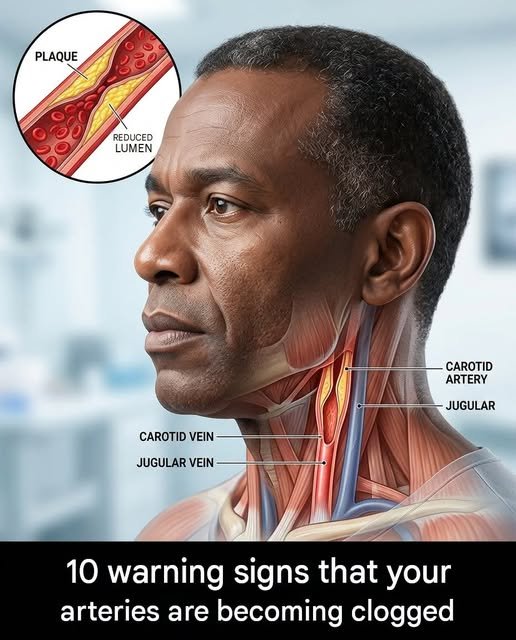
Arteries carry oxygen-rich blood throughout the body. When fatty deposits called plaque build up inside an artery, the artery can become narrower and blood flow may decrease. This condition is known as atherosclerosis.
The important thing to understand is that narrowed or blocked arteries do not always cause obvious symptoms. Some people may feel completely normal until the disease becomes more advanced or a sudden blood clot blocks blood flow.
Symptoms also depend on which arteries are affected. The heart, brain, legs, kidneys and other organs can all be affected by reduced blood flow.
Here are 10 warning signs worth knowing.
1. Chest Pressure, Tightness or Pain
Chest discomfort is one of the most important symptoms associated with reduced blood flow to the heart.
It may feel like:
- Pressure or squeezing
- Tightness
- Heaviness
- Burning or discomfort
- Pain that occurs during physical activity and improves with rest
This type of discomfort can be associated with angina, which can occur when the heart muscle does not receive enough oxygen-rich blood.
Chest pain should never automatically be blamed on indigestion or muscle strain, particularly when it is new, severe or accompanied by other symptoms.
2. Shortness of Breath During Activity
Becoming unusually short of breath while walking, climbing stairs or exercising can have many possible causes.
However, reduced blood flow to the heart can contribute to breathlessness, particularly when it occurs alongside chest discomfort, unusual fatigue, sweating or dizziness.
Because shortness of breath has many causes, it should be evaluated rather than assumed to be an artery problem.
3. Leg Pain or Cramping While Walking
A particularly important warning sign of peripheral artery disease (PAD) is leg pain that appears during walking or exercise and improves after resting.
The discomfort may occur in the:
- Calves
- Thighs
- Buttocks
- Hips
- Feet
It can feel like aching, cramping, burning, heaviness or fatigue.
This happens because exercising muscles need more blood. If an artery is narrowed, blood flow may not increase enough to meet that demand.
4. One Foot or Leg Feels Colder Than the Other
Reduced circulation can sometimes cause noticeable temperature differences between limbs.
A foot or leg may feel unusually cool compared with the other side. Other changes can include altered skin color, reduced hair growth or slower toenail growth.
These changes don’t prove that an artery is blocked, but persistent circulation changes deserve medical attention.
5. Wounds on the Feet or Legs That Heal Slowly
Poor arterial blood flow can make it more difficult for tissues to receive enough oxygen and nutrients for normal healing.
A sore, blister or small wound that repeatedly takes a long time to heal—especially on the foot or lower leg—should not simply be ignored.
Slow-healing wounds are among the symptoms associated with PAD.
6. Sudden Weakness or Numbness on One Side
Sudden weakness or numbness involving the face, arm or leg—particularly on one side of the body—can be a warning sign of a stroke or transient ischemic attack (TIA).
Other possible warning signs include:
- Trouble speaking
- Trouble understanding speech
- Sudden vision problems
- Loss of balance
- Sudden dizziness
- A sudden severe headache
These symptoms require emergency medical attention, even if they disappear after a few minutes. A TIA can be a warning that a future stroke may occur.
7. Sudden Vision Changes
Temporary or sudden loss of vision, particularly in one eye, can occur when blood flow to the eye or brain is disrupted.
Sudden blurred vision or vision loss should be treated as an emergency when it occurs together with other possible stroke symptoms.
Do not wait for the vision to return before seeking medical care.
8. Unusual Fatigue, Weakness or Dizziness
Some people with coronary artery disease may experience unusual tiredness, weakness, dizziness or lightheadedness.
These symptoms are nonspecific and can result from many conditions, including anemia, dehydration, medication effects, infections and other heart or non-heart problems.
However, when unexplained fatigue or dizziness occurs with chest discomfort, shortness of breath, sweating or nausea, prompt medical evaluation is important.
9. Erectile Dysfunction
For some men, erectile dysfunction (ED) can be associated with vascular disease.
The blood vessels involved in an erection are relatively small, so problems with blood-vessel health may sometimes become noticeable through erectile difficulties before more obvious cardiovascular symptoms develop.
ED does not automatically mean that a man has blocked arteries, but persistent unexplained ED is worth discussing with a healthcare professional, particularly when cardiovascular risk factors are present.
10. Changes in the Skin, Color or Hair of the Legs
Reduced blood flow to the legs can cause several changes, including:
- Pale, bluish or otherwise altered skin color
- Less hair growth on the legs
- Slower toenail growth
- Cool feet
- Persistent sores
- Changes in the appearance of the skin
These signs can occur with peripheral artery disease and should be evaluated, especially when combined with walking-related leg pain.
Important: Some People Have No Warning Signs
One of the most important facts about atherosclerosis is that it can develop silently.
Some people don’t experience noticeable symptoms until an artery has become significantly narrowed or a complication occurs. Atherosclerosis can affect arteries supplying the heart, brain, legs, kidneys and other parts of the body.
That’s why cardiovascular risk factors matter even when you feel healthy.
Important risk factors include:
- High LDL cholesterol
- High blood pressure
- Diabetes
- Smoking
- Physical inactivity
- Overweight or obesity
- Family history of cardiovascular disease
- Increasing age
When Should You Seek Emergency Help?
Call your local emergency medical service immediately if you experience symptoms that could indicate a heart attack or stroke.
Possible heart attack symptoms include:
- New or severe chest pressure or pain
- Shortness of breath
- Cold sweating
- Nausea
- Dizziness
- Pain or discomfort involving the arm, back, neck or jaw
Possible stroke symptoms include:
- Sudden facial drooping
- Sudden weakness or numbness, especially on one side
- Sudden difficulty speaking or understanding
- Sudden vision problems
- Sudden difficulty walking or loss of balance
- Sudden severe headache
Do not drive yourself if emergency symptoms are occurring. Get emergency medical help immediately.
How Are Narrowed Arteries Checked?
A healthcare professional may consider your symptoms, medical history and cardiovascular risk factors and may perform examinations or tests when appropriate.
Depending on the suspected artery and condition, evaluation may involve:
- Blood tests, including cholesterol and blood sugar measurements
- Blood pressure measurement
- Physical examination
- An ankle-brachial index for suspected PAD
- Electrocardiogram or other cardiac testing
- Ultrasound
- Other vascular or cardiac imaging when indicated
The appropriate testing depends on the symptoms and individual risk factors.
How Can You Support Better Artery Health?
There is no single food, drink, herb or “detox” that can clear blocked arteries in minutes.
Instead, protecting cardiovascular health involves addressing the factors that contribute to plaque buildup.
Helpful steps include:
- Don’t smoke or use tobacco products.
- Stay physically active according to your abilities.
- Eat a heart-healthy diet rich in vegetables, fruits, whole grains, legumes, nuts and other minimally processed foods.
- Manage blood pressure.
- Keep cholesterol under control.
- Manage blood sugar if you have diabetes.
- Maintain a healthy weight when appropriate.
- Get adequate, consistent sleep.
- Follow prescribed medications and medical advice.
These measures can help reduce cardiovascular risk, but they do not replace medical treatment when significant artery disease is present.
Final Thoughts
Narrowed or blocked arteries can affect different parts of the body, so the warning signs aren’t always the same. Chest discomfort, activity-related leg pain, slow-healing foot wounds, sudden one-sided weakness, vision changes and unusual circulation changes are among the symptoms that deserve attention.
At the same time, remember that symptoms alone cannot diagnose a blocked artery—and some people with atherosclerosis have no symptoms at all.
If you notice a new, persistent or worsening symptom, especially if you have cardiovascular risk factors, speak with a healthcare professional rather than trying to treat the problem with a home remedy.
SEO Details
SEO Title: 10 Warning Signs of Narrowed or Blocked Arteries
Meta Description: Learn 10 warning signs that may be linked to narrowed or blocked arteries, including chest discomfort, leg pain, slow-healing wounds and sudden neurological symptoms.
Focus Keyword: warning signs of blocked arteries
Slug: warning-signs-narrowed-blocked-arteries
Suggested Excerpt: Narrowed arteries don’t always cause obvious symptoms. Learn 10 possible warning signs and when symptoms require urgent medical attention.