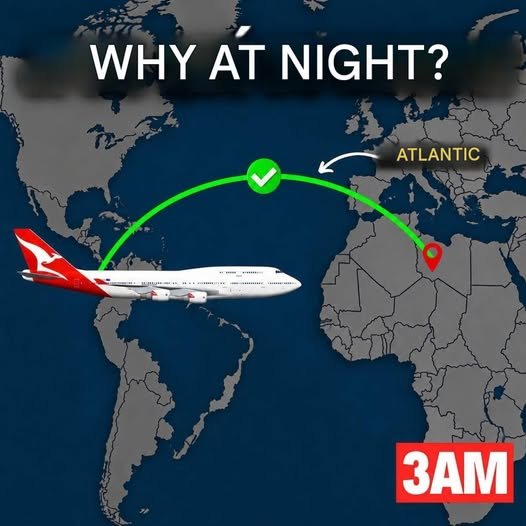
Why does it sometimes seem like they don’t?
Most long-haul flights between North America and Europe are scheduled as overnight flights in one direction. For example, a flight leaving New York in the evening may arrive in London the following morning. This is mainly because airlines schedule flights around passenger convenience, airport connections, time zones, and aircraft utilization—not because crossing the Atlantic during daylight is unsafe.
There are plenty of daytime crossings
Flights routinely cross the Atlantic during daylight hours. The North Atlantic is one of the world’s busiest international aviation regions, with aircraft operating throughout the day and night.
Why are overnight flights so common?
1. Time zones
Flying east across the Atlantic means moving several hours ahead. An evening departure from North America can arrive in Europe in the morning, making the schedule convenient for business and leisure travelers.
2. Passenger sleep
A nighttime departure allows passengers to sleep during much of the flight and arrive closer to the beginning of their destination’s daytime.
3. Airport connections
Airlines coordinate arrival times with connecting flights. Morning arrivals in European hubs can give passengers access to flights continuing to other cities.
4. Aircraft scheduling
Airlines operate aircraft according to complex schedules designed to maximize useful flying time and coordinate airport slots.
Is the Atlantic more dangerous during the day?
No. Daylight itself doesn’t make an Atlantic crossing safer or more dangerous. Commercial aircraft are designed and certified to operate safely over oceans, and crews use weather forecasts, navigation systems, communications, and established procedures throughout the flight.
So if you’ve heard that “planes don’t cross the Atlantic during the day,” that’s simply not true. They absolutely do—the apparent pattern comes mainly from how airlines schedule particular routes.