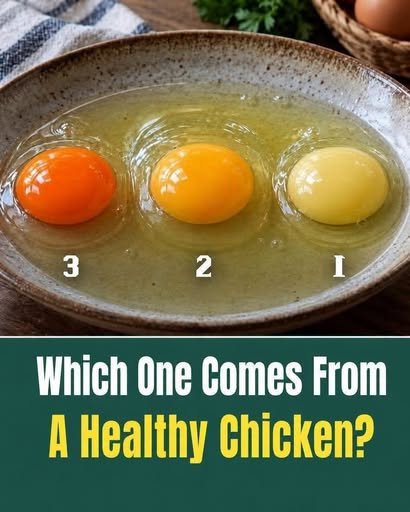
Have you ever cracked two eggs into a pan and noticed that one has a pale yellow yolk while the other has a deep golden or almost orange yolk?
It is easy to assume that the darker yolk must come from a healthier chicken or that a bright orange yolk automatically means the egg is more nutritious.
But the truth is more interesting.
Yolk color is influenced mainly by what the hen eats—not simply by how healthy the chicken is.
A hen that eats feed containing more yellow-orange plant pigments can produce eggs with deeper-colored yolks. Another hen that is perfectly healthy may produce eggs with pale yellow yolks because her diet contains fewer of these pigments.
So, if you’re standing in the kitchen wondering which egg is the “healthiest,” the color of the yolk alone cannot give you the answer.
What Determines Egg Yolk Color?
The main factor behind yolk color is the hen’s diet.
Certain natural pigments called carotenoids are found in foods such as:
- Corn
- Marigold petals
- Alfalfa
- Green leafy plants
- Grass
- Other colorful plant ingredients
These pigments can be transferred into the egg yolk, producing different shades of yellow and orange.
This is why two eggs from healthy hens can look completely different when cracked open.
One may have a pale yellow yolk, while another may have a deep orange yolk.
Both can still be perfectly normal eggs.
Does a Dark Orange Yolk Mean a Healthier Chicken?
Not necessarily.
A darker yolk can indicate that the hen’s diet contained more pigment-rich ingredients, but it does not prove that the hen was healthier, better cared for, or that the egg is automatically superior.
This distinction is important because food marketing sometimes makes consumers believe that a particular yolk color is proof of exceptional nutritional quality.
In reality, yolk color is a poor standalone measure of the hen’s overall health.
What About Pale Yellow Yolks?
A pale yellow yolk isn’t automatically a sign of a sick or poorly nourished chicken.
If the hen’s feed contains fewer carotenoid pigments, the yolk may naturally be lighter.
Commercial poultry diets can be carefully formulated to meet the nutritional needs of laying hens while still producing relatively pale yolks.
Therefore, pale does not automatically mean unhealthy.
Are Orange Yolks More Nutritious?
This is where things get more complicated.
Some carotenoids found in poultry feed have antioxidant properties, and certain pigments can contribute to the nutritional composition of the yolk.
However, yolk color itself isn’t a reliable nutritional score.
A very orange yolk doesn’t mean the egg contains dramatically more protein or that it is automatically better for your health.
The protein, fats, vitamins, minerals, and other nutrients in eggs are not determined simply by how orange the yolk looks.
Can Chicken Breed Affect Yolk Color?
The breed of the hen can influence the appearance of eggs, but diet remains a major factor in yolk color.
Different hens can also have individual differences in how dietary pigments are deposited into the yolk.
This means that judging an egg entirely by its appearance can be misleading.
Does the Color of the Shell Matter?
Another common misconception is that brown eggs are healthier than white eggs.
Generally, shell color is primarily related to the breed of the hen and does not by itself determine the nutritional quality of the egg.
A brown-shelled egg isn’t automatically healthier than a white-shelled egg.
Likewise, a blue or greenish shell doesn’t automatically indicate superior nutrition.
The important thing is to look beyond color.
What Actually Matters When Choosing Eggs?
Instead of judging an egg solely by yolk color, consider factors that are more meaningful for food quality and safety.
1. Freshness
Fresh eggs generally have better texture and quality.
Store eggs properly and pay attention to packaging dates and storage instructions.
2. Food Safety
Eggs should be handled carefully and cooked appropriately, particularly for young children, older adults, pregnant people, and individuals with weakened immune systems.
3. How the Hens Were Fed
If you’re interested in nutritional differences, the hen’s diet and the egg’s labeling are more informative than yolk color alone.
Some eggs may be specifically produced with diets designed to increase nutrients such as omega-3 fatty acids.
4. Farming Practices
If animal welfare or farming practices matter to you, look at the labeling and information provided by the producer rather than trying to determine those factors from yolk color.
What Does a Healthy Egg Look Like?
When you crack an egg, you may notice several characteristics.
A relatively fresh egg often has a yolk that sits higher and a thicker white that holds its shape better.
As eggs age, the white can become thinner and the yolk may spread more easily.
However, appearance isn’t a perfect freshness test.
An egg can still look normal while carrying harmful bacteria, which is why proper refrigeration, handling, and cooking are important.
What About a Very Pale or Unusual Yolk?
Yolk colors can naturally vary from pale yellow to deep orange.
However, if an egg has an unusual appearance accompanied by an unpleasant odor, damaged shell, abnormal texture, or signs of spoilage, it is safer not to eat it.
When in doubt, discard questionable eggs rather than tasting them to determine whether they’re safe.
Are Eggs Healthy to Eat?
For most people, eggs can be part of a balanced diet.
They provide:
- High-quality protein
- Vitamin B12
- Riboflavin
- Selenium
- Choline
- Vitamin A
- Other vitamins and minerals
- Fat and other nutrients concentrated in the yolk
The yolk is especially important nutritionally because many of the egg’s vitamins, minerals, fats, and choline are concentrated there.
Why Are Some Eggs Advertised as More Nutritious?
You may see eggs marketed as:
- Omega-3 eggs
- Free-range eggs
- Organic eggs
- Pasture-raised eggs
- Vitamin-enriched eggs
These descriptions can refer to different production practices or nutritional characteristics.
For example, an egg from a hen fed an omega-3-rich diet may contain more omega-3 fatty acids than a conventional egg.
That difference is related to the hen’s diet—not simply the color of the yolk.
The Big Yolk-Color Myth
The biggest misconception is:
“The darker the yolk, the healthier the chicken.”
That’s too simple.
A dark yolk mainly tells you that the hen consumed more pigments that were deposited into the yolk.
It doesn’t tell you everything about:
- The hen’s overall health
- The quality of its living conditions
- The freshness of the egg
- The egg’s protein content
- Whether the egg is safer to eat
- Whether the egg is nutritionally superior overall
Yolk color can be interesting, but it shouldn’t be treated as a health certificate.
Does a Golden Orange Yolk Mean the Egg Is Better?
Not necessarily.
If you prefer eggs with deeper-colored yolks, that’s perfectly fine. Many people enjoy their appearance and richer-looking color.
But don’t feel that you’re missing out if the yolk of your egg is pale yellow.
A pale yolk can still come from a healthy hen and provide the nutrients associated with eggs.
Simple Tips for Buying and Storing Eggs
To get the most from your eggs:
Check the carton:
Look at the date and storage information.
Inspect the shells:
Avoid eggs with cracked or heavily soiled shells.
Keep eggs refrigerated:
Follow local food-safety guidance and keep eggs at the recommended temperature.
Wash your hands:
Wash hands and utensils after handling raw eggs.
Cook eggs appropriately:
Thorough cooking reduces the risk of foodborne illness.
Don’t judge solely by appearance:
A beautiful orange yolk isn’t proof of superior nutrition.
Final Thoughts
The next time you crack an egg and see a pale yellow yolk, don’t automatically assume something is wrong.
And when you see a beautiful deep-orange yolk, don’t assume you’ve discovered a dramatically healthier egg.
Yolk color is primarily a reflection of the hen’s diet and the pigments present in that diet.
The nutritional value of an egg depends on much more than its appearance. Freshness, food safety, the hen’s diet, production practices, and specific nutritional characteristics are all more useful considerations.
So instead of asking, “Which yolk is the healthiest?”, a better question is:
“Where did this egg come from, how was it produced, and how has it been handled?”
That’s where the real story behind your egg begins.
SEO Title
Which Egg Comes From a Healthy Chicken? The Truth About Yolk Colors
Meta Description
Does a dark orange yolk mean a healthier chicken? Learn what egg yolk color really tells you, how diet affects yolk color, and what matters when choosing eggs.