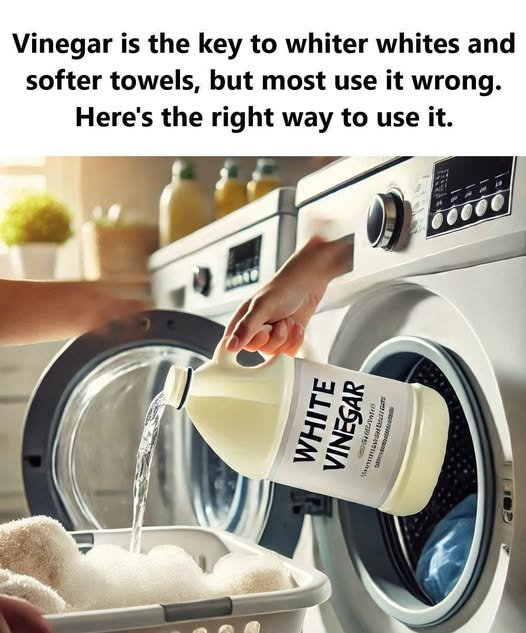
Vinegar: The Key to Whiter Whites and Softer Towels? Here’s the Right Way to Use It
Vinegar is one of those simple household products that has been used in laundry for generations. Many people add it to the washing machine hoping for softer towels, fresher-smelling clothes, and brighter whites.
But there is a right way to use vinegar in the laundry—and a few important things you should never do with it.
Why Do People Use Vinegar in Laundry?
White distilled vinegar contains acetic acid, which can help dissolve some mineral deposits, soap residue, and detergent buildup. This is one reason it may leave fabrics feeling cleaner and less coated with residue.
It can be particularly useful for towels that have become stiff or feel less absorbent over time.
However, vinegar isn’t a miracle whitening product. It may help remove certain residues that make fabrics look dull, but it won’t replace a proper laundry detergent or a dedicated oxygen-based whitener for heavily stained whites.
The Right Way to Use Vinegar
For a typical household load, add ½ cup of white distilled vinegar to the washing machine’s fabric-softener dispenser.
For a smaller load, you can use around ¼ cup.
The vinegar is released during the rinse cycle, helping reduce detergent residue without being mixed directly with the detergent during the main wash.
For Softer, More Absorbent Towels
Towels can become stiff when detergent and fabric-softener residues accumulate in the fibers.
Try washing towels with your normal detergent and adding white distilled vinegar to the fabric-softener compartment during the rinse cycle.
For best results:
- Don’t overload the washing machine.
- Use the recommended amount of detergent.
- Avoid excessive fabric softener.
- Make sure towels dry completely after washing.
- Occasionally run a hot wash if the care label allows it.
What About Whiter Whites?
Vinegar can help with residue and mineral buildup, which may make fabrics look dull. But it shouldn’t be considered a powerful bleach or stain remover.
For stubborn stains or yellowing, a laundry product specifically designed for whitening or stain removal will generally be more effective.
Never Mix Vinegar With Chlorine Bleach
This is the most important safety rule.
Never mix vinegar with chlorine bleach.
Combining acids such as vinegar with chlorine bleach can produce dangerous chlorine gas, which can irritate or seriously injure the eyes and respiratory system.
If you’re using bleach, follow the product instructions and don’t add vinegar to the same wash.
Can Vinegar Damage Your Washing Machine?
Occasional use of diluted white vinegar is commonly practiced, but using large amounts frequently isn’t necessarily better. Strong acidity can affect certain rubber components and seals over time.
If your washing-machine manufacturer specifically advises against vinegar, follow the manufacturer’s instructions.
Can You Use Vinegar Instead of Fabric Softener?
Vinegar doesn’t work exactly like conventional fabric softener. Rather than coating fibers to create a soft feel, it may help reduce some residue left behind by detergent and hard water.
For towels, this can be useful because excessive fabric softener can actually reduce their absorbency.
A Simple Laundry Routine
For everyday laundry:
- Add your usual detergent according to the label.
- Place ¼–½ cup white distilled vinegar in the fabric-softener dispenser.
- Wash according to the garment and machine instructions.
- Dry thoroughly.
- Never combine vinegar with chlorine bleach.
Final Thoughts
White distilled vinegar can be a useful, inexpensive laundry helper, particularly for reducing detergent residue and helping towels feel fresher and less coated. But more vinegar isn’t better, and it shouldn’t be treated as a substitute for detergent or a dedicated whitening product.
Used correctly—and never mixed with chlorine bleach—it can be a simple addition to a sensible laundry routine.