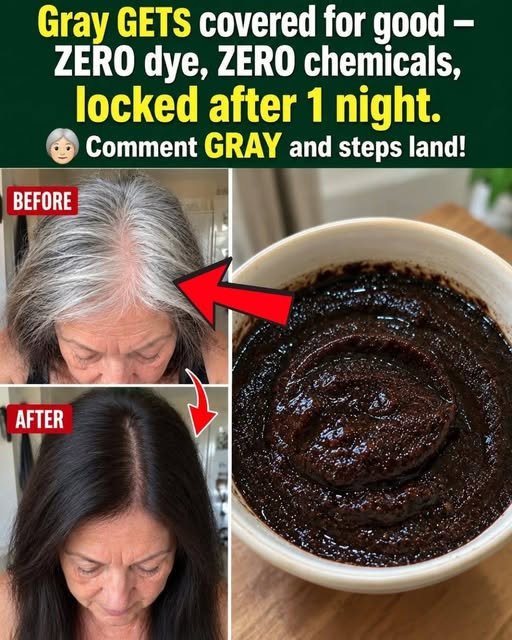
Gray hair is a completely natural part of getting older, but many people prefer to soften or cover the appearance of gray without using conventional permanent hair dyes. That is why natural hair-coloring methods such as henna, indigo, coffee, black tea, and herbal rinses remain popular.
But there is an important distinction: a natural ingredient may stain or tint gray hair, but that does not mean it permanently restores the hair’s original pigment. Once a hair follicle stops producing enough melanin, a kitchen remedy cannot reliably make that individual strand permanently grow in its original color.
The good news is that there are plant-based options that can give gray hair a noticeable color change without relying on conventional synthetic dye formulas.
Can Natural Ingredients Permanently Turn Gray Hair Black?
Not in the literal sense.
Hair gets its natural color from melanin, a pigment produced by specialized cells inside the hair follicle. As these cells become less active with age and other factors, newly growing hair can become gray, silver, or white.
A topical ingredient can coat or stain the hair shaft, but it generally cannot permanently restart melanin production inside a follicle.
This means claims such as “one natural recipe permanently eliminates gray hair” should be treated cautiously.
However, plant-based coloring can provide a longer-lasting visible tint, especially when used regularly.
Henna: One of the Best-Known Natural Hair Colors
Henna comes from the Lawsonia inermis plant. Its leaves contain a natural pigment called lawsone, which binds to keratin in the hair.
Pure henna typically produces shades ranging from:
- Orange-red
- Copper
- Warm auburn
- Reddish brown
On gray or white hair, the result can be particularly noticeable because gray strands are lighter and absorb the pigment differently.
If you want a completely natural coloring method, 100% pure henna is one of the better-known options.
Important: Check the Ingredient List
Not every product labeled “natural henna” is simply henna.
Some commercial products may contain additional dyes or chemicals. If your goal is to avoid synthetic coloring ingredients, look for products that clearly list Lawsonia inermis as the main or only coloring ingredient.
What About Indigo for Darker Hair?
Indigo is another plant traditionally used for hair coloring.
When used after or together with henna, indigo can create significantly darker shades, including:
- Brown
- Dark brown
- Very dark brown
- Near-black shades
A common plant-based approach is a two-step henna-and-indigo process.
First, henna is applied to the hair. After rinsing, indigo is applied separately. The final color depends on the starting hair color, amount of gray, processing time, and individual hair characteristics.
This method can be especially useful for people who want a darker result without conventional permanent hair dye.
A Simple Natural Gray-Covering Approach
If you want to experiment with a plant-based color, pure henna is the simplest place to start.
Ingredients
- 100% pure henna powder
- Warm water
- A non-metal bowl
- A spoon or applicator
- Gloves
- Old towel or clothing
Directions
1. Prepare the Henna
Place the desired amount of pure henna powder into a bowl.
Slowly add warm water and mix until you have a smooth paste similar to thick yogurt.
Avoid making it excessively watery because a thicker paste is easier to apply.
2. Let the Mixture Rest
Depending on the henna product and preparation method, the mixture may need time to release its pigment.
Follow the instructions supplied with your specific pure henna powder rather than relying on a single universal processing time.
3. Protect Your Skin
Wear gloves and apply a small amount of petroleum jelly around the hairline and ears.
This helps reduce staining of the surrounding skin.
4. Apply to the Hair
Divide your hair into sections.
Apply the paste generously from the roots through the lengths, paying particular attention to gray areas.
Make sure the gray strands are thoroughly coated.
5. Allow It to Process
Cover the hair with a shower cap or plastic covering and leave the henna on according to the product’s instructions.
Processing time can affect the intensity of the result.
6. Rinse Thoroughly
Rinse with plenty of water until most of the paste has been removed.
The color may continue developing or appear different over the following couple of days.
Can Coffee or Black Tea Cover Gray Hair?
Coffee and black tea are frequently promoted online as natural gray-hair dyes.
They may temporarily darken or tint some hair, but their coloring effect is generally much less reliable and less durable than dedicated plant-based coloring ingredients such as henna or indigo.
A coffee or tea rinse can be used as a cosmetic hair treatment, but it should not be described as a permanent gray-hair solution.
Why Gray Hair Can Be Difficult to Cover
Gray and white hair can behave differently from pigmented hair.
Some gray strands are coarse and resistant, while others absorb color easily. The percentage of gray also makes a major difference.
For example, someone with a few scattered gray hairs may see a very different result from someone whose hair is predominantly white.
Your final shade can also depend on:
- Natural hair color
- Percentage of gray
- Hair porosity
- Previous coloring
- Processing time
- Type and quality of plant powder
- Whether henna and indigo are used together or separately
Therefore, natural coloring is not a one-size-fits-all process.
Does Natural Hair Coloring Damage Hair?
“Natural” does not automatically mean “risk-free.”
Pure henna itself is different from conventional oxidative hair dyes, but any substance applied to the scalp or hair can cause irritation or an allergic reaction in some people.
There is also an important warning about products marketed as black henna.
Some black-henna products may contain paraphenylenediamine (PPD), a chemical associated with potentially serious skin reactions.
If you want a plant-based coloring method, carefully check the ingredient list instead of assuming every product called henna is purely herbal.
Always Perform a Patch Test
Before applying any new coloring product to your scalp, follow the manufacturer’s patch-test instructions.
Do not use a product if you develop concerning symptoms such as:
- Burning
- Significant redness
- Swelling
- Blistering
- Severe itching
- Difficulty breathing
A severe allergic reaction requires urgent medical attention.
Can You Reverse Gray Hair Naturally?
This is where many viral hair-care claims become misleading.
There is no universally proven kitchen ingredient that permanently turns naturally gray hair back to its original color.
Some cases of premature graying can be associated with nutritional deficiencies or underlying conditions, but age-related graying is usually a biological process rather than something that can simply be “washed away.”
If someone develops unusually rapid or premature graying, discussing it with a healthcare professional may be worthwhile.
Nutrients such as vitamin B12, iron, folate, copper, and other factors can be relevant in specific situations, but taking supplements without a demonstrated deficiency is not a guaranteed way to restore hair color.
How to Make Natural Hair Coloring Last Longer
If you choose plant-based coloring, a few habits can help maintain the appearance of the color.
Wash Gently
Frequent washing with harsh shampoos can make any deposited color fade faster.
Protect Hair From Excessive Heat
Frequent high-temperature styling can leave hair dry and brittle.
Use reasonable heat settings and avoid unnecessary repeated heat exposure.
Keep Hair Conditioned
Gray hair can sometimes feel drier or rougher than pigmented hair. Regular conditioning can improve softness and manageability.
Be Patient With Color Development
Plant-based color can change slightly after application. Avoid judging the final shade immediately after rinsing.
Keep Expectations Realistic
Natural coloring can cover, blend, or tint gray hair, but it does not permanently change the biological process that caused the hair to become gray.
A Natural-Looking Alternative: Gray Blending
You do not necessarily have to cover every gray strand.
Some people choose to blend gray hair rather than completely hide it. This can create a softer, more natural appearance while reducing the frequency of coloring.
Plant-based colors can also be used strategically to add warmth or depth rather than trying to make every gray strand look completely black.
Final Thoughts
If you’re looking for a natural way to cover gray hair, pure henna and plant-based henna-and-indigo coloring are among the better-known options.
They can stain the hair and provide noticeable color without conventional synthetic permanent hair dye. However, the result should not be described as permanent restoration of natural hair pigment.
Gray hair develops because of changes within the hair follicle. A topical natural color can change the appearance of the hair shaft, but it does not reliably reactivate the follicle’s original melanin production.
So rather than searching for a miracle ingredient that permanently reverses gray hair, focus on a realistic goal: safe, attractive, plant-based color that blends or covers gray hair while respecting your hair and scalp.
SEO Title
Natural Hair Color for Gray Hair: Can Henna Really Cover Gray Naturally?
Meta Description
Discover how henna and indigo can naturally tint and cover gray hair, what natural hair colors can realistically do, and why permanent gray reversal claims can be misleading.
Focus Keyphrase
natural hair color for gray hair
Suggested Slug
natural-hair-color-for-gray-hair