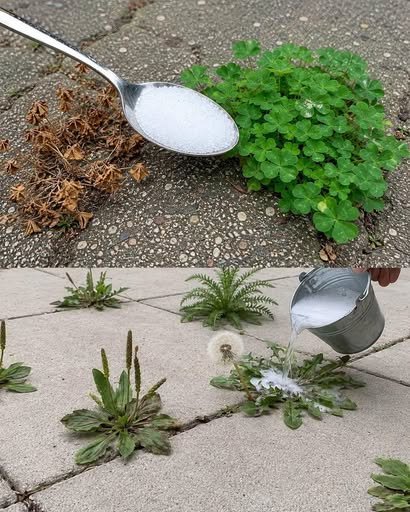
Few things are more frustrating for gardeners than spending time pulling weeds, only to see tiny green shoots appear again a few days later.
That is why homemade weed-killing recipes are so popular. One of the most commonly discussed options combines ingredients such as vinegar, salt, and dish soap and promises to burn weeds within a day.
The mixture can damage or kill the leaves of many small weeds, especially when applied on a warm, dry day. But there is an important catch: killing the visible leaves does not necessarily kill the entire root system, so some weeds can grow back.
If you want a quick and inexpensive way to deal with unwanted weeds, here’s what you should know.
Why Vinegar Can Damage Weeds
Household white vinegar contains acetic acid.
When sprayed directly onto plant foliage, acetic acid can damage plant cells and cause leaves to dry out.
You may notice a weed becoming:
- Wilted
- Brown
- Crispy
- Discolored
within a relatively short period, particularly under warm, sunny conditions.
However, ordinary household vinegar is much weaker than the concentrated horticultural herbicides sometimes used for weed control.
A Simple Homemade Weed Spray
For weeds growing in places such as cracks in paving or gravel areas, a simple mixture can be used carefully.
Ingredients
- 1 liter white vinegar
- 1 teaspoon liquid dish soap
Directions
- Pour the vinegar into a spray bottle.
- Add the dish soap.
- Gently mix rather than shaking vigorously.
- Spray the solution directly onto the weed leaves.
- Choose a dry day when rain isn’t expected for several hours.
- Avoid spraying nearby plants.
The dish soap primarily helps the liquid spread and adhere to the leaf surface. It isn’t the ingredient responsible for killing the weed.
What About Adding Salt?
Salt is another ingredient frequently included in homemade weed-killing formulas.
Salt can damage plants by interfering with their ability to maintain normal water balance. However, salt can also damage soil and nearby desirable plants.
Repeatedly applying salt to garden beds can increase soil salinity and make it harder for other plants to grow.
For that reason, salt is generally a poor choice for areas where you want healthy soil.
If you’re treating weeds in a driveway crack or another location where you don’t intend to grow plants, there are still environmental considerations because runoff can carry salt into surrounding soil.
Will the Weeds Be Gone in One Day?
You may see significant browning within a day, especially with young weeds and strong sunlight.
But visible browning isn’t the same as permanent elimination.
Some weeds have:
- Deep roots
- Underground stems
- Extensive root networks
- Seeds already present in the soil
A spray may damage the foliage while leaving enough of the plant alive to produce new growth.
That’s why the claim that weeds will “never grow again” is unrealistic.
Why Weeds Keep Coming Back
Even when you completely remove an existing weed, new weeds can emerge from seeds that are already present in the soil.
Wind, birds, animals, water, gardening equipment, and foot traffic can all introduce new seeds.
This means long-term weed control usually requires more than a single spray.
The Best Approach Depends on Where the Weeds Are Growing
Weeds in Driveway or Pavement Cracks
For isolated weeds growing between paving stones or in driveway cracks, physically removing the plant and roots can be very effective.
A narrow weeding tool can help pull out the root system.
A vinegar-based spray may be useful for small weeds afterward, provided nearby plants and surfaces are protected.
Weeds in Garden Beds
Be much more careful.
You don’t want to kill your flowers, vegetables, herbs, or beneficial plants along with the weeds.
Hand-pulling, hoeing, mulching, and targeted weed control are generally better options.
Weeds in Lawns
A broad weed spray can damage grass along with the weeds.
For lawns, identify the weed first and use a method specifically designed for that type of turf.
Weeds Around Trees
Avoid casually spraying homemade vinegar or salt mixtures around trees.
Tree roots can extend much farther than the visible canopy, and soil damage can affect desirable plants.
Mulch: One of the Best Long-Term Weed Controls
If weeds are constantly appearing in garden beds, consider using mulch.
A layer of organic mulch can block light from reaching weed seeds and make it more difficult for new weeds to establish.
Useful options include:
- Wood chips
- Shredded bark
- Straw
- Compost
- Leaf mulch
Keep mulch a few inches away from the trunks of trees and woody plants to avoid creating overly moist conditions around the base.
Pull Weeds Before They Produce Seeds
Timing makes a major difference.
If you allow weeds to flower and produce seeds, the problem can become much larger.
Removing weeds while they’re young prevents them from establishing large root systems and producing additional seeds.
A quick weekly inspection of garden beds can save hours of work later.
Boiling Water: Another Simple Option
For isolated weeds growing through cracks in hard surfaces, carefully poured boiling water can damage plant tissue.
It works by exposing the plant to extreme heat.
However, boiling water doesn’t know the difference between a weed and a desirable plant.
It can also damage nearby grass, flowers, insects, and soil organisms.
Use extreme caution to avoid burns and keep children and pets away while handling boiling water.
Don’t Mix Household Chemicals
Homemade weed-control recipes sometimes circulate online with long lists of cleaning products.
Avoid experimenting with combinations of household chemicals.
Never mix vinegar with bleach, ammonia, or other unknown cleaning products.
Chemical reactions can produce dangerous gases or other hazardous substances.
A simple approach is safer.
Protect Yourself When Spraying
Even household vinegar can irritate the eyes and skin.
When applying a weed spray:
- Avoid spraying against the wind.
- Wear gloves if your skin is sensitive.
- Protect your eyes from splashes.
- Keep children away from the treated area.
- Keep pets away until the area is appropriately dry.
- Avoid spraying edible plants.
- Wash your hands after use.
Always read and follow the instructions for any commercial herbicide you use.
A Better Strategy for Nearly Weed-Free Garden Beds
If your goal is to dramatically reduce weeds rather than simply kill them temporarily, combine several methods.
Step 1: Remove Existing Weeds
Pull or dig out established weeds, aiming to remove as much of the root system as possible.
Step 2: Cover Bare Soil
Apply an appropriate layer of mulch.
Step 3: Don’t Disturb Soil Unnecessarily
Turning soil frequently can bring buried weed seeds closer to the surface.
Step 4: Inspect Regularly
Remove new weeds while they’re small.
Step 5: Avoid Letting Weeds Go to Seed
This is one of the simplest ways to reduce future weed problems.
What About Commercial Herbicides?
Commercial herbicides can be effective, but they should be used carefully.
Choose a product specifically labeled for the location and type of weed you’re treating.
Follow the label exactly, including:
- Application rate
- Protective equipment
- Weather restrictions
- Re-entry instructions
- Storage requirements
- Disposal instructions
Using more product than recommended doesn’t necessarily produce better results and can increase risks to plants, people, pets, and the environment.
Common Mistakes That Make Weed Problems Worse
Spraying on a Windy Day
The spray can drift onto flowers, vegetables, shrubs, or lawns.
Spraying Before Rain
Rain can wash the treatment away and spread it beyond the area you intended to treat.
Using Salt Everywhere
Salt can accumulate in soil and harm plants you actually want to grow.
Ignoring the Roots
Removing only the visible leaves may allow perennial weeds to return.
Waiting Until Weeds Are Mature
Large established weeds are generally more difficult to control than young seedlings.
Final Thoughts
A vinegar-based spray can make some small weeds wilt and turn brown surprisingly quickly, particularly when used under suitable conditions.
But the promise that a homemade mixture will kill every weed permanently after one application is too good to be true.
For lasting results, think beyond the visible leaves. Remove established weeds, prevent them from producing seeds, cover bare soil with appropriate mulch, and regularly deal with new growth.
The most effective weed-control strategy isn’t necessarily the strongest homemade recipe—it’s the combination of early removal, prevention, and targeted treatment.
SEO Title
This Can Kill Weeds Quickly: How to Control Weeds Naturally
Meta Description
Learn how vinegar can damage weeds, why homemade sprays may not provide permanent control, and practical ways to prevent weeds from coming back in your garden.