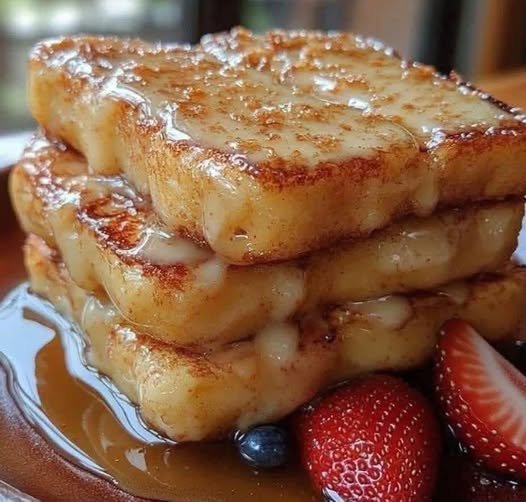
There is something wonderfully comforting about a stack of Thick-Cut French Toast on a lazy morning. Thick slices of bread are soaked in a rich, lightly sweetened egg-and-milk custard, then cooked until beautifully golden on the outside while remaining soft, creamy, and custardy in the center.
The secret to exceptional French toast is the bread. Thin sandwich bread can become soggy or fall apart, while thick slices of brioche, challah, or sturdy white bread have enough structure to absorb the custard without losing their shape.
Serve these golden slices with maple syrup, fresh berries, powdered sugar, butter, or your favorite toppings for a breakfast that feels special but is surprisingly easy to make.
Why You’ll Love This Recipe
- Thick, custardy center with a golden exterior
- Simple everyday ingredients
- Perfect for weekend breakfasts
- Easy to customize with different toppings
- Works beautifully with brioche, challah, or sturdy bread
- Can be prepared ahead of time
- Delicious with fruit, syrup, or powdered sugar
Ingredients
For the French Toast
- 6 thick slices brioche, challah, or sturdy white bread
- 3 large eggs
- 3/4 cup whole milk
- 1/4 cup heavy cream
- 2 tablespoons granulated sugar
- 1 teaspoon vanilla extract
- 1 teaspoon ground cinnamon
- 1/4 teaspoon ground nutmeg, optional
- 1/4 teaspoon salt
- 2 tablespoons butter, for cooking
For Serving
- Maple syrup
- Powdered sugar
- Fresh strawberries or blueberries
- Sliced bananas
- Butter
- Honey, optional
How to Make Thick-Cut French Toast
1. Choose the Right Bread
For the best texture, use bread slices approximately 1 to 1 1/2 inches thick.
Brioche gives the French toast a rich, buttery texture, while challah provides a slightly firmer structure. A thick-cut country or white bread also works very well.
If possible, use bread that is slightly stale or leave freshly cut slices uncovered for several hours. Slightly dried bread absorbs the custard better without becoming mushy.
2. Make the Custard
In a shallow bowl or baking dish, whisk together the eggs, whole milk, heavy cream, sugar, vanilla, cinnamon, nutmeg, and salt.
Whisk thoroughly until the eggs are completely incorporated.
A shallow dish makes it easier to coat the thick slices evenly.
3. Soak the Bread
Place one slice of bread into the custard.
Let it soak for approximately 20–30 seconds per side, depending on how dense and dry the bread is.
Thicker, drier bread can handle a little more soaking time.
The goal is to allow the custard to penetrate into the center without making the bread so saturated that it falls apart.
4. Heat the Pan
Place a large skillet or griddle over medium-low to medium heat.
Add about 1 tablespoon of butter and allow it to melt.
Don’t use excessively high heat. The outside can brown too quickly while the center remains undercooked.
5. Cook the French Toast
Place the soaked bread slices into the hot skillet.
Cook for approximately 3–4 minutes on the first side, or until golden brown.
Carefully flip and cook the other side for another 3–4 minutes.
If the slices are especially thick, reduce the heat slightly and cook for another minute or two so the custard in the center has time to set.
Add more butter to the pan as needed.
6. Keep Finished Slices Warm
Transfer cooked French toast to a wire rack or baking sheet.
If you’re making a large batch, keep the finished slices warm in a 200°F (95°C) oven while you cook the remaining pieces.
Avoid stacking them directly on top of each other for too long because trapped steam can soften the crispy surface.
7. Serve
Place the golden French toast on plates and top with your favorite toppings.
Try:
- A drizzle of maple syrup
- Fresh berries
- Powdered sugar
- Sliced bananas
- A pat of butter
- A drizzle of honey
Serve immediately while warm.
The Secret to Perfect Thick-Cut French Toast
Use Thick Bread
Thin bread simply doesn’t provide the same custardy center. Aim for slices around 1–1 1/2 inches thick.
Slightly Stale Bread Works Best
Fresh bread can absorb too much custard on the surface and become fragile. Slightly dried bread provides a better balance.
Don’t Rush the Soaking
The center needs time to absorb the custard. Give each slice enough time to soak, but don’t leave it submerged for so long that it becomes impossible to handle.
Cook Over Moderate Heat
Medium-low to medium heat gives the custard time to cook while allowing the exterior to become golden brown.
Use Butter
Butter provides a beautiful flavor and helps create that classic golden crust.
How to Make French Toast Extra Custardy
For an especially rich center, use:
- Whole milk instead of skim milk
- A little heavy cream
- Brioche or challah
- Slightly thicker slices
- An additional egg yolk
You can add one extra egg yolk to the custard for an even richer texture.
Flavor Variations
Cinnamon French Toast
Increase the cinnamon to 1 1/2 teaspoons for a stronger warm-spice flavor.
Vanilla French Toast
Increase the vanilla to 1 1/2 teaspoons for a more pronounced vanilla aroma.
Orange French Toast
Add 1 teaspoon finely grated orange zest to the custard.
Chocolate French Toast
Add 1 tablespoon cocoa powder to the custard and serve with sliced strawberries.
Caramel Banana French Toast
Top the cooked French toast with sliced bananas, a little butter, and warm caramel sauce.
What Bread Is Best?
Brioche
Rich, buttery, and soft. One of the best choices for luxurious French toast.
Challah
Slightly more structured and excellent at absorbing custard.
Sourdough
Provides a pleasant tang and sturdy texture.
Thick-Cut White Bread
A simple and affordable option that works surprisingly well.
Cinnamon Raisin Bread
Adds sweetness, cinnamon, and dried fruit without requiring additional toppings.
Can I Prepare French Toast Ahead of Time?
Yes.
Prepare and cook the French toast, allow it to cool, and refrigerate it in an airtight container.
When ready to serve, reheat it in a skillet, toaster oven, or oven until warmed through.
For the best texture, avoid microwaving for too long because it can make the bread soft.
Can I Freeze French Toast?
Yes.
Allow the cooked slices to cool completely.
Place parchment paper between the slices and transfer them to a freezer-safe bag or container.
Freeze for up to 2 months.
Reheat directly from frozen in a toaster, oven, or air fryer until hot and crisp.
Frequently Asked Questions
Why is my French toast soggy?
The bread may have absorbed too much custard, or the pan may not have been hot enough. Slightly stale bread and moderate heat usually produce a better texture.
Why is the outside burning before the center cooks?
The heat is probably too high. Reduce it to medium-low and give the thick slices more time to cook through.
Can I use regular milk instead of cream?
Yes. Replace the heavy cream with additional whole milk.
Can I use thinner bread?
Yes, but reduce the soaking time because thin bread absorbs the custard much faster.
How do I keep French toast crispy?
Place cooked slices on a wire rack rather than stacking them. If making a large batch, keep them warm in a low oven.
Recipe at a Glance
Recipe: Thick-Cut French Toast
Prep Time: 10 minutes
Cooking Time: 15–20 minutes
Total Time: About 25–30 minutes
Servings: 3–4
Category: Breakfast / Brunch
Difficulty: Easy
Final Thoughts
This Thick-Cut French Toast delivers everything you want from a great breakfast: a beautifully browned exterior, a soft custardy middle, warm cinnamon and vanilla flavor, and plenty of opportunities for delicious toppings.
For the best results, use thick slices of slightly stale brioche, challah, or another sturdy bread. Cook them slowly over moderate heat so the outside becomes golden while the center has time to become perfectly tender.
Serve warm with butter, maple syrup, fresh fruit, or powdered sugar for a simple breakfast that feels wonderfully indulgent.
SEO Title
Thick-Cut French Toast – Golden, Custardy & Easy Breakfast Recipe
Meta Description
Make thick-cut French toast with buttery brioche, rich vanilla custard, cinnamon, and a golden crisp exterior. An easy, indulgent breakfast or brunch recipe.