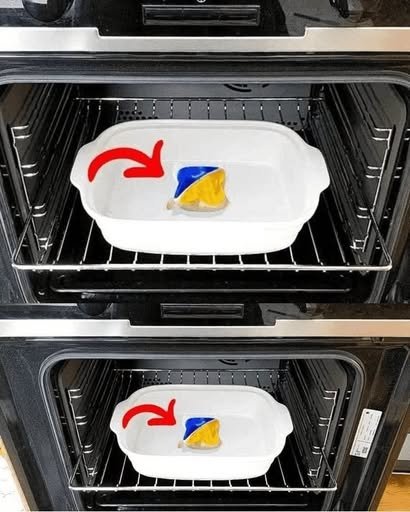
The Trick to Cleaning the Oven “Effortlessly” — Even Burnt-On Grease
Cleaning the oven is one of those household jobs that most people put off for as long as possible. Grease splatters, baked-on food, dark stains, and stubborn burnt residue can make an otherwise clean kitchen look neglected.
The good news is that you don’t necessarily need hours of hard scrubbing.
The key is to soften the buildup before you scrub it. Instead of attacking hardened grease with a dry sponge, use heat, moisture, and a simple cleaning paste to loosen the residue first.
This method won’t magically remove every stain in seconds, but it can make heavily soiled ovens considerably easier to clean.
What You’ll Need
- ½ cup baking soda
- 3–4 tablespoons water
- 2 tablespoons dishwashing liquid
- 1–2 tablespoons white vinegar
- Warm water
- A spray bottle
- Non-scratch sponge or scrub pad
- Old toothbrush or small cleaning brush
- Microfiber cloth
- Rubber gloves
- Plastic or silicone scraper, optional
Step 1: Make Sure the Oven Is Cool
Before cleaning, turn the oven off and allow it to cool completely.
Remove the oven racks and set them aside.
Never begin scrubbing a hot oven with a homemade cleaning mixture, especially if it contains vinegar or other products that could create irritating fumes.
Step 2: Remove Loose Crumbs
Start by removing loose food particles, crumbs, and burnt pieces.
A dry cloth, small brush, or handheld vacuum can make this step easier.
Getting rid of loose debris first prevents it from turning into muddy residue once you add water.
Step 3: Make the Cleaning Paste
Add the baking soda to a bowl.
Slowly mix in the water until you have a thick paste.
Add the dishwashing liquid and stir gently.
The baking soda provides mild abrasive action, while the dish soap helps loosen greasy residue.
You want the mixture thick enough to spread over dirty surfaces without immediately running down the oven walls.
Step 4: Apply the Paste
Spread the paste over the dirty areas of the oven.
Concentrate on:
- Burnt-on food
- Greasy oven walls
- The bottom of the oven
- Dark baked-on patches
- Areas around previous spills
Use a sponge or gloved fingers to spread the mixture.
Avoid coating heating elements, electrical components, vents, or areas specifically marked by your oven manufacturer as unsuitable for moisture.
Step 5: Let It Sit
This is the step that makes the biggest difference.
Instead of scrubbing immediately, allow the paste to sit for several hours.
For particularly stubborn buildup, leaving it overnight can give the mixture more time to soften the residue.
The goal isn’t to make the grime disappear while the paste sits. The goal is to make hardened grease and food deposits easier to remove.
Step 6: Work on the Oven Racks
While the paste is working inside the oven, clean the racks.
Place them in a bathtub, large basin, or suitable container.
Cover them with warm water and add a generous amount of dish soap.
Let them soak for at least 30–60 minutes.
Use a non-scratch scrubber to remove loosened grease and food residue.
Rinse thoroughly and dry the racks completely before returning them to the oven.
Step 7: Loosen the Burnt Residue
After the paste has had time to work, use a damp sponge to begin wiping the oven.
For stubborn patches, gently work them with a non-scratch scrub pad.
If thick pieces of residue remain, a plastic or silicone scraper can help lift them without aggressively scratching the surface.
Don’t use excessive force. Add a little warm water and allow the residue to soften further.
Step 8: Use Vinegar for the Final Cleanup
Put white vinegar in a spray bottle and lightly mist the areas where baking soda residue remains.
The vinegar will react with leftover baking soda and create fizzing.
This reaction can help loosen some remaining residue, but it isn’t a magical grease-dissolving reaction. Most of the cleaning work comes from the baking soda, dish soap, soaking time, and physical wiping.
Wipe everything thoroughly with a damp microfiber cloth.
Step 9: Rinse the Oven
This step is important.
Use a clean damp cloth to wipe the interior several times.
You don’t want to leave cleaning-product residue behind.
Rinse the cloth frequently and continue wiping until the surfaces feel clean rather than slippery or powdery.
Finally, dry the interior with a clean microfiber cloth.
Step 10: Clean the Oven Door
The glass oven door often collects some of the most noticeable grease.
Apply a small amount of the baking soda paste to the glass.
Let it sit for 10–20 minutes.
Gently wipe with a soft sponge.
For stubborn residue, use a suitable glass-safe scraper very carefully and according to your oven manufacturer’s instructions.
Wipe the glass with a clean damp cloth and then dry it.
What About Extremely Burnt-On Grease?
Some ovens have layers of carbonized food that have accumulated over months or even years.
In that situation, one cleaning session may not remove everything.
Instead of aggressively scraping the surface, repeat the soaking-and-wiping process.
For very stubborn deposits:
- Apply the baking soda and dish-soap paste.
- Leave it for several hours or overnight.
- Wipe away the softened material.
- Reapply to remaining patches.
- Gently scrape only where appropriate.
- Finish with several clean-water wipes.
Repeated gentle cleaning is usually better than damaging the oven surface with excessive force.
A Faster Method for Lightly Dirty Ovens
If your oven only has a few fresh splatters, you don’t need an overnight treatment.
Mix warm water with a little dish soap.
Wipe the interior while the oven is cool.
For fresh grease, this simple approach may be all you need.
The longer food residue sits and bakes onto the surface, the more difficult it becomes to remove.
Important Things You Should Never Do
Don’t Mix Cleaning Chemicals
Never combine homemade mixtures with commercial oven cleaners, bleach, ammonia, or other cleaning chemicals.
Different cleaning products can produce irritating or dangerous fumes.
Don’t Pour Liquid Into the Bottom of the Oven
Excess liquid can reach areas that should remain dry and may damage electrical or heating components.
Use a damp cloth or controlled application instead.
Don’t Coat Heating Elements
Avoid applying cleaning paste directly to heating elements.
Don’t Use Aggressive Metal Tools
Steel wool, knives, and sharp metal scrapers can damage enamel or glass surfaces.
Use a non-scratch pad or an appropriate plastic scraper instead.
Don’t Ignore the Manufacturer’s Instructions
Some ovens have special interior coatings or self-cleaning surfaces that require specific cleaning methods.
Check your oven manual before applying any homemade cleaner.
Can Baking Soda Really Remove Burnt Food?
It can help, particularly when combined with soaking time and gentle scrubbing.
Baking soda is mildly abrasive and alkaline, while dish soap helps with greasy residue.
However, extremely old carbonized deposits may require multiple treatments or a commercial cleaner specifically designed for ovens.
So the real “trick” isn’t one magical ingredient.
It’s loosening the grime before you start scrubbing.
How to Keep Your Oven Cleaner
Once you’ve done the hard work, keeping the oven clean becomes much easier.
Wipe Spills Promptly
Allowing food to repeatedly bake onto the surface makes cleaning much harder.
Use a Baking Tray
When cooking dishes that may bubble over, place them on a suitable baking tray to catch spills.
Don’t Overfill Baking Dishes
Leaving enough room at the top can prevent sauces and casseroles from overflowing.
Do a Quick Monthly Clean
A few minutes of regular maintenance can prevent thick layers of buildup.
Final Thoughts
A dirty oven doesn’t always require hours of exhausting scrubbing.
The most useful approach is to soften stubborn grease and burnt food first, then wipe and gently scrub it away.
A simple mixture of baking soda, water, and dish soap can be useful for ordinary oven grime, while patience and repeated treatment may be needed for heavily carbonized areas.
The biggest difference comes from giving the cleaning mixture enough time to work instead of immediately attacking the oven with a scrubber.
SEO Title
The Trick to Cleaning a Dirty Oven Easily — Even Burnt-On Grease
Meta Description
Learn an easy homemade method for cleaning a greasy, dirty oven using baking soda, dish soap, water, and gentle scrubbing to tackle burnt-on residue.