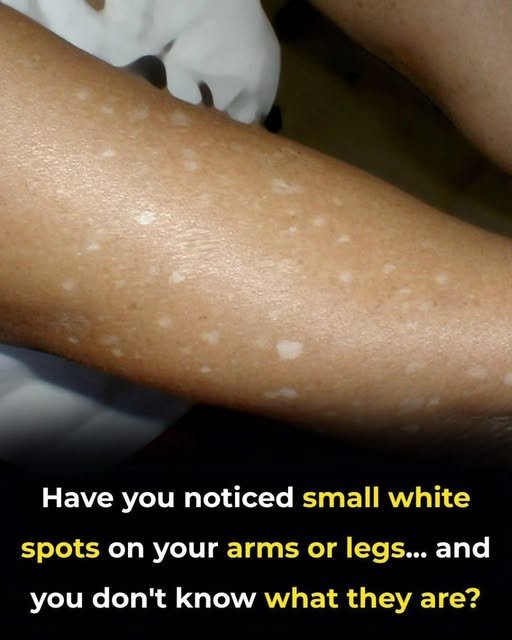
Small white spots on the arms or legs are fairly common and can have several different causes. They aren’t necessarily a sign of a serious illness, but their appearance, location, and whether they’re changing can provide useful clues.
🔎 Common Causes
1. Idiopathic guttate hypomelanosis (IGH)
These are usually tiny, flat, white or lighter-colored spots that commonly appear on the forearms and lower legs, particularly with increasing age and long-term sun exposure. They are generally harmless.
2. Sun-related changes
Repeated sun exposure can cause uneven pigmentation and make lighter spots more noticeable. Using sunscreen can help protect the surrounding skin from further sun damage.
3. Fungal infection
Certain superficial fungal infections can cause lighter patches, sometimes with fine scaling or mild itching. These usually require appropriate antifungal treatment rather than home remedies.
4. Vitiligo
Vitiligo can cause areas of skin to lose pigment. Patches may gradually become more noticeable and can occur on different parts of the body. A healthcare professional or dermatologist can help distinguish it from other causes.
5. Dry or irritated skin
Dryness, eczema, or previous inflammation can sometimes leave lighter areas behind after the skin heals.
⚠️ When Should You Get Them Checked?
Consider seeing a dermatologist if the spots:
- Are rapidly increasing or spreading
- Become completely depigmented
- Are itchy, painful, scaly, or inflamed
- Appear suddenly without an obvious explanation
- Involve the face, mouth, or other areas as well
- Are accompanied by other unusual symptoms
☀️ What You Can Do
Avoid harsh scrubs and unproven bleaching remedies. Use a broad-spectrum sunscreen of SPF 30 or higher, moisturize regularly, and monitor whether the spots change in size, number, or appearance.
Bottom line: Small white spots on the arms or legs are often harmless, especially when they’re tiny, flat, and stable. But because several different conditions can look similar, persistent or changing spots are best evaluated by a healthcare professional rather than diagnosed from appearance alone.