Have you ever made liquid soap that looked perfectly clear at first, only to find that it became cloudy, hazy, or developed sediment?
The problem may not always be your soap formula.
Sometimes, the water you’re using is the problem.
Water makes up a large portion of many liquid soap and personal-care formulations, so its quality can have a major effect on the appearance, stability, and performance of the finished product.
Water Is Not Always Just Water
Many people assume that if water is clean enough to drink, it is automatically suitable for making clear liquid soap.
But water can contain dissolved substances that aren’t obvious to the eye, including:
- Calcium and magnesium ions
- Other dissolved minerals
- Iron and other metal ions
- Suspended particles
- Salts and other impurities
These substances may interact with surfactants, soap ingredients, fragrances, thickeners, and other components in a formulation.
Hard Water Can Cause Cloudiness
One of the biggest concerns is water hardness.
Hard water contains significant amounts of calcium and magnesium ions. These ions can interact with certain soap and surfactant ingredients and may produce insoluble materials or deposits.
The result can be:
- Cloudy or milky liquid soap
- Reduced clarity
- Sediment at the bottom of the container
- Reduced foam
- Changes in viscosity
- Instability during storage
In traditional soap systems, calcium and magnesium can form insoluble metallic soaps, commonly associated with soap scum.
Why Professional Formulators Care About Water
Professional formulators don’t simply say:
“Water is water.”
They consider the quality and chemistry of the water being used.
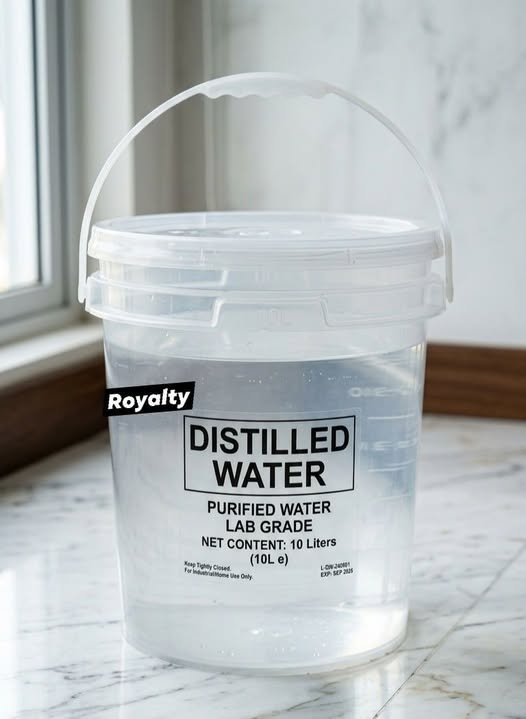
For products where clarity is important, formulators may choose deionized, demineralized, or appropriately softened water rather than relying on untreated tap water.
For example, technical guidance for diluted liquid-soap concentrates recommends softened or deionized water and notes that insufficient chelation can contribute to clouding and sediment formation.
What Are Chelating Agents?
A chelating agent can bind certain metal ions such as calcium and magnesium, helping prevent them from interfering with other ingredients.
Depending on the formulation, ingredients such as EDTA or biodegradable alternatives such as GLDA may be considered.
The correct chelator, concentration, and pH compatibility depend on the specific formulation, so it should not simply be added randomly.
How to Improve Your Liquid Soap Clarity
If you’re experiencing cloudy liquid soap, consider checking these factors:
1. Check Your Water
If possible, test the hardness of your water. A water-hardness test can help determine whether calcium and magnesium may be contributing to the problem.
2. Consider Purified Water
For clear formulations, appropriately purified or deionized water can provide a more predictable starting point.
3. Review Your Chelating System
If your formula requires a chelating agent, make sure it is compatible with the surfactants and the finished product’s pH.
4. Check Other Ingredients
Water isn’t the only possible cause of cloudiness. Fragrances, essential oils, preservatives, surfactants, salts, and other additives can also affect clarity and stability.
5. Test Before Making a Large Batch
Always test a small batch first.
Observe the product immediately after mixing and again after several days or weeks. A formula that looks clear immediately may develop haze or sediment during storage.
The Bottom Line
If your liquid soap is cloudy, don’t immediately assume that you made a mistake in your formulation.
Look at the water.
The quality and mineral content of your water can influence how your ingredients behave, particularly when calcium and magnesium are present.
That’s why experienced formulators pay attention not only to what goes into the formula, but also to the quality of the water going into it.
Because when it comes to liquid soap formulation:
Water isn’t just water — its chemistry matters.