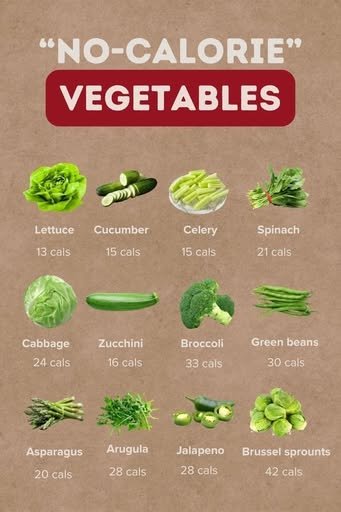
No-Calorie Vegetables: 15 Very Low-Calorie Vegetables to Add to Your Diet
If you’re trying to eat healthier, manage your weight, or simply make your meals more filling, vegetables are some of the most useful foods you can keep in your kitchen.
You may have heard certain vegetables described as “no-calorie vegetables.” Technically, almost all vegetables contain at least some calories, so the term isn’t completely accurate. However, many vegetables are very low in calories while providing water, fiber, vitamins, and minerals.
That combination makes them especially useful when you’re trying to build satisfying meals without relying heavily on calorie-dense foods.
Here are 15 low-calorie vegetables worth adding to your grocery list.
1. Cucumber
Cucumber is one of the most refreshing low-calorie vegetables you can eat.
Because it contains a high amount of water, it adds volume and crunch without contributing many calories.
Easy ways to eat it:
- Sliced with a little salt and lemon
- Added to salads
- Mixed into yogurt
- Served with hummus
- Added to sandwiches and wraps
- Used in homemade chilled salads
For extra fiber and nutrients, keep the peel on when appropriate and wash it thoroughly.
2. Lettuce
Lettuce is another excellent choice when you want to make a meal look and feel larger without adding many calories.
Use it as the base of a salad or as a crunchy addition to wraps, sandwiches, burgers, and bowls.
Instead of building a salad around a large amount of cheese, creamy dressing, or fried toppings, make vegetables the main component and use richer ingredients in smaller portions.
3. Celery
Celery is crisp, refreshing, and naturally low in calories.
It can be eaten raw as a snack or added to soups, stews, salads, and stir-fries.
Try celery sticks with a small amount of peanut butter or hummus for a more satisfying snack.
4. Radishes
Radishes provide a peppery crunch and work particularly well in salads.
They can be:
- Sliced into salads
- Added to sandwiches
- Served with dips
- Roasted
- Pickled
Their strong flavor can make a simple vegetable plate much more interesting.
5. Zucchini
Zucchini is versatile enough to replace or reduce higher-calorie ingredients in many meals.
Try it:
- Grilled
- Roasted
- Sautéed
- Added to soups
- Spiralized into vegetable noodles
- Added to omelets
It absorbs seasonings beautifully, making it an easy vegetable for everyday cooking.
6. Cabbage
Cabbage is inexpensive, filling, and extremely versatile.
You can use it in:
- Coleslaw
- Stir-fries
- Soups
- Salads
- Wraps
- Vegetable bowls
Shredded cabbage also makes an excellent base for a crunchy salad.
For a simple version, combine shredded cabbage, carrots, cucumber, lemon juice, black pepper, and a small amount of olive oil.
7. Spinach
Spinach provides nutrients such as folate, vitamin K, vitamin A, and other beneficial plant compounds while remaining relatively low in calories.
Add it to:
- Omelets
- Smoothies
- Soups
- Pasta
- Curries
- Salads
- Sandwiches
A large amount of raw spinach also cooks down dramatically, making it easy to add more vegetables to a meal.
8. Tomatoes
Tomatoes are technically fruits botanically, but they’re commonly used as vegetables in cooking.
They’re relatively low in calories and provide vitamin C, potassium, and the antioxidant lycopene.
Use them in:
- Salads
- Soups
- Sauces
- Sandwiches
- Omelets
- Salsas
Fresh tomatoes can also add moisture and flavor to meals without requiring heavy sauces.
9. Bell Peppers
Bell peppers are colorful, crunchy, and relatively low in calories.
Red, yellow, orange, and green peppers can all add flavor and texture to meals.
They’re particularly useful for increasing the vegetable content of:
- Stir-fries
- Omelets
- Fajitas
- Salads
- Wraps
- Rice dishes
10. Cauliflower
Cauliflower is a remarkably versatile vegetable.
It can be roasted, steamed, mashed, riced, or added to soups.
One popular option is cauliflower rice, which can be used as a lower-calorie alternative to some of the rice in a meal.
However, you don’t have to completely replace rice. Mixing cauliflower rice with regular rice can increase the vegetable content while maintaining the texture you enjoy.
11. Broccoli
Broccoli is relatively low in calories while providing fiber and several vitamins and minerals.
Roast it with garlic and a small amount of olive oil, steam it as a side dish, or add it to stir-fries.
For a simple meal, combine roasted broccoli with grilled chicken and a moderate serving of rice or potatoes.
12. Mushrooms
Mushrooms are a great way to add a savory, satisfying flavor to meals.
They work especially well in:
- Omelets
- Soups
- Stir-fries
- Pasta
- Sandwiches
- Meat dishes
Their naturally savory flavor can help make vegetable-based meals more satisfying.
13. Green Beans
Green beans are a useful low-calorie side dish that provides fiber and several nutrients.
Try steaming or roasting them instead of deep-frying them.
For extra flavor, toss cooked green beans with garlic, lemon juice, black pepper, and a small amount of olive oil.
14. Asparagus
Asparagus is another nutrient-rich vegetable that can fit easily into a calorie-conscious diet.
It can be roasted, grilled, steamed, or sautéed.
Try roasting asparagus with garlic, black pepper, lemon zest, and a small amount of olive oil.
15. Turnips
Turnips are a less frequently used vegetable but can be a great addition to soups, stews, and roasted vegetable dishes.
They have a mildly earthy flavor and can provide variety when you’re tired of eating the same vegetables.
What About “Zero-Calorie” Foods?
This is where the popular term can become misleading.
Vegetables aren’t literally calorie-free.
However, some vegetables contain so few calories relative to their volume that they’re useful for increasing the amount of food on your plate without dramatically increasing the total calories.
This is sometimes referred to as low-energy-density eating.
For example, a large bowl of leafy greens and cucumber can provide considerably more volume than a small serving of a calorie-dense food.
That’s one reason vegetables can be useful for people trying to manage their weight.
The Secret Is What You Add to Them
A vegetable can be low in calories on its own but become much more calorie-dense depending on how it is prepared.
For example:
Steamed broccoli: relatively low in calories
Broccoli covered in a large amount of cheese sauce: considerably higher in calories
Raw cucumber: very low in calories
Cucumber salad with a large amount of creamy dressing: considerably higher in calories
Baked potato: nutritious and filling
Deep-fried potato: much more calorie-dense
This doesn’t mean you have to avoid sauces, cheese, butter, or oil. It simply means that these additions should be considered when you’re trying to manage your overall calorie intake.
How to Use Low-Calorie Vegetables for Weight Management
You don’t need to eat vegetables exclusively.
Instead, use them to build balanced meals.
A simple plate might contain:
½ plate vegetables
¼ plate protein
¼ plate carbohydrate
Then add a modest amount of healthy fat.
For example:
Lunch
Grilled chicken + cabbage salad + cucumber + rice
Dinner
Baked fish + roasted broccoli + potatoes
Breakfast
Eggs + spinach + tomatoes + whole-grain toast
Snack
Cucumber and carrots + hummus
This approach is generally more sustainable than trying to survive on extremely restrictive “zero-calorie” diets.
Best Vegetables for Snacking
If you’re hungry between meals, some convenient choices include:
- Cucumber
- Celery
- Carrots
- Radishes
- Bell peppers
- Cherry tomatoes
Pair them with a protein or healthy fat when you want a more substantial snack.
Examples include:
Cucumber + Greek yogurt dip
Bell peppers + hummus
Celery + peanut butter
Carrots + cottage cheese dip
Don’t Forget Protein
One common mistake when trying to lose weight is focusing so heavily on low-calorie vegetables that protein intake becomes an afterthought.
Vegetables provide valuable nutrients, but they aren’t usually a concentrated source of protein.
Include foods such as:
- Eggs
- Chicken
- Fish
- Greek yogurt
- Cottage cheese
- Beans
- Lentils
- Tofu
- Lean meat
Protein can help make meals more satisfying and is important for maintaining muscle.
Don’t Fear Healthy Carbohydrates
You also don’t need to eliminate rice, potatoes, oats, whole grains, or other carbohydrate foods simply because you’re trying to lose weight.
A balanced diet can include carbohydrates.
The important factors include your overall calorie intake, portions, food quality, activity level, and individual nutritional needs.
Simple Low-Calorie Vegetable Bowl
For an easy lunch or dinner, combine:
- 1 cup chopped lettuce
- ½ cucumber
- 1 tomato
- ½ bell pepper
- ½ cup shredded cabbage
- ½ cup cooked chicken or chickpeas
- Lemon juice
- Black pepper
- A small amount of olive oil
- Optional herbs
Add a serving of rice, potatoes, or whole-grain bread if you want a more substantial meal.
Final Thoughts
There aren’t truly zero-calorie vegetables, but there are plenty of vegetables that are naturally very low in calories and can add substantial volume, fiber, water, vitamins, minerals, and plant compounds to your meals.
Cucumber, lettuce, celery, radishes, zucchini, cabbage, spinach, tomatoes, peppers, cauliflower, broccoli, mushrooms, green beans, asparagus, and turnips are all useful choices.
Instead of searching for foods that contain absolutely no calories, focus on building meals that are nutrient-dense, satisfying, and appropriate for your individual needs.
Vegetables don’t need to be boring, either. Roasting, grilling, seasoning, herbs, lemon, garlic, and modest amounts of healthy fats can turn simple vegetables into genuinely enjoyable meals.
The goal isn’t to eat as little as possible.
The goal is to eat well while creating an eating pattern you can maintain.
SEO Title
15 “No-Calorie” Vegetables That Are Actually Very Low in Calories
Meta Description
Discover 15 very low-calorie vegetables, including cucumber, celery, lettuce, zucchini, cabbage, spinach, broccoli, and more for healthy, filling meals.
Focus Keyphrase
No-Calorie Vegetables
Suggested Slug
no-calorie-vegetables