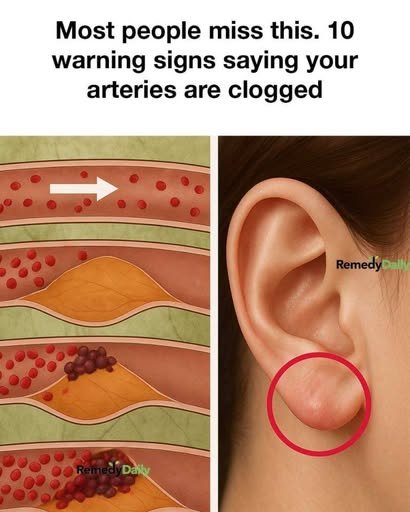
Atherosclerosis, commonly described as “clogged arteries,” can develop quietly over many years. Plaque made up of cholesterol, fats, calcium, and other substances can build up inside artery walls, gradually narrowing the passage available for blood flow.
The concerning part is that many people have no obvious symptoms in the early stages. Symptoms may appear only when narrowing becomes significant or when a plaque suddenly ruptures and contributes to a blood clot.
That is why it’s important not to rely only on how you feel to determine whether your arteries are healthy. Blood pressure, cholesterol, blood sugar, smoking history, family history, age, and other risk factors can provide important clues.
Still, certain symptoms deserve attention.
Here are 10 warning signs that can occur when narrowed arteries reduce blood flow, depending on which part of the body is affected.
1. Chest Pressure, Tightness, or Pain
One of the best-known warning signs of reduced blood flow to the heart is chest discomfort, commonly called angina.
It may feel like:
- Pressure
- Tightness
- Squeezing
- Heaviness
- Burning
- Discomfort in the center of the chest
Angina can occur when the heart muscle isn’t receiving enough oxygen-rich blood, often because the coronary arteries have become narrowed.
Chest discomfort that repeatedly appears during physical activity and improves with rest deserves medical evaluation.
However, chest pain isn’t always caused by clogged arteries. Digestive problems, muscle strain, lung conditions, and other issues can produce similar symptoms.
2. Shortness of Breath
Feeling unusually short of breath can sometimes occur when the heart isn’t receiving enough blood or when cardiovascular disease affects the heart’s ability to function normally.
Shortness of breath may happen during exercise, climbing stairs, or other activities that previously felt comfortable.
It can also have many other causes, including asthma, lung disease, anemia, infections, and physical deconditioning.
For that reason, persistent or unexplained breathlessness shouldn’t automatically be blamed on clogged arteries—but it shouldn’t be ignored either.
3. Pain or Cramping in the Legs While Walking
This is one of the more characteristic symptoms of peripheral artery disease (PAD).
A person may develop aching, burning, cramping, heaviness, or fatigue in the calf, thigh, hip, or buttock while walking or climbing stairs.
Interestingly, the discomfort often improves after stopping and resting.
This happens because working muscles need more blood and oxygen. If an artery supplying the legs is significantly narrowed, blood flow may not increase enough to meet the muscles’ needs during activity.
Some people mistakenly assume this type of pain is simply arthritis or part of getting older.
4. One Foot or Leg Feels Colder Than the Other
Reduced blood flow can sometimes cause one foot or leg to feel noticeably cooler than the other.
The American Heart Association and CDC list cool skin as one possible physical sign associated with PAD.
A cold foot does not automatically mean an artery is blocked. Temperature differences can have many causes.
But a persistent change—especially when combined with pain, numbness, color changes, or weak pulses—deserves medical attention.
5. Numbness, Weakness, or Tingling in the Legs or Feet
Reduced circulation to the legs can sometimes be associated with numbness, weakness, or other unusual sensations.
These symptoms can also result from nerve problems, diabetes, spinal conditions, vitamin deficiencies, and other disorders.
If numbness repeatedly occurs alongside walking-related leg pain or noticeable changes in the foot, peripheral artery disease should be considered and discussed with a healthcare professional.
6. Wounds That Heal Slowly
A small cut on the foot or lower leg should normally begin healing with appropriate care.
When blood flow is severely reduced, however, wounds may heal slowly because tissues aren’t receiving enough oxygen and nutrients.
Slow-healing sores or ulcers on the legs and feet are recognized signs that can occur with PAD.
This is particularly important for people who also have diabetes, because diabetes can increase the risk of both circulation problems and foot complications.
Don’t wait for a wound to become severe before having it assessed.
7. Changes in the Color or Appearance of the Feet
Reduced circulation can sometimes cause changes in the appearance of the skin.
Possible changes include:
- Pale skin
- Bluish or unusual discoloration
- Smooth or shiny skin
- Reduced hair growth
- Changes in toenails
These findings aren’t specific to clogged arteries, but they can occur with PAD and other circulation problems.
If these changes are new or accompanied by pain, numbness, coldness, or sores, medical evaluation is appropriate.
8. Sudden Trouble Speaking, Seeing, or Moving
Some artery problems affect blood flow to the brain.
Atherosclerosis can contribute to carotid artery disease, and a narrowed or diseased carotid artery can increase the risk of TIA or stroke.
Warning symptoms include sudden:
- Weakness or numbness, particularly on one side
- Difficulty speaking or understanding speech
- Vision loss or sudden visual disturbance
- Dizziness or loss of balance
- Severe headache without a known cause
These symptoms are not something to monitor at home.
A TIA can produce temporary symptoms that disappear, but it is still a medical emergency and can be a warning of a future stroke.
If these symptoms occur suddenly, seek emergency medical care immediately—even if they disappear.
9. Unusual Fatigue or Reduced Exercise Tolerance
Some people notice that activities they previously handled easily have become unexpectedly difficult.
You may find yourself becoming tired or short of breath after walking a distance that once felt comfortable.
This can occur for many reasons, including heart and vascular disease, but also anemia, poor sleep, thyroid problems, medication effects, infections, and other conditions.
Therefore, unexplained changes in exercise tolerance shouldn’t be treated as proof of clogged arteries.
Instead, they are a reason to look at the bigger picture.
10. Erectile Dysfunction Can Sometimes Be a Cardiovascular Clue
For some men, erectile dysfunction can be associated with vascular disease.
The blood vessels involved in erections are relatively small, so vascular problems may sometimes become noticeable there before more obvious cardiovascular symptoms develop.
However, erectile dysfunction has numerous possible causes, including diabetes, medications, hormonal problems, psychological factors, nerve disorders, and other medical conditions.
It should therefore be viewed as a possible cardiovascular clue—not a diagnosis of clogged arteries.
The Important Truth: Clogged Arteries Can Cause No Symptoms
This may be the most important point in the entire article.
You can have atherosclerosis without feeling anything unusual.
The American Heart Association notes that atherosclerosis often develops slowly and may not cause symptoms until an artery becomes narrowed or blocked.
In coronary artery disease, some people don’t experience warning symptoms before a heart attack.
That’s why preventive health checks matter.
Who Is More Likely to Develop Artery Disease?
Several factors can increase the risk of atherosclerosis and related cardiovascular disease.
These include:
- High LDL cholesterol
- High blood pressure
- Diabetes
- Smoking
- Physical inactivity
- Overweight or obesity
- Older age
- Family history of cardiovascular disease
- Chronic kidney disease
Not every risk factor can be changed, but many can be managed.
How Do Doctors Check for Artery Problems?
Symptoms alone cannot tell you whether an artery is clogged.
Depending on your symptoms and risk factors, a healthcare professional may evaluate:
- Blood pressure
- Cholesterol levels
- Blood glucose or diabetes risk
- Smoking history
- Family history
- Physical activity
- Pulses in the arms and legs
- Heart-related symptoms
- Circulation in the legs
For suspected PAD, one commonly used test is the ankle-brachial index (ABI), which compares blood pressure in the ankle with blood pressure in the arm. Other imaging tests may be used when appropriate.
What Can You Do to Protect Your Arteries?
You don’t need to wait for symptoms before taking care of your cardiovascular health.
Helpful habits include:
Don’t Smoke
Smoking damages blood vessels and increases cardiovascular risk.
Manage Cholesterol
High cholesterol can contribute to plaque formation. If lifestyle changes aren’t enough, a healthcare professional may recommend medication.
Keep Blood Pressure Under Control
High blood pressure can damage artery walls over time.
Stay Physically Active
Regular physical activity supports cardiovascular health and can also help manage blood pressure, cholesterol, blood sugar, and body weight.
Eat a Heart-Healthy Diet
Emphasize vegetables, fruits, whole grains, beans, nuts, seeds, fish, and other minimally processed foods while limiting excessive saturated fat, highly processed foods, and added sugars.
Manage Diabetes
High blood sugar can damage blood vessels and increase cardiovascular risk.
Maintain a Healthy Weight
If you’re overweight, gradual weight loss can improve several cardiovascular risk factors.
When Is It an Emergency?
Don’t wait for a routine appointment if you experience symptoms that could represent a heart attack or stroke.
Seek emergency medical care for symptoms such as:
- Severe or persistent chest pressure or pain
- Chest discomfort accompanied by shortness of breath
- Cold sweating, nausea, or faintness with chest discomfort
- Sudden weakness or numbness on one side
- Sudden difficulty speaking
- Sudden vision loss
- Sudden severe dizziness or loss of balance
- A sudden, severe headache unlike usual headaches
A heart attack or stroke can become life-threatening quickly.
Final Thoughts
There isn’t a simple checklist that can tell you, “Your arteries are clogged.”
Atherosclerosis can remain silent for years, and many symptoms associated with poor circulation have other possible causes.
However, symptoms such as chest discomfort, exertional leg pain, slow-healing foot wounds, unusual changes in the feet, and sudden neurological symptoms should never be casually dismissed.
The most useful approach is to look at the entire picture: symptoms, blood pressure, cholesterol, blood sugar, smoking status, family history, age, and other cardiovascular risk factors.
And remember: you don’t have to wait for a warning sign to take care of your arteries. Prevention and early evaluation can be much more valuable than trying to recognize a problem after it has become advanced.
SEO Title
10 Warning Signs of Narrowed or Clogged Arteries You Should Know
Meta Description
Learn 10 possible warning signs associated with narrowed arteries, including chest discomfort, leg pain, cold feet, slow-healing wounds and sudden stroke symptoms.