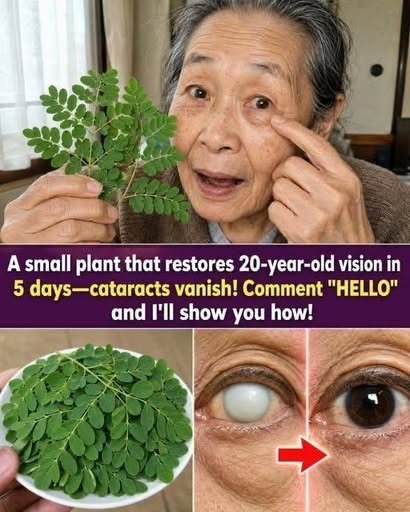
Moringa has earned a reputation as a nutrient-rich plant and is widely used as a food and traditional herbal remedy. Its leaves contain vitamins, minerals, carotenoids, polyphenols, and other plant compounds that have attracted scientific interest.
That has led to many dramatic claims online, including stories of older adults whose eyesight supposedly became perfectly clear after taking moringa for only a few days.
But there is an important distinction between supporting overall nutrition and treating an eye disease.
There is currently no good clinical evidence showing that eating moringa or taking moringa powder can turn severe vision loss into perfect 20/20 vision in four days. A 2026 review of human studies found promising areas of research but emphasized the need for larger, better-designed clinical trials. Earlier systematic research has likewise concluded that evidence for many medicinal uses of moringa remains insufficient for evidence-based medical treatment.
So what can moringa realistically offer?
What Is Moringa?
Moringa oleifera is a tree native to parts of South Asia and now cultivated in many tropical and subtropical regions.
Its leaves are commonly eaten fresh or dried and ground into powder. The plant has been studied for its nutritional composition and potential antioxidant, anti-inflammatory, and metabolic effects.
Moringa leaves contain several nutrients and plant compounds, including:
- Vitamin A precursors such as carotenoids
- Vitamin C
- Vitamin E
- Folate
- Calcium
- Iron
- Potassium
- Polyphenols
- Flavonoids
- Other antioxidant compounds
The nutritional value can make moringa a useful addition to a varied diet, but nutritional value should not be confused with proof that it treats a particular eye disease.
Can Moringa Restore 20/20 Vision?
There is no reliable evidence that moringa can restore 20/20 vision within four days.
Vision can become blurry for many different reasons. Refractive errors such as nearsightedness and farsightedness are corrected with glasses, contact lenses, or appropriate refractive procedures. Cataracts involve clouding of the eye’s lens. Macular degeneration affects the retina, while glaucoma damages the optic nerve.
These conditions cannot all be treated in the same way.
A nutrient-rich food may support general health, but it cannot automatically reverse structural damage to the eye.
Why Does Nutrition Matter for Eye Health?
The eyes require many nutrients to function normally.
Vitamin A, for example, plays an important role in normal vision. Other nutrients and antioxidant compounds are also involved in maintaining eye tissues.
Research into dietary patterns and eye health suggests that nutrition can be relevant to long-term ocular health. Studies of specific nutrients such as lutein and zeaxanthin have also found evidence of effects on certain measures related to eye health.
However, these findings do not mean that any single plant can quickly reverse established vision loss.
Moringa Contains Carotenoids
One reason moringa attracts interest in relation to eye health is its nutritional content.
Carotenoids are pigments found in many green leafy vegetables and other plant foods. Some carotenoids are converted by the body into vitamin A, while others have antioxidant roles.
Moringa leaves contain carotenoid compounds, but eating moringa should not be presented as equivalent to receiving a medically established treatment for an eye condition.
A varied diet containing leafy greens, colorful vegetables, fruits, eggs, fish, nuts, and other nutrient-rich foods is a more sensible approach to obtaining a broad range of nutrients.
What About Cataracts?
Cataracts are a particularly important example because they commonly affect older adults.
A cataract occurs when the normally clear lens of the eye becomes cloudy. This can cause:
- Blurry vision
- Faded colors
- Difficulty seeing at night
- Glare around lights
- Increased sensitivity to bright light
- Frequent changes in glasses prescription
Research is examining whether nutritional and antioxidant approaches may influence cataract development or progression, but that is very different from proving that moringa can make an established cataract disappear within days.
Even research involving moringa and cataracts is still largely at the preclinical stage rather than demonstrating that ordinary moringa consumption can restore human vision.
Could Moringa Be Part of a Healthy Diet?
Yes.
Moringa leaves can be incorporated into a balanced diet just like other nutrient-rich leafy vegetables.
You can add small amounts of moringa leaf powder to:
- Smoothies
- Soups
- Lentil dishes
- Vegetable curries
- Omelets
- Yogurt
- Homemade savory sauces
Fresh moringa leaves can also be cooked with other vegetables.
The goal should be nutritional variety, rather than depending on moringa as a treatment.
Don’t Put Moringa Directly Into Your Eyes
This is particularly important.
A viral claim about a plant’s eye benefits can sometimes lead people to try placing plant juice, powders, extracts, or homemade preparations directly into the eyes.
That is not a safe approach.
The eye is extremely sensitive, and non-sterile substances can cause irritation, infection, inflammation, or injury.
Moringa intended as food should be treated as food—not as an eye drop.
When Blurred Vision Requires Medical Attention
Sudden or rapidly worsening vision should never be treated as a simple nutritional deficiency without evaluation.
Seek urgent medical attention for:
- Sudden loss of vision
- A sudden increase in floaters
- Flashes of light
- A dark curtain or shadow across the vision
- Severe eye pain
- Sudden double vision
- New severe headache accompanied by vision changes
- Sudden weakness, facial drooping, or speech difficulty
Older adults with progressive blurry vision should also have regular eye examinations, particularly if they have diabetes, high blood pressure, glaucoma risk, or a history of eye disease.
Foods That Support Overall Eye Nutrition
Rather than focusing exclusively on moringa, build a diet around a variety of nutrient-rich foods.
Leafy Greens
Spinach, kale, collard greens, and other dark green vegetables provide carotenoids and numerous other nutrients.
Eggs
Egg yolks contain lutein and zeaxanthin, along with other nutrients.
Fatty Fish
Salmon, sardines, and trout provide omega-3 fatty acids and high-quality protein.
Colorful Fruits and Vegetables
Carrots, peppers, berries, oranges, and other colorful produce provide a variety of vitamins and plant compounds.
Nuts and Seeds
Almonds, walnuts, sunflower seeds, and other nuts and seeds provide vitamin E, healthy fats, and minerals.
The Bottom Line
Moringa is a nutritious plant with interesting nutritional and medicinal research behind it, but the claim that it can make a nearly blind 74-year-old person’s eyes become “crystal clear” with perfect 20/20 vision in only four days is not supported by current clinical evidence.
Moringa may be included as part of a balanced diet, but it should not replace an eye examination or established treatment for cataracts, glaucoma, macular degeneration, diabetic eye disease, or other causes of vision loss.
If an older person’s eyesight suddenly changes, the safest “natural remedy” is not to wait and see whether a plant works—it is to find out why the vision changed in the first place.
SEO Details
SEO Title: Moringa and Eye Health: Can It Really Improve Vision?
Meta Description: Can moringa improve eyesight? Learn what research says about moringa, eye nutrition, vision loss, cataracts, and safe ways to support eye health.
Suggested URL Slug: moringa-eye-health-vision