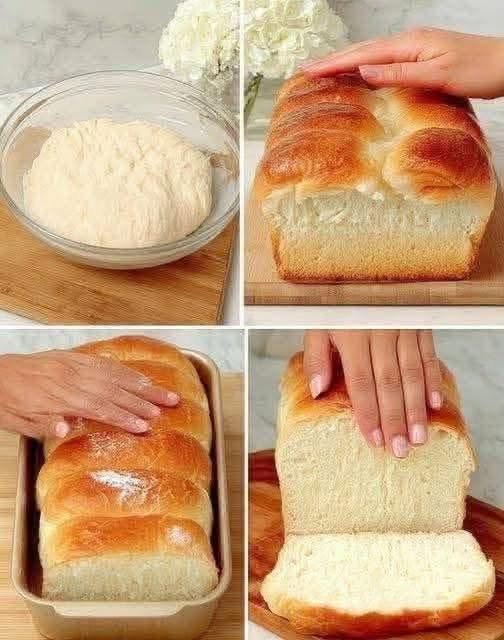
Soft and Fluffy Milk Bread
There’s nothing quite like the smell of freshly baked Milk Bread filling the kitchen. Soft, tender, slightly sweet, and beautifully fluffy, homemade milk bread has a texture that makes ordinary store-bought bread feel completely different.
This easy recipe creates a loaf with a delicate golden crust and a wonderfully soft interior. Milk gives the bread richness and tenderness, while a little butter adds flavor and helps keep the crumb moist.
Whether you slice it for breakfast toast, make sandwiches for the family, or simply tear off a warm piece and spread it with butter, this homemade milk bread is sure to become a favorite.
Why You’ll Love This Milk Bread
- Soft and fluffy texture
- Lightly sweet and buttery
- Simple everyday ingredients
- Perfect for toast and sandwiches
- Delicious fresh from the oven
- Stays soft for several days when stored properly
- Beginner-friendly yeast bread
Preparation Time
Prep Time: 20 minutes
Rise Time: 1 hour 30 minutes
Bake Time: 25–30 minutes
Total Time: About 2 hours 20 minutes
Servings: 1 loaf
Ingredients
- 3 cups (375 g) all-purpose flour or bread flour
- 2 tablespoons sugar
- 2 1/4 teaspoons (7 g) active dry yeast
- 1 teaspoon salt
- 1 cup (240 ml) warm milk
- 1 large egg
- 2 tablespoons unsalted butter, softened
- 1 tablespoon milk, for brushing the top
How to Make Milk Bread
Step 1: Activate the Yeast
Pour the warm milk into a large mixing bowl.
Add the sugar and active dry yeast. Stir gently and let the mixture sit for approximately 5–10 minutes.
The surface should become slightly foamy, indicating that the yeast is active.
The milk should be warm, not hot. Very hot liquid can damage the yeast.
Step 2: Make the Dough
Add the egg to the yeast mixture and whisk briefly.
Add the flour and salt and mix until a shaggy dough forms.
Add the softened butter and begin kneading.
Knead by hand for approximately 8–10 minutes, or use a stand mixer with a dough hook for about 5–7 minutes.
The finished dough should be smooth, soft, and elastic. It may feel slightly sticky at first, but avoid adding large amounts of extra flour.
Step 3: First Rise
Place the dough in a lightly greased bowl.
Cover it with plastic wrap or a clean kitchen towel and place it somewhere warm and draft-free.
Allow the dough to rise for approximately 60–90 minutes, or until it has roughly doubled in size.
The rising time will depend on the temperature of your kitchen.
Step 4: Shape the Dough
Once the dough has risen, gently press it down to release excess air.
Transfer it to a lightly floured work surface.
For a simple loaf, shape the dough into a smooth log that fits comfortably into a greased 9 × 5-inch loaf pan.
For a more attractive pull-apart style loaf, divide the dough into three equal pieces. Roll each piece into a small oval, fold it inward, and roll it into a log. Arrange the three pieces side by side in the loaf pan.
Step 5: Second Rise
Cover the loaf pan loosely and allow the dough to rise again for approximately 30–45 minutes.
The dough should become noticeably puffy and rise close to the top of the pan.
Don’t skip this step. The second rise helps create a lighter, softer loaf.
Step 6: Prepare for Baking
Preheat your oven to 350°F (175°C).
Lightly brush the top of the risen dough with milk. This helps encourage a beautiful golden-brown crust.
Step 7: Bake
Place the loaf in the preheated oven and bake for approximately 25–30 minutes.
The top should be golden brown, and the loaf should sound slightly hollow when gently tapped.
If the top begins browning too quickly, loosely cover it with aluminum foil during the final portion of baking.
Step 8: Cool
Remove the bread from the oven and let it rest in the pan for about 5–10 minutes.
Carefully remove it from the pan and transfer it to a wire rack.
Allow it to cool before slicing.
For the softest texture, brush the warm crust lightly with butter immediately after baking.
Tips for Extra Soft Milk Bread
Use the Right Temperature Milk
Milk should be comfortably warm rather than hot. If it feels too hot on your skin, allow it to cool before adding the yeast.
Don’t Add Too Much Flour
This is one of the most important tips. A dough that is heavily floured can produce a dense loaf.
The dough should be soft and slightly tacky while kneading.
Knead Until Elastic
Proper kneading develops gluten, giving the bread the structure needed to rise while maintaining its soft texture.
A good test is the windowpane test: stretch a small piece of dough gently. It should stretch thin enough to let some light through without immediately tearing.
Give the Dough Time to Rise
Yeast needs time to work. Don’t rush the rising process simply because the recipe gives an estimated time.
The dough’s appearance is more important than the exact clock time.
Don’t Overbake
Overbaking can remove too much moisture from the bread and make it dry.
Once the loaf is nicely golden and baked through, remove it from the oven.
How to Get a Shiny, Soft Crust
For a slightly shiny crust, brush the dough with milk or a beaten egg before baking.
For an especially soft crust, brush the freshly baked loaf with a small amount of melted butter and cover it loosely with a clean towel while it cools.
Easy Milk Bread Variations
Honey Milk Bread
Replace the sugar with 2 tablespoons of honey for a subtle floral sweetness.
Honey Butter Bread
Add 1 tablespoon of honey to the dough and brush the warm loaf with honey butter after baking.
Cinnamon Milk Bread
Add 1 teaspoon of cinnamon to the dough for a lightly spiced loaf that’s delicious toasted.
Cheese Milk Bread
Add 1/2 cup of shredded cheddar or mozzarella during the final stage of kneading.
Raisin Milk Bread
Fold 1/2 cup of raisins into the dough after kneading.
Garlic Herb Milk Bread
Add minced garlic and dried herbs to the dough for a savory version that pairs beautifully with soups and pasta.
How to Serve Milk Bread
Fresh milk bread is delicious in many ways.
Try it with:
- Butter and honey
- Jam or preserves
- Peanut butter
- Scrambled eggs
- Cheese
- Fried eggs
- Cream cheese
- Soup
- Sandwich fillings
It also makes excellent French toast because the soft crumb absorbs the egg mixture beautifully.
How to Store Milk Bread
Allow the loaf to cool completely before storing.
Place it in an airtight container or bread bag and keep it at room temperature for approximately 3–4 days.
Avoid refrigerating homemade bread unless necessary because refrigeration can make bread stale more quickly.
For longer storage, slice the bread and freeze it in a freezer-safe bag for up to 2–3 months.
Individual slices can be removed as needed and toasted directly from frozen.
Frequently Asked Questions
Can I use bread flour?
Yes. Bread flour can produce a slightly chewier and more structured loaf, while all-purpose flour gives a softer, tender crumb.
Can I use instant yeast?
Yes. If using instant yeast, you can mix it directly with the flour instead of activating it in the milk first.
Why is my milk bread dense?
Dense bread can result from too much flour, insufficient kneading, inactive yeast, or not allowing the dough enough time to rise.
Can I make this bread without an egg?
Yes. The egg contributes richness and tenderness, but the bread can be made without it. You may need a small adjustment in liquid depending on the dough consistency.
How can I make the bread even softer?
Keep the dough soft during kneading, avoid overbaking, and brush the warm loaf lightly with butter after it comes out of the oven.
Recipe at a Glance
Recipe: Soft and Fluffy Milk Bread
Prep Time: 20 minutes
Rise Time: 1 hour 30 minutes
Bake Time: 25–30 minutes
Total Time: About 2 hours 20 minutes
Yield: 1 loaf
Oven Temperature: 350°F (175°C)
Final Thoughts
This Soft and Fluffy Milk Bread is a simple homemade loaf with a wonderfully tender crumb and lightly golden crust. The combination of warm milk, butter, egg, and yeast creates bread that’s rich enough to enjoy on its own but versatile enough for sandwiches, toast, and French toast.
For the softest loaf, don’t overload the dough with flour and give it enough time to rise properly. Once baked, a light brushing of butter over the warm crust makes it especially tender and fragrant.
Slice it while still slightly warm, spread on some butter or your favorite jam, and enjoy the simple comfort of freshly baked homemade bread.
SEO Title: Soft and Fluffy Milk Bread Recipe – Easy Homemade Bread
Meta Description: Learn how to make soft and fluffy homemade milk bread with simple ingredients. This tender, lightly sweet loaf is perfect for toast, sandwiches, breakfast, and snacks.