Your feet can sometimes reveal clues about what is happening elsewhere in your body. A little tiredness after a long day is usually nothing unusual, but persistent burning, tingling, numbness, pain, or unusual changes in the feet deserve attention—especially when they keep returning or gradually become worse.
These symptoms can have many possible causes. Nerve irritation, diabetes, vitamin deficiencies, circulation problems, certain medications, injuries, infections, and other health conditions can all affect the feet.
That doesn’t mean every tingling toe is a warning sign of something serious. But if your feet keep sending you unusual signals, it’s worth paying attention.
Here are nine symptoms to know about.
1. Burning Sensation in the Feet
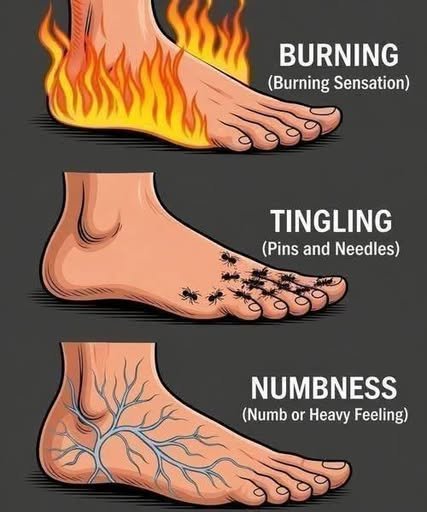
A persistent burning sensation, particularly in the soles or toes, can sometimes be associated with nerve irritation or peripheral neuropathy.
People may describe it as feeling like their feet are unusually hot even when the skin doesn’t actually feel warm.
Possible causes include:
- Nerve damage
- Diabetes
- Vitamin deficiencies
- Alcohol-related nerve damage
- Certain medications
- Nerve compression
- Some infections or other medical conditions
If burning persists or is accompanied by numbness or weakness, speak with a healthcare professional.
2. Tingling or a “Pins and Needles” Feeling
Occasional tingling can happen when you’ve been sitting or sleeping in an awkward position.
However, frequent or persistent tingling in the feet may indicate that a nerve is being irritated or affected.
It can occur with conditions such as diabetes, peripheral neuropathy, nerve compression, or nutritional deficiencies.
Pay attention to whether the sensation is occurring in one foot or both and whether it is becoming more frequent.
3. Numbness
Numbness means you have reduced or absent sensation.
You may notice that your feet don’t feel temperature, pressure, or touch as clearly as they normally do.
Persistent numbness is particularly important because reduced sensation can make it easier to overlook blisters, cuts, burns, or other injuries.
People with diabetes should be especially careful about foot sensation because diabetic nerve damage can increase the risk of unnoticed injuries.
4. Unexplained Foot Pain
Foot pain is extremely common and can result from footwear, overuse, injuries, arthritis, tendon problems, or many other causes.
But unexplained pain that continues despite rest deserves attention.
The location can also provide useful clues. Pain in the heel, arch, toes, or joints can have different causes, so persistent pain should be evaluated rather than automatically attributed to one condition.
5. Feeling Unusually Cold
Cold feet are often caused by the environment, footwear, or simply individual differences.
However, feet that remain unusually cold—especially when accompanied by color changes, pain, numbness, or slow-healing wounds—can sometimes be associated with circulation problems.
If one foot suddenly becomes cold, pale, blue, or painful, seek urgent medical attention.
6. Changes in Skin Color
Pay attention to unusual changes such as:
- Pale or unusually white skin
- Blue or purple discoloration
- Persistent redness
- Darkening around an injury
- Skin that looks unusually shiny
Color changes can have many explanations, including temperature, inflammation, infection, injury, or circulation problems.
A persistent or unexplained change should be checked by a healthcare professional.
7. Swelling in the Feet or Ankles
Feet and ankles can swell after standing, sitting, traveling, or eating a particularly salty meal.
But persistent or unexplained swelling can have many possible causes, including vein problems, injuries, medication effects, and certain heart, kidney, or liver conditions.
Swelling in one leg, especially when it develops suddenly and is accompanied by pain, warmth, or redness, requires prompt medical evaluation because a blood clot is one possible cause.
8. Slow-Healing Cuts or Sores
A small blister or cut should normally begin healing with appropriate care.
If wounds on your feet repeatedly take a long time to heal, don’t ignore them.
Poor circulation, diabetes, reduced sensation, infection, and other conditions can interfere with normal wound healing.
This is especially important for people who already have diabetes or known circulation problems.
9. Weakness or Difficulty Walking
Foot symptoms become more concerning when they are accompanied by weakness, balance problems, or difficulty walking.
Nerve problems can sometimes affect muscle strength and coordination.
Sudden weakness, particularly if it affects one side of the body or occurs together with facial drooping, speech problems, severe dizziness, or confusion, is an emergency and may indicate a stroke.
What Could Cause Burning, Tingling, or Numbness?
There isn’t one single explanation.
Some possibilities include:
Diabetes
Persistently high blood sugar can damage nerves over time and is a common cause of peripheral neuropathy.
Vitamin Deficiency
Certain nutritional deficiencies, particularly vitamin B12 deficiency, can contribute to neurological symptoms such as numbness and tingling.
Nerve Compression
Pressure on nerves in the back, legs, ankles, or feet can produce pain, tingling, or numbness.
Circulation Problems
Reduced blood flow can cause symptoms such as coldness, color changes, pain, or slow-healing wounds.
Medications or Alcohol
Some medications and long-term heavy alcohol use can contribute to peripheral nerve damage.
Injuries
Previous injuries can sometimes irritate or damage nerves and produce symptoms long after the original injury.
When Should You See a Doctor?
Make an appointment if you experience persistent or worsening:
- Burning
- Tingling
- Numbness
- Foot pain
- Swelling
- Weakness
- Skin-color changes
- Repeated sores or wounds
- Changes in your ability to walk
A healthcare professional may review your medical history, medications, blood sugar, vitamin levels, circulation, nerve function, and other possible causes depending on your symptoms.
When Is It an Emergency?
Seek urgent medical attention if you experience sudden numbness or weakness, especially on one side of the body, or if foot symptoms occur with:
- Difficulty speaking
- Facial drooping
- Severe dizziness
- Loss of coordination
- Chest pain
- Shortness of breath
- A suddenly cold, pale, or blue foot
- Severe swelling and pain in one leg
Don’t wait for persistent or severe symptoms to disappear on their own.
Simple Ways to Protect Your Feet
Even when you don’t have a diagnosed foot problem, good foot care is worthwhile.
Check your feet regularly for cuts, blisters, redness, swelling, or changes in the skin. Wear comfortable shoes that fit properly and avoid walking barefoot in situations where you could injure your feet.
If you have diabetes, regular foot checks are particularly important.
Keeping blood sugar, blood pressure, and cholesterol within healthy ranges—as advised by your healthcare professional—can also help protect circulation and nerve health.
Final Thoughts
Burning, tingling, numbness, swelling, and other unusual foot symptoms don’t automatically mean you have a serious illness. Feet can be affected by everything from uncomfortable shoes and temporary pressure on a nerve to diabetes, nutritional deficiencies, circulation problems, and other medical conditions.
The important thing is persistence and context.
If your feet repeatedly feel different from normal, especially if symptoms are worsening or accompanied by weakness, wounds, color changes, or difficulty walking, don’t simply ignore them. Finding the underlying cause is the best way to know what treatment or care is actually appropriate.
SEO Title
9 Foot Symptoms You Shouldn’t Ignore: Burning, Tingling, Numbness & More
Meta Description
Burning, tingling, numbness, swelling, and other unusual foot symptoms can have many causes. Learn which signs deserve attention and when to seek medical care.