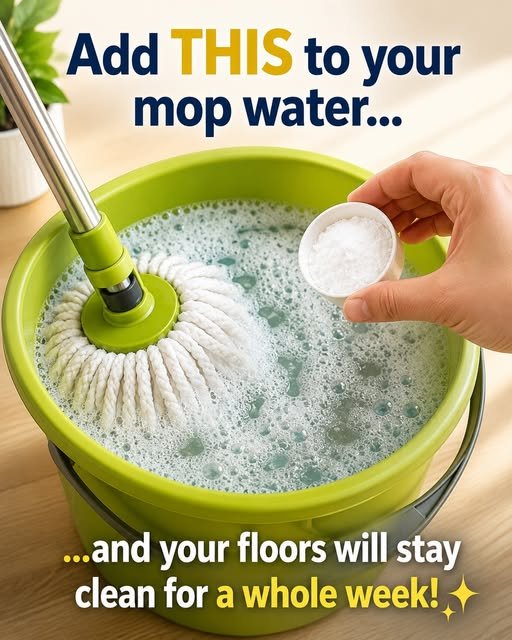
I used to think getting floors truly clean required expensive floor cleaners, strong fragrances, and a lot of scrubbing. Then I tried a much simpler approach: adding a small amount of white vinegar to my mop water.
The difference was surprisingly noticeable.
Vinegar can help cut through light grease, soap residue, and everyday grime, making it a useful option for some hard, washable surfaces. The best part is that you only need a small amount.
But there’s an important catch: vinegar isn’t suitable for every type of flooring, so always check your floor manufacturer’s cleaning recommendations first.
🧹 The Simple Mop-Water Trick
What You’ll Need
- 1 gallon (about 3.8 liters) warm water
- ½ cup white distilled vinegar
- A clean mop or microfiber mop
- Bucket
How to Make It
- Fill your bucket with about 1 gallon of warm water.
- Add ½ cup of white distilled vinegar.
- Stir gently to combine.
- Dip your mop into the solution and wring it out thoroughly.
- Mop the floor in sections, working from the farthest corner toward the exit.
- Allow the floor to air-dry completely.
For floors that don’t tolerate much moisture, use a damp—not soaking wet—mop.
✨ Why This Simple Mixture Works
Vinegar contains acetic acid, which gives it its characteristic acidity. That acidity can help loosen certain mineral deposits and residues left behind by everyday cleaning.
It can be particularly useful for some sealed, washable hard surfaces.
However, more vinegar doesn’t mean cleaner floors. A stronger mixture can leave an odor and isn’t necessarily more effective.
⚠️ Don’t Use Vinegar on Every Floor
This is the part many viral cleaning hacks leave out.
Avoid using vinegar on marble, granite, limestone, travertine, and other natural stone surfaces, because acids can etch or dull the finish.
For hardwood, laminate, luxury vinyl, painted surfaces, and specialty flooring, follow the manufacturer’s cleaning instructions rather than assuming vinegar is safe.
When you’re unsure, test any cleaning solution on a small, inconspicuous area first.
🚫 Never Mix Vinegar With Certain Cleaners
Never combine vinegar with bleach or bleach-containing products. Mixing acids such as vinegar with bleach can release dangerous chlorine gas.
Also avoid mixing cleaning products together unless the product label specifically says the combination is safe.
Simple is usually better.
🧽 A Few Tricks for Cleaner Floors
Sweep or Vacuum First
Mopping over loose dirt and grit can spread it around and may scratch some flooring. Always remove dust, crumbs, and debris before wet cleaning.
Don’t Soak the Floor
Excess water can damage certain flooring materials, especially wood-based products. Wring your mop thoroughly and follow the flooring manufacturer’s instructions.
Change Dirty Water
If your mop water becomes visibly dirty, replace it. Otherwise, you’re essentially redistributing grime across the floor.
Use Microfiber
A clean microfiber mop can pick up dirt effectively while requiring relatively little water.
Don’t Chase a Strong Fragrance
A floor doesn’t need to smell strongly of chemicals to be clean. Focus on removing dirt and residue rather than simply covering odors with fragrance.
🌿 Want a Fresh-Smelling Floor?
If you enjoy scented cleaning products, it’s safer to use a commercial floor cleaner specifically formulated for your flooring type rather than adding essential oils or other ingredients to a homemade mixture.
Some DIY combinations can leave residues, damage finishes, or create slippery surfaces.
The Real Secret
The biggest difference isn’t necessarily the vinegar.
It’s the combination of regular sweeping, using the right amount of water, choosing a cleaner appropriate for your floor, and using a clean mop.
A simple routine can often make floors look noticeably better without relying on excessive amounts of cleaning products.
Final Thoughts
Sometimes the simplest cleaning tricks really can make a difference—but the right trick depends on the surface you’re cleaning.
If your floor is compatible with vinegar, a properly diluted solution can be a handy addition to your cleaning routine. If it isn’t, stick with the cleaner recommended by the flooring manufacturer.
Before adding anything to your mop water, always check what your floor can safely handle.