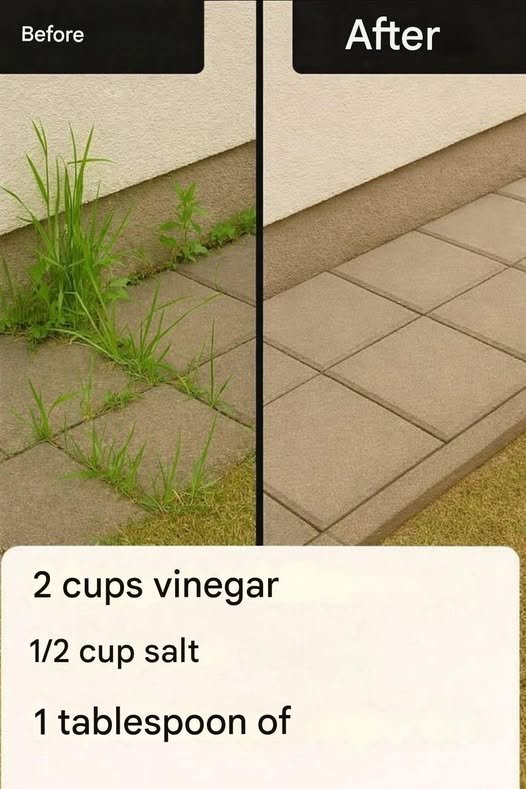
Weeds can appear almost overnight, pushing through cracks in driveways, growing between paving stones, and competing with garden plants for water and nutrients. If you don’t want to rely on commercial weed killers for every small patch, you can make a simple homemade herbicide using ingredients commonly found around the house.
One of the simplest approaches is based on white vinegar, which can damage the leaves of many young, actively growing weeds.
However, there’s an important distinction: homemade vinegar sprays are generally non-selective. That means they can damage desirable plants just as easily as weeds. They also work mainly by burning or drying the foliage rather than permanently preventing weeds from returning.
Simple Homemade Weed-Killer Recipe
Ingredients
- 1 liter (about 4¼ cups) of white vinegar
- 1 teaspoon of mild liquid dish soap
- A clean spray bottle
Directions
- Pour the vinegar into the spray bottle.
- Add the mild dish soap.
- Close the bottle and gently shake to combine.
- Label the bottle clearly so it isn’t mistaken for another household liquid.
- Spray the mixture directly onto the leaves of unwanted weeds.
Try to apply it on a dry, sunny day when rain isn’t expected soon. Thoroughly wet the weed foliage, but avoid spraying nearby flowers, vegetables, grass, shrubs, or other plants you want to keep.
Why Does It Work?
Vinegar contains acetic acid, which can damage plant tissue when it comes into contact with leaves.
The soap is mainly included to help the liquid spread across the leaf surface instead of immediately running off.
This treatment tends to work best on:
- Small weeds
- Young weeds
- Annual weeds
- Weeds growing through cracks
- Weeds between paving stones
Larger, established perennial weeds can be much more difficult to eliminate because their roots may survive even after the leaves have been damaged.
How to Use It More Effectively
Timing makes a big difference.
Spray young weeds early. Small weeds are generally easier to control than mature plants with extensive root systems.
Choose a sunny day. Sunlight and dry conditions can help foliage dry out after treatment.
Apply carefully. Spray the leaves rather than soaking the surrounding soil.
Repeat only when necessary. Some weeds may regrow from their roots, requiring removal or another treatment.
What About Salt?
You may see homemade herbicide recipes that recommend adding large amounts of salt to vinegar.
Although salt can damage plants, it can also accumulate in soil and interfere with the growth of plants you want to keep. It can also move with water into areas where it isn’t wanted.
For that reason, avoid routinely adding salt to garden soil, especially around flower beds, lawns, trees, and vegetable gardens.
If you’re treating weeds in a location where you never intend to grow plants again, such as an isolated crack in hard paving, physical removal is still often the safer long-term option.
Where This Homemade Spray Makes the Most Sense
This type of treatment is most appropriate for weeds growing in places such as:
- Cracks in concrete
- Paving gaps
- Driveways
- Walkways
- Gravel areas
- Other locations away from desirable vegetation
For lawns and garden beds, a non-selective homemade herbicide can easily cause more damage than intended.
Safety Tips
Even simple household ingredients deserve careful handling.
- Keep the spray away from children and pets while applying it.
- Avoid getting the spray in your eyes or on your skin.
- Wear gloves and protective eyewear if there is a risk of splashing.
- Don’t spray on windy days.
- Don’t spray edible crops or plants you want to preserve.
- Clearly label the bottle.
- Never mix vinegar with bleach or other cleaning chemicals.
- Follow local rules regarding pesticide and herbicide use.
The Most Eco-Friendly Option: Pull the Weed Out
For a small number of weeds, manual removal may actually be more effective.
Pulling or digging out the entire plant, including as much of the root as possible, prevents the foliage from simply growing back. A layer of mulch can then help reduce future weed growth in garden beds.
For weeds growing through pavement cracks, removing the weed and filling the gap can also provide longer-lasting control than repeatedly spraying the leaves.
Final Thoughts
A vinegar-based spray can be a convenient homemade option for dealing with small weeds, particularly in cracks and other hard-surface areas. Its effectiveness depends on the type and age of the weed, and it shouldn’t be treated as a guaranteed permanent solution.
Most importantly, use it carefully. Because vinegar-based sprays are non-selective, they can injure desirable plants just as easily as unwanted weeds.
For the best long-term results, combine targeted weed removal with prevention methods such as mulching, maintaining healthy ground cover, and keeping cracks and paving areas free of accumulated soil.
SEO Title
How to Make a Super-Effective Homemade Herbicide for Weeds
Meta Description
Learn how to make a simple homemade herbicide using white vinegar and dish soap, plus safe application tips and natural ways to prevent weeds.