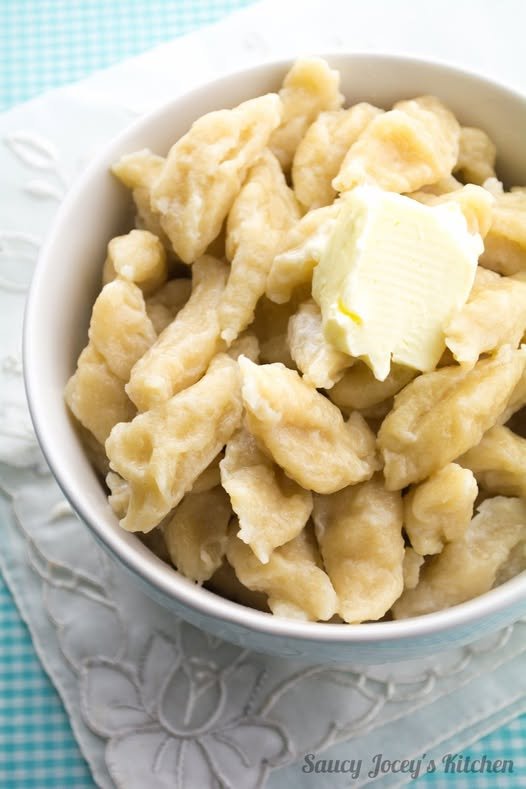
If you are looking for a simple Hungarian comfort food that turns a handful of basic ingredients into something truly satisfying, Galuska is a recipe worth trying. These small, soft Hungarian dumplings are traditionally made from flour, eggs, salt, and water, then dropped directly into simmering water and cooked until tender.
Often compared to German spaetzle, galuska has a wonderfully rustic texture. The dumplings are soft and slightly chewy, making them an excellent accompaniment to hearty Hungarian dishes such as chicken paprikash, beef stew, and mushroom sauces. They can also be tossed with butter and served simply as a comforting side dish.
The beauty of galuska is its simplicity. You do not need a pasta machine or any special equipment. With a spoon, knife, or galuska/spaetzle maker, you can create these delicious little dumplings right in your kitchen.
Ingredients
- 2 cups all-purpose flour
- 2 large eggs
- ½ teaspoon salt
- ¾ cup water, approximately
- 1 tablespoon butter, for serving
- Fresh parsley, chopped, optional
The amount of water can vary slightly depending on the flour and size of the eggs. The finished batter should be soft, thick, and sticky rather than firm like traditional pasta dough.
How to Make Galuska
1. Prepare the Batter
Add the flour and salt to a large mixing bowl.
Make a well in the center and crack in the eggs.
Begin mixing with a wooden spoon or sturdy spatula while gradually adding the water.
Continue mixing until you have a thick, sticky batter.
Do not try to knead it like bread dough. Galuska batter should remain soft enough to drop or press into the cooking water.
2. Bring the Water to a Simmer
Fill a large pot with water and add a generous amount of salt.
Bring the water to a gentle boil.
Once the water is bubbling steadily, reduce the heat slightly if necessary so it does not boil too violently.
3. Shape the Dumplings
There are several traditional ways to make galuska.
Using a Galuska or Spaetzle Maker
Place some of the batter into the hopper of the dumpling maker and press it over the simmering water.
Move the tool back and forth so small pieces of batter fall directly into the water.
Using a Knife and Cutting Board
Spread a portion of the sticky batter thinly over a wet cutting board.
Hold the board over the pot and use a wet knife to cut small pieces of batter directly into the simmering water.
Using a Spoon
For a very simple method, use a small spoon to drop little portions of batter into the water.
Try to keep the dumplings relatively similar in size so they cook evenly.
4. Cook the Galuska
Once the dumplings enter the water, they will initially sink.
Cook them until they rise to the surface and become tender.
Give them another minute or two after they float, then remove one and taste it to check the texture.
Avoid overcooking, as the dumplings can become excessively soft.
5. Drain
Use a slotted spoon or spider strainer to transfer the cooked galuska to a colander.
If you are not serving them immediately, toss them gently with a little butter or oil to prevent them from sticking together.
6. Finish with Butter
Melt the butter in a large skillet over low heat.
Add the cooked dumplings and gently toss until coated.
Sprinkle with fresh chopped parsley if desired.
Serve immediately.
Traditional Ways to Serve Galuska
Galuska is especially delicious when paired with rich sauces and stews.
Chicken Paprikash
One of the most classic pairings is Hungarian chicken paprikash. The tender dumplings soak up the paprika-rich sauce beautifully.
Beef Stew
Serve galuska alongside a hearty beef stew for a filling and comforting meal.
Mushroom Sauce
A creamy mushroom sauce turns simple dumplings into a satisfying vegetarian meal.
Buttered Galuska
For a simple side dish, toss freshly cooked dumplings with butter, salt, and a little parsley.
Cottage Cheese Variation
Some Hungarian-style dishes combine dumplings with cottage cheese and sour cream for a creamy, comforting preparation.
Tips for Perfect Hungarian Dumplings
Keep the batter sticky: A firm dough can produce dense dumplings. The batter should be thick but soft.
Do not add all the water at once: Start with less and add more gradually until the correct consistency is reached.
Salt the cooking water: Since the dumplings themselves contain relatively little seasoning, properly salted water helps develop their flavor.
Avoid overcrowding: Cook in batches if your pot is small. Too many dumplings at once can cause them to stick together.
Taste one before removing the batch: Cooking time varies depending on dumpling size.
Use plenty of water: A large pot gives the dumplings enough room to cook without sticking excessively.
How to Make Galuska Ahead of Time
Galuska is best served fresh, but you can prepare it ahead of time.
Cook and drain the dumplings, then toss them gently with a little butter or oil.
Allow them to cool and store them in an airtight container in the refrigerator for up to 3 days.
When ready to serve, warm them gently in a skillet with butter or add them directly to a hot stew or sauce.
Can You Freeze Galuska?
Yes. Cooked galuska can be frozen.
Spread the cooled dumplings on a tray in a single layer and freeze until firm. Transfer them to a freezer-safe container or bag.
They can be stored for approximately 2–3 months.
To reheat, place the frozen dumplings directly into simmering water for a short time or warm them gently in a skillet with butter.
Common Mistakes to Avoid
Making the Batter Too Thick
If there is not enough liquid, the dumplings may become heavy and dense.
Making the Batter Too Thin
An overly loose batter may break apart in the cooking water.
Making Very Large Dumplings
Large dumplings take longer to cook and can become uneven in texture. Small, bite-sized pieces are easier to manage.
Boiling Too Aggressively
A violent boil can cause delicate dumplings to break apart. A steady simmer or gentle boil is preferable.
Leaving Them in the Water Too Long
Once tender, remove the dumplings promptly to prevent them from becoming overly soft.
Galuska vs. Spaetzle
Galuska and spaetzle are closely related dumpling-style dishes and are made using similar techniques. The exact ingredients, consistency, shape, and preparation can vary between Hungarian, German, Austrian, and Central European traditions.
Hungarian galuska is particularly well known as an accompaniment to dishes such as chicken paprikash.
Frequently Asked Questions
What does galuska mean?
Galuska refers to small Hungarian dumplings, generally made from a simple egg-and-flour batter and cooked in boiling or simmering water.
Are Hungarian dumplings the same as spaetzle?
They are very similar. Both are small dumplings made from a soft batter and cooked in water, although regional recipes and preparation methods differ.
Why are my galuska hard?
The batter may have been too thick, the dumplings may have been too large, or they may have been overcooked. Aim for a soft batter and small dumplings.
Can I make galuska without a special tool?
Yes. A spoon, knife, cutting board, or other simple kitchen method can be used to create the dumplings.
Can I add herbs to the batter?
Yes. Fresh parsley, chives, or other mild herbs can be added for extra flavor, although plain galuska is the traditional choice for many dishes.
Serving Suggestions
For a complete Hungarian-inspired dinner, serve warm galuska with:
- Chicken paprikash
- Beef stew
- Mushroom sauce
- Pork or poultry stews
- Paprika-based sauces
- Braised vegetables
- Sour cream-based sauces
- Butter and fresh herbs
The dumplings are particularly good at absorbing rich sauces, so they work best with dishes that have plenty of flavorful gravy.
Final Thoughts
Galuska – Hungarian Dumplings is a wonderful example of how simple ingredients can create an incredibly comforting dish. Soft, tender, and wonderfully rustic, these dumplings require very little equipment and can be prepared in a short amount of time.
Whether you serve them beside chicken paprikash, spoon them into a hearty stew, or simply toss them with butter and herbs, homemade galuska brings a traditional Hungarian touch to the dinner table.
Once you learn the right batter consistency, this recipe becomes an easy staple that you can make whenever you want a comforting homemade side dish.
Recipe at a Glance
Prep Time: 15 minutes
Cook Time: 10–15 minutes
Total Time: About 30 minutes
Servings: 4–6
Difficulty: Easy
Cuisine: Hungarian
SEO Title
Galuska – Traditional Hungarian Dumplings Recipe
Meta Description
Learn how to make soft and tender Galuska, traditional Hungarian dumplings made with flour, eggs, salt, and water. Perfect with chicken paprikash, stews, and rich sauces.