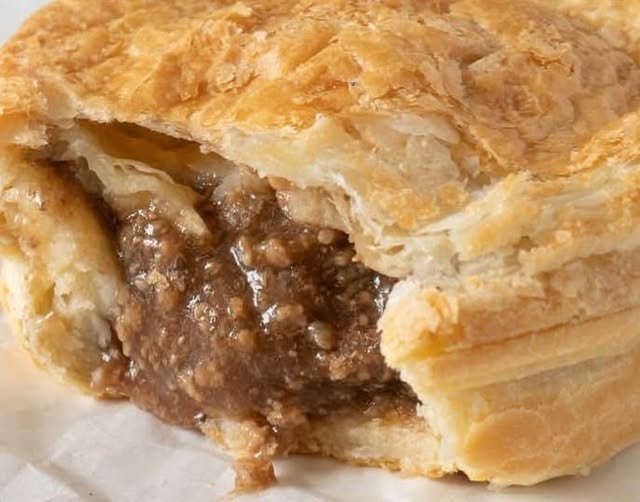
This homemade Flaky Puff Pastry is buttery, crisp, and beautifully layered. The secret is keeping the butter cold and folding the dough several times to create those delicate, airy layers.
Ingredients
- 2 cups (250 g) all-purpose flour
- 1 teaspoon salt
- ¾ cup (180 ml) cold water
- 1 tablespoon lemon juice
- 1 cup (225 g) cold unsalted butter
- Extra flour, for rolling
Instructions
1. Make the Dough
Combine the flour and salt in a large bowl.
Gradually add the cold water and lemon juice, mixing until a rough dough forms.
Turn the dough onto a lightly floured surface and knead gently for about 1–2 minutes. Don’t overwork it.
Shape into a rectangle, wrap, and refrigerate for 30 minutes.
2. Prepare the Butter
Place the cold butter between two sheets of parchment paper.
Using a rolling pin, gently pound and roll the butter into a flat rectangle about ½ inch thick.
The butter should be cold but flexible enough to bend without breaking.
3. Enclose the Butter
Roll the chilled dough into a rectangle roughly twice the size of the butter.
Place the butter in the center and fold the dough over it, completely enclosing the butter. Seal the edges.
4. First Fold
Roll the dough into a long rectangle.
Fold the dough into thirds, like folding a letter.
Wrap and refrigerate for 30 minutes.
5. Repeat the Folds
Repeat the rolling and folding process 3–4 more times, chilling the dough for about 30 minutes between folds.
Keep the dough and butter cold throughout the process. If the butter starts becoming soft or leaking out, refrigerate the dough before continuing.
6. Chill Before Baking
After the final fold, wrap the dough well and refrigerate for at least 1 hour, preferably overnight.
7. Use the Puff Pastry
Roll the pastry to your desired thickness and use it for pies, turnovers, pastries, cheese twists, tarts, or savory appetizers.
For a golden finish, brush the pastry lightly with beaten egg before baking.
Bake according to your recipe, generally around 400°F (200°C) until deeply puffed and golden.
Tips for Extra-Flaky Pastry
- Always use cold butter and cold water.
- Don’t press or flatten the edges unnecessarily when cutting the pastry.
- Chill the pastry whenever the butter begins to soften.
- Use a sharp knife or pastry cutter for clean edges.
- Avoid twisting the cutter, as this can seal the layers and prevent the pastry from rising properly.
Storage
Wrap unused puff pastry tightly and refrigerate for up to 3 days, or freeze for up to 2 months.
Thaw frozen pastry in the refrigerator before rolling and baking.
Final Thoughts
Once baked, this homemade puff pastry becomes wonderfully crisp and golden on the outside with dozens of delicate buttery layers inside. It’s the perfect base for both sweet and savory pastries.