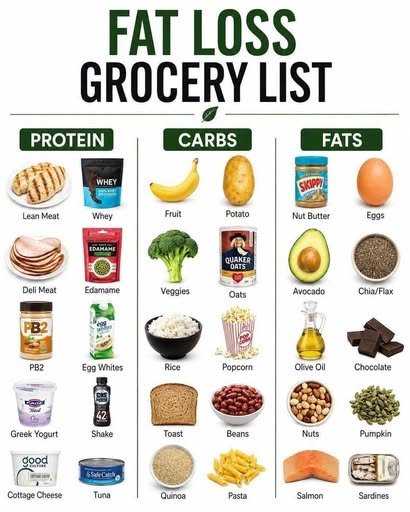
Losing body fat does not require a complicated diet or a kitchen full of expensive “diet foods.” In many cases, the most useful first step is simply changing what you bring home from the grocery store.
A well-planned grocery list can make it easier to build meals around protein, vegetables, fruit, high-fiber carbohydrates, and healthy fats while reducing the amount of highly processed foods that are easy to overeat.
There is no single food that melts belly fat or causes rapid fat loss. Body-fat reduction generally comes from maintaining a calorie deficit over time while getting enough protein, fiber, nutrients, sleep, and physical activity.
The good news is that healthy grocery shopping can be simple.
Why Your Grocery List Matters
Your food environment can influence your everyday choices. If your refrigerator and pantry are stocked with convenient, filling foods, preparing balanced meals becomes much easier.
A useful fat-loss grocery list should include foods that help you:
- Stay satisfied between meals
- Get enough protein
- Increase fiber intake
- Eat more vegetables and fruit
- Choose minimally processed foods more often
- Prepare meals at home
- Limit foods high in added sugar and saturated fat
- Control portions without feeling excessively restricted
You don’t have to eliminate your favorite foods. Instead, build most of your meals around nutritious foods and enjoy treats in reasonable portions.
1. Protein-Rich Foods
Protein is one of the most useful nutrients to prioritize when you’re trying to lose body fat because it can help make meals more filling and helps maintain muscle while losing weight.
Add to your grocery cart:
- Eggs
- Chicken breast
- Chicken thighs, with skin removed if desired
- Turkey
- Lean beef
- Fish
- Tuna
- Salmon
- Shrimp
- Greek yogurt
- Cottage cheese
- Plain yogurt
- Milk
- Tofu
- Lentils
- Chickpeas
- Kidney beans
- Black beans
Easy meal ideas
Try eggs with vegetables for breakfast, grilled chicken with a large salad for lunch, or fish with roasted vegetables and potatoes for dinner.
If you eat meat, you don’t need to make every meal extremely low-fat. Choosing leaner cuts more often can make calorie control easier.
2. Vegetables
Vegetables are excellent grocery-list staples because many provide plenty of fiber and water relative to their calorie content.
Buy a mixture of fresh and frozen vegetables so you always have something available.
Good choices include:
- Spinach
- Lettuce
- Cucumber
- Tomatoes
- Broccoli
- Cauliflower
- Carrots
- Bell peppers
- Cabbage
- Zucchini
- Green beans
- Mushrooms
- Eggplant
- Onions
- Okra
- Peas
- Frozen mixed vegetables
Don’t worry if you cannot buy organic produce. Conventional fruits and vegetables can still be part of a healthy diet.
A Simple Vegetable Rule
Instead of trying to find a magical vegetable for fat loss, aim to make vegetables a regular part of your main meals.
For example:
Chicken + vegetables + rice
or
Eggs + spinach + whole-grain toast
or
Fish + roasted vegetables + potatoes
3. Fruits
Fruit doesn’t need to be avoided during fat loss.
Whole fruit provides fiber, water, vitamins, minerals, and naturally occurring sugars. It can also satisfy a desire for something sweet.
Put these on your list:
- Apples
- Oranges
- Bananas
- Berries
- Strawberries
- Blueberries
- Grapes
- Pears
- Peaches
- Kiwi
- Guava
- Melons
- Pineapple
- Mango
Smart snack combinations
Pairing fruit with protein or healthy fat can make a snack more satisfying.
Try:
Apple + Greek yogurt
Banana + a small portion of peanut butter
Berries + plain yogurt
Orange + a handful of nuts
You don’t need to fear bananas, mangoes, or other naturally sweet fruits. Portion size and your overall diet matter more than labeling individual fruits as “fattening.”
4. High-Fiber Carbohydrates
Carbohydrates are not automatically responsible for weight gain. The type, portion, preparation, and total amount you eat all matter.
Choose mostly minimally processed carbohydrate sources.
Grocery list:
- Oats
- Brown rice
- Basmati rice
- Whole-grain bread
- Whole-wheat tortillas
- Whole-wheat pasta
- Potatoes
- Sweet potatoes
- Barley
- Quinoa
- Bulgur
- Corn
- Beans
- Lentils
Potatoes, for example, can fit into a fat-loss diet very easily when baked, boiled, or air-fried instead of being repeatedly deep-fried.
5. Healthy Fats
Healthy fats are nutritious, but they are also calorie-dense. That means portion size is important.
Buy:
- Avocados
- Almonds
- Walnuts
- Pistachios
- Peanuts
- Chia seeds
- Flaxseeds
- Pumpkin seeds
- Natural peanut butter
- Olive oil
Instead of pouring oil freely into the pan, measure it with a teaspoon or tablespoon when you’re trying to control calories.
The same applies to nuts and nut butters. They’re nutritious, but eating several handfuls can add a substantial number of calories.
6. Healthy Breakfast Staples
A fat-loss breakfast doesn’t have to be tiny.
Stock your kitchen with ingredients that allow you to make filling meals.
Try keeping:
- Eggs
- Oats
- Plain Greek yogurt
- Berries
- Bananas
- Apples
- Whole-grain bread
- Cottage cheese
- Milk
- Chia seeds
- Peanut butter
Simple breakfast combinations
Oatmeal + berries + Greek yogurt
Eggs + whole-grain toast + vegetables
Greek yogurt + fruit + chia seeds
Oatmeal + banana + a small amount of peanut butter
7. Healthy Snack Options
Snacking isn’t automatically bad for weight loss. The problem is often eating highly calorie-dense snacks without realizing how much has been consumed.
Keep convenient options available.
Better everyday choices include:
- Fresh fruit
- Greek yogurt
- Cottage cheese
- Boiled eggs
- Carrot sticks
- Cucumber
- Air-popped popcorn
- A measured portion of nuts
- Roasted chickpeas
- Hummus with vegetables
Pre-portion nuts, seeds, and other calorie-dense snacks instead of eating directly from a large package.
8. Drinks to Put in Your Cart
Drinks can contribute a surprising amount of calories, especially when they’re sweetened.
Good everyday choices:
- Water
- Sparkling water
- Unsweetened tea
- Green tea
- Black coffee
- Coffee with a modest amount of milk
- Herbal tea
You don’t need a “detox drink” to lose body fat.
Lemon water, cucumber water, ginger water, and similar drinks can be enjoyable ways to drink more fluids, but they don’t directly melt fat.
9. Pantry Staples
A few basic ingredients can make healthy cooking much easier.
Stock your pantry with:
- Canned tomatoes
- Tomato paste
- Low-sodium canned beans
- Lentils
- Oats
- Brown or basmati rice
- Whole-grain pasta
- Spices
- Garlic
- Vinegar
- Mustard
- Low-sodium soy sauce
- Olive oil
- Herbs
- Unsweetened peanut butter
Spices are particularly useful because they can make simple foods taste satisfying without requiring heavy sauces.
10. Foods to Buy Less Often
You don’t necessarily need to completely ban these foods.
However, if you’re struggling to control calories, keeping them less frequently in the house may help.
Consider limiting:
- Sugary soft drinks
- Sweetened juices
- Candy
- Cookies
- Cakes
- Doughnuts
- Chips
- Deep-fried foods
- Large portions of fast food
- Highly processed snack foods
- Sugary breakfast cereals
- Creamy sauces
- Large amounts of mayonnaise
- Sugar-heavy coffee drinks
The goal isn’t perfection.
A person can lose body fat while occasionally enjoying pizza, dessert, or another favorite food.
A Simple 7-Day Grocery List
If you want a practical starting point, here’s a basic shopping list for one person.
Protein
- 12 eggs
- 2–3 lb chicken
- 1–2 portions fish
- 1 can tuna
- 1 large container Greek yogurt
- 1 container cottage cheese
- 1 bag lentils
- 2 cans beans
Vegetables
- 1 bag spinach
- 1 head lettuce
- 4–5 tomatoes
- 2 cucumbers
- 2 bell peppers
- 1 broccoli
- 1 cauliflower
- 4 carrots
- 1 zucchini
- 1 cabbage
- 2 onions
Fruit
- 4–5 apples
- 5 bananas
- 4 oranges
- 1 container berries
- 1 seasonal fruit such as guava, melon, peaches, or pineapple
Carbohydrates
- Oats
- Whole-grain bread
- Rice
- Potatoes
- Sweet potatoes
- Whole-wheat pasta
Healthy fats
- Almonds or walnuts
- Chia seeds
- Natural peanut butter
- Olive oil
- Avocados
Drinks
- Water
- Tea
- Coffee
- Herbal tea
How to Build a Fat-Loss Plate
You don’t have to count every calorie to start eating more intentionally.
A simple plate structure can be:
½ plate: vegetables and salad
¼ plate: protein
¼ plate: carbohydrates
Then add a modest amount of healthy fat.
For example:
Grilled chicken + roasted vegetables + potato + a small amount of olive oil
or
Salmon + salad + rice + avocado
This approach is flexible and can be adjusted according to your appetite, activity level, cultural foods, and nutritional needs.
What About Rice and Roti?
You don’t have to eliminate either one.
Rice and roti can fit into a fat-loss diet.
The bigger issue is often the total portion and what accompanies them.
Instead of a very large serving of rice with a calorie-dense curry, consider a moderate rice portion with plenty of vegetables and a protein source.
Similarly, roti can be paired with chicken, fish, lentils, beans, vegetables, and yogurt.
The goal is to create a balanced meal rather than declaring individual foods “bad.”
The Most Important Grocery-Shopping Tip
Don’t shop when you’re extremely hungry if you can avoid it.
Before going to the store, make a short list based on the meals you actually plan to eat.
For example:
Breakfast: eggs + toast + fruit
Lunch: chicken + rice + vegetables
Snack: Greek yogurt + berries
Dinner: fish + potatoes + salad
Once you know your meals, your grocery list becomes much easier.
Final Thoughts
A fat-loss grocery list doesn’t need to contain expensive supplements, detox powders, special teas, or foods marketed as “fat burners.”
Focus on ordinary foods that help you create balanced, satisfying meals: protein, vegetables, fruit, whole grains, beans, potatoes, healthy fats, and low-calorie drinks.
The most important factor is not finding one magical food. It’s creating an eating pattern that you can realistically maintain over time.
If your goal is losing body fat, think consistency rather than perfection. A nutritious grocery cart is a simple first step toward making that consistency easier.
SEO Title
Fat Loss Grocery List: 50+ Healthy Foods for Weight Loss
Meta Description
Build a simple fat loss grocery list with protein-rich foods, vegetables, fruits, whole grains, healthy fats, snacks, and practical shopping tips for sustainable weight loss.
Focus Keyphrase
Fat Loss Grocery List
Suggested Slug
fat-loss-grocery-list