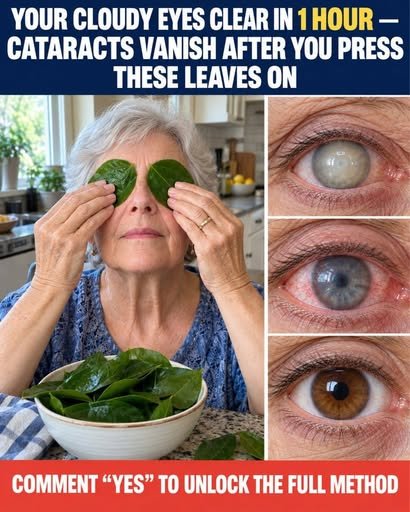
You may have seen claims online suggesting that placing certain leaves over cloudy eyes can make cataracts disappear in just one hour.
It sounds simple and appealing, especially for anyone worried about worsening vision. But there is an important problem with this claim: there is no reliable medical evidence that pressing leaves onto the eyes can remove or reverse a cataract in an hour.
In fact, putting leaves, plant juices, herbal mixtures, or other unsterile substances directly on or around the eye can potentially cause irritation or infection.
So where does this claim come from, and what actually happens when someone develops a cataract?
Let’s take a closer look.
What Is a Cataract?
A cataract occurs when the normally clear lens inside the eye becomes cloudy.
The lens helps focus light onto the retina so that you can see clearly. As proteins within the lens change over time, cloudy areas can develop and gradually interfere with vision.
Cataracts are particularly common with aging, although they can also develop because of eye injuries, certain medical conditions, medications, or other eye problems.
As a cataract progresses, you may notice:
- Blurry or cloudy vision
- Faded-looking colors
- Increased sensitivity to bright light
- Glare around lights
- Difficulty seeing at night
- Difficulty reading
- Frequent changes in your glasses prescription
- Occasionally double vision
Symptoms usually develop gradually rather than appearing suddenly.
Can Leaves Make a Cataract Disappear?
No.
A cataract is a physical clouding of the eye’s natural lens. Simply placing a leaf over the eyelid cannot remove that cloudy lens.
There is currently no established home remedy in which leaves, herbs, vegetables, or plant extracts can dissolve a cataract within minutes or hours.
The National Eye Institute states that surgery is the only way to get rid of a cataract.
That doesn’t mean every cataract requires immediate surgery. Early cataracts may not interfere enough with daily activities to require treatment right away.
But the idea that a leaf can make a cataract vanish in one hour is not supported by evidence.
Why Might Someone Think Their Vision Improved After a Home Remedy?
This is an important distinction.
Cloudy or blurry vision does not always mean cataracts.
Vision can temporarily seem different because of:
- Dry eyes
- Excessive tearing
- Changes in lighting
- Eye fatigue
- Temporary irritation
- Changes in glasses or contact lenses
- Other eye conditions
Someone may therefore experience a temporary change in how clearly they see and incorrectly attribute it to a particular leaf or home treatment.
That does not mean the underlying cataract has disappeared.
Don’t Put Plant Leaves or Juices Directly on Your Eyes
The eye is extremely delicate.
Fresh leaves and homemade plant preparations are not sterile. They can carry dirt, microorganisms, pesticides, or other substances that may irritate the eye.
Plant juices can also cause irritation or allergic reactions.
For that reason, avoid putting homemade herbal preparations, crushed leaves, vegetable juices, oils, or other substances directly into the eye unless they have been specifically prescribed or recommended by an eye-care professional.
What Actually Helps Early Cataracts?
If a cataract is mild, you may not need surgery immediately.
Some practical measures can make vision easier while you are being monitored.
Your eye doctor may recommend:
- Brighter lighting when reading
- Anti-glare sunglasses
- Magnifying lenses
- An updated glasses prescription
These measures can help you manage the visual effects of an early cataract, but they do not remove the cataract itself.
When Is Cataract Surgery Considered?
Cataract surgery is generally considered when the cataract begins interfering with everyday activities.
For example, you may find it increasingly difficult to:
- Read
- Drive
- Watch television
- Work
- Recognize faces
- Move around safely
- Perform normal household activities
During cataract surgery, the surgeon removes the cloudy natural lens and replaces it with an artificial intraocular lens.
The National Eye Institute reports that about 9 out of 10 people see better after cataract surgery.
The decision about when to have surgery should be made with an eye-care professional based on your vision and how much the cataract affects your daily life.
Can Cataracts Be Prevented?
Not every cataract can be prevented, particularly those associated with aging.
However, several habits may help protect your eyes and overall eye health.
Protect Your Eyes From UV Exposure
Wear sunglasses that provide appropriate UV protection when spending significant time outdoors.
A hat with a brim can provide additional protection.
Don’t Smoke
Smoking is associated with an increased risk of cataracts, so quitting can benefit overall health as well as eye health.
Protect Your Eyes From Injury
Use appropriate protective eyewear during activities where your eyes could be injured.
Eat a Balanced Diet
A varied diet containing fruits, vegetables, leafy greens, nuts, and whole grains provides nutrients that support general eye health.
However, healthy foods should not be presented as a treatment capable of reversing an established cataract.
Cloudy Vision Doesn’t Always Mean Cataracts
This is especially important.
If your vision becomes cloudy or blurry, don’t diagnose yourself based on an online article.
Other eye conditions can cause similar symptoms.
An eye-care professional can examine the eye and determine whether a cataract is present and whether something else may be contributing to your vision changes.
A dilated eye examination is commonly used to check for cataracts and other eye conditions.
When Cloudy Vision Needs Urgent Attention
Cataracts generally develop gradually.
If your vision suddenly becomes blurry or you suddenly develop:
- Flashes of light
- A sudden increase in floaters
- A dark curtain or shadow across your vision
- Sudden loss of vision
- Severe eye pain or significant redness
seek urgent medical attention.
Sudden visual changes can sometimes indicate a different eye emergency rather than an ordinary cataract.
The Bottom Line
The idea of pressing leaves onto cloudy eyes and making cataracts disappear in one hour may sound like an exciting natural remedy, but it isn’t supported by medical evidence.
A cataract is clouding of the eye’s natural lens, and surgery is currently the established treatment that actually removes it.
If you have cloudy or declining vision, the safest approach is to have your eyes examined rather than experimenting with leaves or homemade substances.
Healthy nutrition, UV protection, avoiding smoking, and regular eye examinations can all support eye health—but they should not be confused with a cure for cataracts.
Your eyesight is too valuable to risk on an unproven remedy.
SEO Title
Can Leaves Remove Cataracts? The Truth About Cloudy Eyes
Meta Description
Can pressing leaves on cloudy eyes make cataracts disappear in one hour? Learn what cataracts are, why this home remedy isn’t proven, and what actually treats cataracts.
Focus Keyphrase
natural cataract remedy
Suggested Slug
natural-cataract-remedy-cloudy-eyes