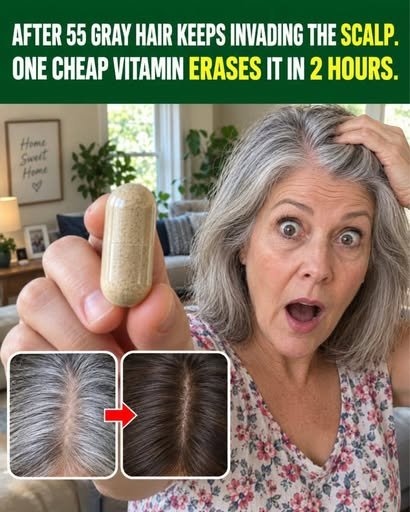
Gray hair is a natural part of aging, and for many people it becomes more noticeable after the age of 50. So when a headline promises that one inexpensive vitamin can erase gray hair from the scalp in just two hours, it is understandably tempting to believe it.
But hair biology doesn’t work that quickly.
No vitamin has been proven to reliably turn established gray hair back to its original color within two hours. However, certain nutritional deficiencies can affect hair pigmentation, and correcting a genuine deficiency may sometimes help with hair changes.
That distinction is important—especially for adults over 55 who may be experiencing changes in hair color, texture, thickness, or growth.
Why Does Hair Turn Gray?
Hair gets its natural color from a pigment called melanin, which is produced by specialized cells associated with the hair follicle.
As we age, these pigment-producing cells gradually become less active. As less melanin reaches the growing hair shaft, new hairs appear gray, silver, or white.
Genetics and age are major factors, but nutritional deficiencies and certain medical conditions can also contribute to premature or increased graying in some people.
Could a Vitamin Deficiency Be Involved?
One nutrient that has received attention in research on premature graying is vitamin B12.
Low vitamin B12 levels can cause several health problems, and some studies have reported an association between B12 deficiency and premature graying.
Other nutritional factors have also been investigated, including:
- Folate
- Iron
- Vitamin D
- Copper
- Zinc
However, this does not mean that taking these nutrients will automatically reverse normal age-related gray hair.
If someone has a deficiency, treating it is important for overall health and may help correct certain deficiency-related problems. But established gray hair caused by normal aging should not be expected to disappear overnight.
Why the “Two-Hour” Claim Doesn’t Add Up
Hair grows from follicles beneath the scalp. The visible portion of the hair shaft is made of keratinized cells and cannot suddenly manufacture new pigment because you consumed a vitamin.
Even if a nutritional deficiency is corrected, biological changes generally take time.
That’s why claims such as:
“Take this vitamin and gray hair disappears in two hours”
should be viewed skeptically.
A supplement may be useful when a deficiency exists, but it isn’t an instant hair-color treatment.
What About Vitamin B12?
Vitamin B12 is essential for normal red blood cell formation and nervous-system function.
Good food sources include:
- Fish
- Meat
- Eggs
- Milk
- Yogurt
- Cheese
- Fortified breakfast cereals
- Fortified plant-based foods
People who have low B12 levels may require dietary changes or supplementation depending on the cause and severity of the deficiency.
If you suspect a deficiency, a healthcare professional can recommend appropriate testing rather than taking large doses blindly.
Can Gray Hair Ever Become Dark Again?
Sometimes hair color changes associated with an underlying condition or nutritional deficiency may improve after the underlying problem is addressed.
But when gray hair is primarily the result of normal aging and genetics, there is currently no established vitamin treatment that reliably restores the original color.
This is especially important after 55, when age-related changes in pigmentation are common.
What Should You Eat for Healthy Hair?
Instead of focusing on one “miracle vitamin,” aim for a varied diet containing the nutrients hair follicles need.
Protein
Hair is primarily made from a protein called keratin.
Good sources include:
- Eggs
- Fish
- Chicken
- Beans
- Lentils
- Yogurt
- Milk
- Nuts and seeds
Vitamin B12
Found naturally in many animal foods and added to certain fortified foods.
Iron
Sources include:
- Lean meat
- Lentils
- Beans
- Spinach
- Fortified cereals
Folate
Found in:
- Leafy greens
- Beans
- Avocado
- Citrus fruits
- Fortified grains
Zinc
Sources include:
- Meat
- Seafood
- Dairy
- Pumpkin seeds
- Beans
- Nuts
Vitamin D
Vitamin D is important for many body functions. Food sources include fatty fish, egg yolks, and fortified foods, while sunlight contributes to vitamin D production.
Don’t Take High-Dose Supplements Without a Reason
More isn’t always better.
Taking large amounts of vitamins and minerals without knowing whether you need them can cause side effects or interfere with other nutrients and medications.
For example, excessive intake of certain minerals can itself create health problems.
If you are concerned about gray hair accompanied by hair loss, fatigue, weakness, weight changes, or other symptoms, it’s more useful to discuss the symptoms with a healthcare professional than to start a collection of supplements.
When Gray Hair May Deserve More Attention
Normal graying is usually not something to worry about.
However, speak with a healthcare professional if you notice:
- Very rapid or unusual changes in hair color
- Significant hair loss
- Bald patches
- Scalp inflammation
- Severe fatigue
- Unexplained weight changes
- Changes in skin pigmentation
- Other new or persistent symptoms
These signs may have causes unrelated to ordinary aging.
What Can You Do About Gray Hair?
If your gray hair is simply a normal part of aging, there are several cosmetic options.
You can:
- Embrace your natural silver or gray hair
- Use temporary color products
- Use permanent hair dye
- Try highlights or lowlights
- Choose hairstyles that complement silver hair
- Focus on scalp and hair health
Good nutrition can support healthy hair growth even when it doesn’t restore its original color.
The Bottom Line
The idea of a cheap vitamin erasing gray hair in two hours sounds exciting, but there is no reliable evidence that any vitamin can accomplish that.
Certain nutritional deficiencies, particularly vitamin B12 deficiency, have been associated with premature graying, and correcting a genuine deficiency is important for overall health. But normal age-related gray hair is largely driven by genetics and changes in pigment production within the hair follicles.
After 55, the most useful approach is to focus on adequate nutrition, overall health, and realistic expectations rather than searching for an instant gray-hair cure.
Your gray hair may not be a sign that something is wrong—it may simply be a visible reminder of the years you’ve lived.
SEO Title: Can Vitamins Reverse Gray Hair After 55? What Really Helps
Meta Description: Can a vitamin reverse gray hair after 55? Learn how aging, genetics, vitamin B12 deficiency, nutrition, and hair pigment affect gray hair—and what you can realistically do.