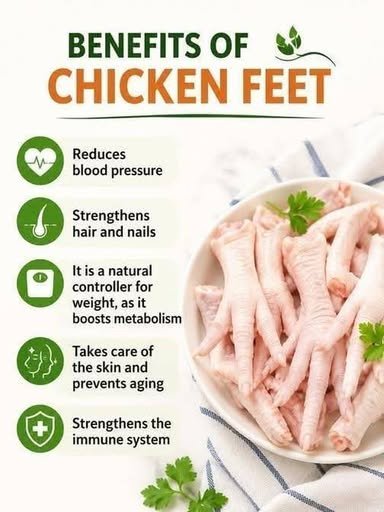
Chicken feet may not be the first food that comes to mind when you think about nutritious meals, but they have been enjoyed in many cuisines for generations. They are commonly braised, stewed, steamed, fried, or slowly cooked into soups and broths.
One reason chicken feet have attracted attention is their naturally high content of collagen and connective-tissue proteins. When cooked slowly, the skin, tendons, and connective tissues soften and release gelatin, giving the resulting broth its characteristic thick, silky texture.
But does eating chicken feet really improve your joints, skin, or bones?
The answer is more nuanced than many social-media claims suggest. Chicken feet can be part of a nutritious diet, particularly when prepared as a protein-containing food, but they are not a miracle treatment for arthritis, aging skin, osteoporosis, or other diseases.
Here are some potential nutritional benefits worth knowing about.
1. They Provide Collagen and Gelatin
Chicken feet contain substantial amounts of collagen, a structural protein found throughout the body’s connective tissues.
During prolonged cooking, some of this collagen breaks down into gelatin. This is one reason chicken-foot broth can become naturally thick after refrigeration.
Collagen is an important component of:
- Skin
- Tendons
- Ligaments
- Cartilage
- Bones
However, eating collagen does not mean that the collagen travels directly to your knees or face. During digestion, proteins are broken down into amino acids and smaller peptides before being absorbed.
2. They Provide Protein
Chicken feet contain protein, although their nutritional composition differs from that of chicken breast or other lean meat.
Protein is important for maintaining muscle and supporting tissues throughout the body. Your body also needs adequate protein to produce enzymes, hormones, antibodies, and structural proteins.
If you eat chicken feet as part of a meal, combining them with vegetables, legumes, grains, or another nutritious protein source can make the meal more balanced.
3. They May Contribute to Skin Health
Collagen plays an important structural role in the skin, which is why collagen-rich foods and supplements are frequently discussed in relation to skin aging.
Some studies of oral collagen peptides have reported improvements in certain measures of skin hydration or elasticity. However, those studies generally involve specific collagen supplements rather than chicken feet themselves.
Therefore, it would be inaccurate to say that eating chicken feet will remove wrinkles or make your skin look younger.
A better way to describe the potential benefit is that chicken feet provide collagen-containing connective tissue, while overall skin health depends on adequate nutrition, hydration, sun protection, sleep, and other factors.
4. They Contain Connective-Tissue Components
Chicken feet contain tendons, ligaments, skin, and other connective tissues.
These tissues naturally contain collagen and other structural components. This has led to interest in chicken feet as a traditional source of nutrients associated with connective-tissue health.
However, there is an important distinction between providing nutrients used by the body and treating a joint disease.
There is currently no good evidence that eating chicken feet can rebuild damaged human cartilage or reverse osteoarthritis.
5. They Can Be Used to Make Nutrient-Rich Broth
One of the most common ways to prepare chicken feet is by slowly simmering them in water with vegetables and herbs.
The resulting broth can contain gelatin and protein-derived compounds, along with nutrients contributed by other ingredients.
A homemade broth can also be an easy way to create a satisfying, warm meal or cooking base.
The nutritional value of the broth depends heavily on how it is prepared. Adding vegetables, herbs, beans, or other nutritious ingredients can make the finished dish more substantial.
6. They Can Be a Source of Minerals
Chicken feet contain minerals, although the exact amounts depend on the preparation and portion.
Calcium and phosphorus are important for maintaining bones and teeth, while other minerals play roles in muscle function and normal cellular processes.
However, chicken feet should not be considered a replacement for major dietary sources of calcium or other essential minerals.
If you’re specifically trying to improve bone health, a balanced diet containing adequate calcium, vitamin D, protein, and other nutrients is much more important.
7. They Can Be a Satisfying Traditional Food
Foods that contain protein and connective tissue can be satisfying, particularly when incorporated into a balanced meal.
Slow-cooked chicken feet can also be paired with vegetables, beans, rice, or whole grains to create a more complete dish.
The way the food is prepared matters. Deep-fried chicken feet can contain considerably more fat and calories than a simple steamed or simmered preparation.
8. They Can Add Flavor and Texture to Soups
Chicken feet contain collagen-rich connective tissue that breaks down during slow cooking.
This can naturally thicken soups and broths and give them a rich mouthfeel without requiring cream or large amounts of added fat.
For home cooks, chicken feet can therefore serve a practical culinary purpose as well as being a traditional food.
What About Joint Pain?
This is probably the biggest claim surrounding chicken feet.
Because chicken feet contain collagen, some people assume that eating them will automatically repair painful or damaged joints.
That conclusion is too strong.
Collagen is certainly an important component of cartilage and connective tissue, but consuming a collagen-containing food does not mean that damaged cartilage will simply be replaced.
People with persistent knee, hip, hand, or other joint pain should consider the underlying cause. Osteoarthritis, rheumatoid arthritis, gout, injuries, bursitis, and other conditions can require very different approaches.
Chicken feet can be enjoyed as food, but they should not replace appropriate medical care.
Are Chicken Feet Good for Bones?
They can contribute protein and some minerals, but bone health requires much more than one food.
Important factors include:
- Adequate calcium
- Vitamin D
- Protein
- Regular weight-bearing activity
- Muscle-strengthening exercise
- Healthy body weight
- Avoiding smoking
- Limiting excessive alcohol
- Appropriate treatment of medical conditions affecting bone health
If you’re concerned about osteoporosis or bone loss, a healthcare professional can assess your risk and determine whether testing or treatment is appropriate.
How to Prepare Chicken Feet More Healthfully
If you enjoy chicken feet, preparation can make a significant difference.
A Simple Slow-Cooked Method
- Clean the chicken feet thoroughly.
- Remove the outer yellow skin if present and trim the nails.
- Blanch them briefly in boiling water.
- Drain and rinse.
- Place them in a pot with water.
- Add onion, garlic, ginger, carrots, celery, or other vegetables.
- Simmer gently until the connective tissues become tender.
- Remove excess fat from the surface if desired.
- Season moderately with herbs and a reasonable amount of salt.
Slow cooking produces a gelatin-rich broth with a characteristic texture.
Food Safety Matters
Chicken feet, like other poultry products, can carry harmful bacteria if handled or cooked improperly.
Keep raw poultry refrigerated, avoid cross-contamination with ready-to-eat foods, wash hands and utensils after handling raw poultry, and cook poultry thoroughly.
Do not rely on appearance alone to determine whether poultry is safely cooked.
Who Should Be Cautious?
Chicken feet can be part of a normal diet for many people, but portion size and preparation matter.
People following a medically prescribed diet for conditions such as kidney disease, heart failure, or other conditions may need to pay particular attention to sodium, protein, phosphorus, potassium, or fluid intake depending on their individual circumstances.
If you have been prescribed a specific dietary restriction, discuss chicken feet and concentrated broths with your healthcare professional or dietitian.
Frequently Asked Questions
Do chicken feet contain collagen?
Yes. Chicken feet contain collagen-rich skin and connective tissues. Slow cooking converts some of the collagen into gelatin.
Can chicken feet rebuild cartilage?
There is no good evidence that eating chicken feet can rebuild damaged cartilage or reverse arthritis.
Are chicken feet good for skin?
They provide collagen-containing tissue, but there is no strong evidence that eating chicken feet specifically removes wrinkles or dramatically improves skin appearance.
Are chicken feet high in protein?
They contain protein, but their nutritional profile is different from lean chicken meat. They should be considered part of an overall diet rather than a primary lean-protein source.
Is chicken-foot broth healthy?
It can be a nutritious addition to a balanced diet, particularly when prepared with vegetables and moderate amounts of salt. Its nutritional composition varies considerably depending on the recipe.
Can I eat chicken feet every day?
There is no need to eat chicken feet every day to obtain the nutrients your body needs. Variety is generally a better approach to nutrition.
Final Thoughts
Chicken feet are a traditional food with an interesting nutritional profile. Their most notable feature is their collagen-rich connective tissue, which becomes gelatin during slow cooking.
They can provide protein and some minerals and can make flavorful, gelatin-rich broths. However, popular claims that chicken feet can erase wrinkles, rebuild cartilage, cure arthritis, or restore bones go beyond the available evidence.
If you enjoy them, chicken feet can certainly have a place in a varied and balanced diet. The healthiest approach is to appreciate them as a nutritious traditional food rather than treating them as a miracle remedy.
SEO Title
Benefits of Chicken Feet: Nutrition, Collagen, Skin and Joint Health
Meta Description
Discover the potential benefits of chicken feet, including collagen, gelatin, protein, minerals, and their use in traditional broths, plus what science really says about skin and joint health.