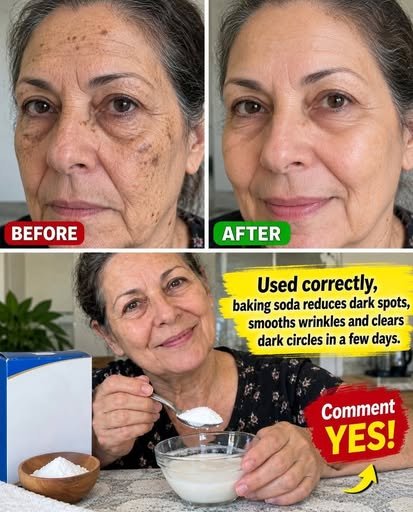
Baking soda is one of those inexpensive kitchen ingredients that seems to have endless household uses. Because of its fine texture and alkaline nature, it has also become popular in homemade beauty recipes.
You may have seen claims that baking soda can erase blemishes, wrinkles, and dark circles in just three days while dramatically lightening the skin.
There is a problem with those promises: baking soda is not a proven wrinkle eraser, dark-circle treatment, or skin-lightening remedy. Using it incorrectly can actually leave your skin irritated, dry, red, or more sensitive.
If you are considering putting baking soda on your face or hands, understanding how it affects the skin is much more important than following a viral recipe.
Why Baking Soda Can Irritate Skin
Healthy skin has a naturally acidic surface environment, often referred to as the acid mantle. This barrier helps support normal skin function and protects against excessive moisture loss and irritation.
Baking soda is alkaline. Applying it repeatedly to the skin can interfere with this environment and may contribute to dryness and irritation, particularly in people with sensitive skin.
Using more baking soda does not make a skincare treatment more powerful. In fact, stronger or more frequent applications can make irritation more likely.
Can Baking Soda Remove Dark Spots?
Not reliably.
Dark spots can develop for many reasons, including acne-related pigmentation, sun exposure, hormonal changes, inflammation, and certain medications.
Baking soda has not been established as a safe and effective treatment for these causes.
Scrubbing or irritating pigmented skin can sometimes make the problem look worse because inflammation may trigger additional pigmentation, particularly in darker skin tones.
For persistent dark spots, identifying the cause and using appropriate ingredients such as sunscreen and dermatologist-recommended pigmentation treatments is a much more dependable approach.
What About Wrinkles?
Baking soda cannot erase wrinkles in three days.
Wrinkles develop through a combination of natural aging, repeated facial movement, changes in collagen and elastin, and cumulative sun exposure.
A baking-soda paste may temporarily make the skin feel smoother because it can remove surface residue, but that is not the same as reversing wrinkles.
For long-term skin aging concerns, daily sun protection and evidence-based skincare are much more useful.
Can It Get Rid of Dark Circles?
Dark circles have many possible causes.
They may be related to genetics, pigmentation, visible blood vessels, shadows caused by facial anatomy, allergies, lack of sleep, or age-related changes around the eyes.
The delicate skin around the eyes is particularly easy to irritate, so applying baking soda there is not a good way to treat dark circles.
Avoid getting baking soda mixtures into the eyes.
What About Acne and Blemishes?
Baking soda is sometimes promoted as a homemade acne scrub or spot treatment.
The problem is that irritating an inflamed pimple can worsen redness and discomfort. Aggressive scrubbing can also damage the skin barrier.
If you regularly experience acne, gentle cleansing and products specifically formulated for acne-prone skin are generally more appropriate than harsh kitchen-based scrubs.
A Safer Approach to Brighter-Looking Skin
If your goal is a more even and healthy-looking complexion, focus on protecting the skin rather than trying to strip it.
1. Wear Sunscreen
Sun exposure is a major contributor to premature skin aging and can make pigmentation more noticeable.
Use a broad-spectrum sunscreen with an appropriate SPF every day and reapply when needed, especially during prolonged outdoor exposure.
2. Keep Your Routine Gentle
Use a mild cleanser and avoid excessive scrubbing.
A healthy skin barrier generally benefits from gentle treatment rather than repeated exposure to harsh DIY ingredients.
3. Moisturize Regularly
A suitable moisturizer can reduce dryness and help support the skin barrier.
Look for products appropriate for your skin type, especially if your skin becomes tight, flaky, or irritated easily.
4. Use Proven Skincare Ingredients
Depending on the concern, dermatologists may recommend ingredients such as vitamin C, niacinamide, retinoids, azelaic acid, or other treatments.
The right option depends on the cause of the pigmentation, acne, or signs of aging.
If You Still Want to Use Baking Soda
Baking soda is much better suited to household and cooking purposes than as a facial treatment.
If you decide to experiment with any DIY skincare ingredient, avoid applying it to broken, sunburned, inflamed, or already irritated skin.
Never use baking soda as a substitute for medical treatment of a skin condition.
Stop Immediately If Your Skin Reacts
Wash the product off if you experience:
- Burning
- Stinging
- Significant redness
- Swelling
- Itching
- Peeling
- Increasing dryness
- Pain
Persistent irritation should be evaluated by a healthcare professional.
When to See a Dermatologist
Consider professional advice if you have:
- Dark patches that continue to spread
- A new or changing pigmented spot
- Severe or persistent acne
- Sudden changes around the eyes
- A rash that does not improve
- Persistent redness, itching, or scaling
- Skin discoloration that develops without an obvious explanation
A dermatologist can determine whether the problem is pigmentation, acne, dermatitis, sun damage, or another skin condition and recommend treatment accordingly.
Final Thoughts
Baking soda may be useful in the kitchen and around the home, but “natural” does not mean that it is automatically suitable for your skin.
It cannot reliably erase wrinkles, eliminate dark circles, or dramatically lighten your face and hands in three days. Repeatedly applying it to the skin may instead cause dryness and irritation.
For healthier-looking skin, a simple routine built around gentle cleansing, moisturizer, and daily sun protection is a much safer starting point. When blemishes, pigmentation, or wrinkles are persistent, evidence-based skincare and professional advice are better choices than harsh homemade remedies.