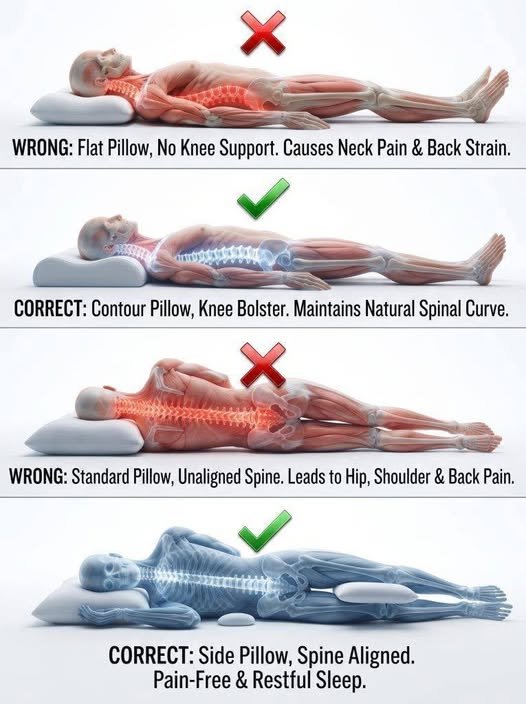
Are You Sleeping in the Right Position? How Nighttime Posture Can Affect Your Health
Your sleeping position may seem like a small detail, but the way you position your head, neck, shoulders, spine, and hips for several hours each night can influence how comfortable you feel when you wake up. The “best” sleeping position isn’t identical for everyone—it depends on your body, existing discomfort, and specific health needs.
🛏️ 1. Sleeping on Your Back
Sleeping on your back keeps your head and spine relatively straight when your pillow provides appropriate support.
Potential benefits:
- Helps maintain a neutral spinal position
- Can reduce pressure on the shoulders and hips
- Allows your body weight to be distributed relatively evenly
A pillow under your knees can sometimes make this position more comfortable by reducing strain on the lower back.
One possible downside
Back sleeping can worsen snoring and obstructive sleep apnea in some people because gravity can allow the tongue and soft tissues to move toward the airway.
If you have significant snoring, witnessed breathing pauses, or excessive daytime sleepiness, it’s worth discussing these symptoms with a healthcare professional.
😴 2. Sleeping on Your Side
For many people, side sleeping is comfortable and can provide good spinal alignment when the pillow height is appropriate.
Potential benefits:
- May reduce snoring compared with sleeping flat on the back
- Can be comfortable for people with certain types of back discomfort
- Allows the spine to remain relatively straight with proper support
Try placing a pillow between your knees. This can prevent the upper leg from rotating forward and may make your hips and lower back feel more comfortable.
Left side vs. right side
There isn’t one universally “healthiest” side for everyone.
However, people who experience acid reflux may find that sleeping on the left side reduces nighttime reflux symptoms. Individual responses vary.
💤 3. Sleeping on Your Stomach
Stomach sleeping isn’t automatically harmful, but it can make maintaining a neutral neck position difficult because your head generally has to turn to one side.
This may contribute to neck stiffness or morning discomfort in some people.
If you prefer sleeping on your stomach, using a relatively thin pillow—or no pillow under your head—may reduce the amount your neck has to bend.
🛏️ Your Pillow Matters Too
Your sleeping position and pillow work together.
If you sleep on your back:
Choose a pillow that supports the natural curve of your neck without pushing your head too far forward.
If you sleep on your side:
You generally need a thicker pillow to fill the space between your shoulder and head.
If you sleep on your stomach:
A thinner pillow can reduce excessive neck extension.
The goal isn’t to find the most expensive pillow—it’s to find one that keeps your neck reasonably aligned with your spine and feels comfortable.
🌙 What About Your Mattress?
A mattress that is extremely soft or extremely firm isn’t necessarily best for everyone.
Your mattress should provide enough support to keep your body reasonably aligned while allowing comfortable pressure distribution.
If you consistently wake with back, hip, or shoulder discomfort, experimenting with your pillow and mattress setup may help.
⚠️ When Your Sleeping Position May Need Extra Attention
Consider speaking with a healthcare professional if you regularly experience:
- Severe morning neck or back pain
- Numbness or tingling
- Persistent shoulder or hip pain
- Loud habitual snoring
- Waking up choking or gasping
- Witnessed pauses in breathing
- Severe daytime sleepiness
- Frequent nighttime heartburn
These symptoms may have causes that aren’t simply related to sleeping posture.
The Bottom Line
There isn’t one perfect sleeping position for everyone.
Side sleeping can be a good choice for many people, particularly those who snore or experience nighttime reflux. Back sleeping can support a neutral spine but may worsen breathing problems in some people. Stomach sleeping can be comfortable for some but may place more strain on the neck.
The best position is generally the one that allows you to sleep comfortably, breathe normally, and wake without significant pain or stiffness. Small adjustments—such as choosing the right pillow height or placing a pillow between your knees—can make a surprisingly big difference.