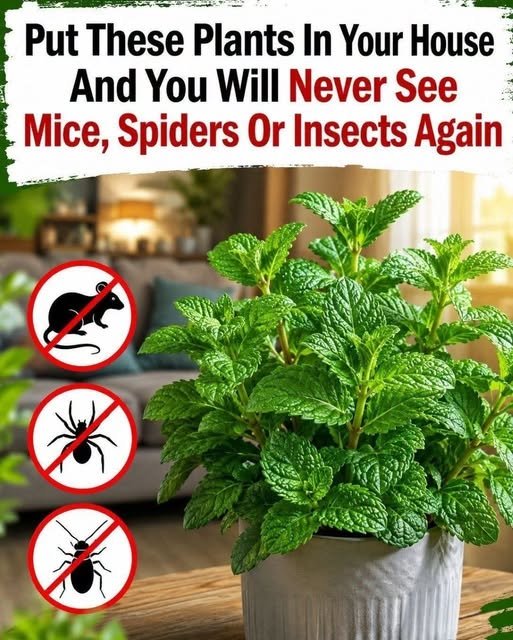
8 Plants That May Help Keep Common Pests Away
Tired of dealing with mosquitoes, flies, spiders, and other unwanted visitors around your home and garden? Certain aromatic plants contain natural compounds that may help discourage some pests, while also adding beauty and pleasant scents to your outdoor spaces.
Keep in mind that plants alone usually won’t eliminate an established pest infestation. Their effectiveness can vary depending on the pest, plant variety, placement, and growing conditions.
1. Lavender
Lavender has a strong, pleasant fragrance that many people love, while some insects dislike its aroma.
Where to use it:
Plant lavender near patios, windows, walkways, and garden seating areas.
It also works beautifully in pots around outdoor living spaces.
2. Basil
Basil is more than a kitchen herb. Its strong scent may help discourage certain flying insects.
Where to use it:
Grow basil in containers near kitchen doors, patios, and outdoor dining areas.
As a bonus, you can harvest fresh leaves for cooking.
3. Mint
Mint has a powerful aroma that may help deter some insects.
Where to use it:
Keep mint in containers near entrances, patios, and garden areas.
Because mint spreads aggressively, growing it in pots is usually better than planting it directly in the ground.
4. Rosemary
Rosemary has a strong, woody fragrance and is an excellent addition to herb gardens.
Where to use it:
Plant it near outdoor seating areas, pathways, or entrances.
You can also grow rosemary in pots and move them around your patio as needed.
5. Lemongrass
Lemongrass has a fresh citrus scent and is commonly grown around outdoor living spaces.
Where to use it:
Place containers around patios, decks, and areas where people spend time outdoors.
Lemongrass is also useful in cooking and herbal beverages.
6. Marigolds
Marigolds are colorful, easy-to-grow flowers that are popular in vegetable and flower gardens.
Their strong scent may discourage certain garden pests, although they shouldn’t be considered a guaranteed insect-control solution.
Where to use them:
Plant marigolds around vegetable beds, pathways, and garden borders.
7. Catnip
Catnip contains nepetalactone, a compound that has demonstrated insect-repelling activity in research.
Where to use it:
Grow catnip in sunny areas around your garden.
One important consideration: cats may be strongly attracted to it, so protect young plants if neighborhood cats are frequent visitors.
8. Chrysanthemums
Chrysanthemums naturally contain pyrethrins, compounds used in some insect-control products.
Growing chrysanthemums can add attractive color to your garden, although simply planting them shouldn’t be expected to provide the same pest-control effect as a properly formulated insecticide.
Where to use them:
Place them around patios, garden borders, and outdoor seating areas.
What About Mice and Spiders?
It’s important not to overstate what these plants can do.
Strong-smelling herbs and plants may make certain areas less attractive to some insects, but there is no reliable plant that will prevent mice or eliminate a spider infestation by itself.
For mice, the most effective approach is removing food sources, sealing holes and gaps, and addressing nesting areas.
For spiders, reducing insects around the home, keeping outdoor areas tidy, and sealing cracks around doors and windows can be more effective than relying on plants alone.
How to Use These Plants Effectively
For the best results:
- Place aromatic plants near areas where pests are commonly seen.
- Keep plants healthy and exposed to appropriate sunlight.
- Use containers around patios and entrances.
- Remove standing water to reduce mosquito breeding.
- Keep food and garbage securely covered.
- Seal cracks and gaps around the home.
- Don’t rely on plants alone when dealing with a significant infestation.
Final Thoughts
Lavender, basil, mint, rosemary, lemongrass, marigolds, catnip, and chrysanthemums can make your garden more attractive while potentially helping discourage certain pests. They’re best viewed as one part of an overall pest-management strategy, rather than a guaranteed natural replacement for pest control.
And the biggest bonus? Many of these plants are beautiful, fragrant, edible, or useful in the kitchen. 🌿
Meta Description
Discover 8 aromatic plants that may help discourage common garden pests, including lavender, basil, mint, rosemary, lemongrass, marigolds, catnip, and chrysanthemums.