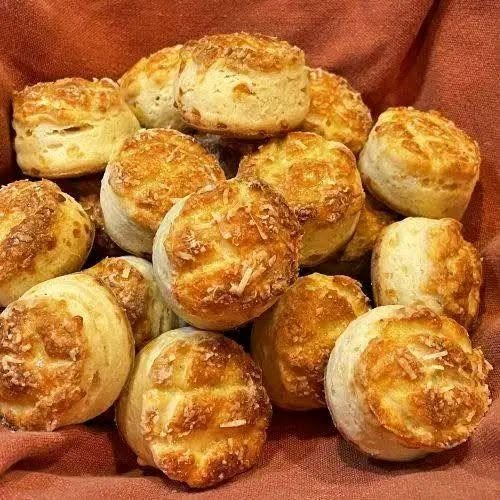
Hungarian Cheese Biscuits, traditionally known as Pogácsa, are delicious little savory pastries with a golden crust, a soft interior, and plenty of rich cheese flavor. Popular throughout Hungary and other parts of Central and Eastern Europe, these irresistible biscuits are often served at family gatherings, celebrations, holidays, and afternoon tea.
Unlike sweet American-style biscuits, Hungarian pogácsa are savory, buttery, and traditionally made with yeast, sour cream, or other rich dairy ingredients. Their signature appearance comes from lightly scoring the dough before baking, creating a beautiful crosshatched pattern on top.
This cheese pogácsa recipe combines butter, sour cream, flour, and grated cheese to create tender pastries with a slightly crisp exterior. They are wonderful served warm from the oven, packed into lunchboxes, or enjoyed alongside soup, coffee, or tea.
If you love homemade bread, flaky pastries, and cheesy snacks, these Hungarian cheese biscuits are well worth making at home.
Why You’ll Love These Hungarian Cheese Biscuits
- Rich cheese flavor: Grated cheese is incorporated into the dough and sprinkled on top for an extra savory finish.
- Tender and buttery texture: Butter and sour cream help create soft, flavorful biscuits.
- Beautiful traditional appearance: The scored tops give pogácsa their recognizable homemade look.
- Perfect for sharing: Their small size makes them ideal for parties, gatherings, and holiday platters.
- Make-ahead friendly: You can prepare the dough in advance and bake the biscuits when needed.
- Versatile and customizable: Try different cheeses or add a pinch of paprika, caraway seeds, or black pepper.
Recipe Information
- Preparation time: 25 minutes
- Chilling time: 45–60 minutes
- Cooking time: 15–20 minutes per batch
- Total time: Approximately 1 hour 30 minutes
- Yield: 25–35 biscuits, depending on the cutter size
- Course: Snack, appetizer, or savory pastry
- Cuisine: Hungarian
- Difficulty: Moderate
Ingredients
For the Dough
- 3 cups (375 g) all-purpose flour
- 1 cup (225 g) cold unsalted butter, cut into small cubes
- 1 cup (100–120 g) finely grated cheese, such as mature cheddar or Gouda
- ¾ cup (180 g) full-fat sour cream
- 1 large egg
- 2 teaspoons baking powder
- 1 teaspoon salt, adjusted according to the saltiness of the cheese
- ½ teaspoon freshly ground black pepper, optional
For the Topping
- 1 egg, beaten
- ½ cup (50–60 g) finely grated cheese
- A pinch of paprika or caraway seeds, optional
Cheese tip: A mature cheddar gives these biscuits a bold, savory flavor, while Gouda provides a slightly milder taste. For a more traditional Central European flavor, you can use a suitable semi-hard cheese commonly used in Hungarian baking.
How to Make Hungarian Cheese Biscuits (Pogácsa)
Step 1: Prepare the Dry Ingredients
Add the flour, baking powder, and salt to a large mixing bowl. Stir to combine the ingredients evenly.
If you are using black pepper, add it at this stage. The pepper gives the biscuits a subtle warmth without overpowering the cheese.
Step 2: Cut the Butter into the Flour
Add the cold, cubed butter to the flour mixture.
Using your fingertips, a pastry cutter, or a food processor, work the butter into the flour until the mixture resembles coarse crumbs. A few small pieces of butter are fine and help contribute to a tender texture.
Avoid warming the butter too much with your hands. Keeping it cool helps prevent the dough from becoming greasy.
Step 3: Add the Cheese
Stir the grated cheese into the flour and butter mixture until it is evenly distributed.
Finely grated cheese is best because it combines more easily with the dough and produces a more consistent texture.
Reserve the additional cheese for the topping.
Step 4: Mix in the Sour Cream and Egg
In a separate small bowl, whisk the sour cream and one egg until smooth.
Pour the mixture into the flour and cheese mixture. Stir with a spoon or spatula until a soft dough begins to form.
Gently bring the dough together with your hands. If it seems slightly crumbly, knead it briefly until it holds together. If it is unusually sticky, add a small amount of flour, one tablespoon at a time.
Avoid adding too much flour, as this can make the biscuits dry and dense.
Step 5: Knead the Dough Gently
Transfer the dough to a lightly floured work surface.
Knead it gently for about 1–2 minutes, just until it becomes cohesive and reasonably smooth. This is not bread dough, so prolonged kneading is unnecessary.
Shape it into a thick rectangle, wrap it, and refrigerate for 45–60 minutes.
Chilling firms the butter and makes the dough easier to roll and cut.
Step 6: Preheat the Oven
Preheat your oven to 400°F (200°C).
Line a baking sheet with parchment paper. If you are baking multiple batches, keep the remaining dough refrigerated while the first batch cooks.
Step 7: Roll Out the Dough
Place the chilled dough on a lightly floured surface.
Roll it into a rectangle approximately ½ inch (1.25 cm) thick. Try to maintain an even thickness so the biscuits bake at the same rate.
For a more layered appearance, you can fold the dough into thirds, roll it out again, and chill it for another 15–20 minutes before cutting. This step is optional but can improve the texture.
Step 8: Score the Surface
Using a sharp knife, lightly score the top of the dough in a crosshatch pattern.
Make shallow diagonal lines in one direction, followed by another set of lines in the opposite direction. Do not cut deeply enough to divide the dough completely.
This traditional-looking pattern helps create the recognizable appearance of pogácsa.
Step 9: Cut the Biscuits
Use a small round biscuit cutter, approximately 1½–2 inches (4–5 cm) wide, to cut out the biscuits.
Press the cutter straight down rather than twisting it. Twisting can compress the edges and interfere with an even rise.
Gather the leftover dough, gently press it together, and cut additional biscuits. Handle the dough as little as possible.
Step 10: Apply the Egg Wash and Cheese
Arrange the biscuits on the prepared baking sheet, leaving approximately 1 inch (2.5 cm) between them.
Brush the tops lightly with beaten egg. Sprinkle the reserved grated cheese over each biscuit.
If desired, add a tiny pinch of paprika or a few caraway seeds for additional flavor.
Try to keep the egg wash and cheese on top rather than letting them run down the sides.
Step 11: Bake Until Golden
Bake for approximately 15–20 minutes, or until the biscuits have risen and their tops are golden brown.
The exact baking time depends on the size and thickness of the biscuits. Smaller biscuits may finish sooner, so begin checking them after 12–14 minutes.
The cheese topping should look melted and lightly golden, while the bottoms should be cooked through.
Step 12: Cool and Serve
Remove the baking sheet from the oven and allow the biscuits to rest for about 5 minutes.
Transfer them to a wire rack or serving plate. Hungarian cheese pogácsa are especially delicious when slightly warm, when their buttery aroma and savory cheese flavor are at their best.
Serve them on their own or alongside a bowl of soup, a fresh salad, or your favorite hot drink.
Tips for Perfect Hungarian Pogácsa
Keep the butter cold. Cold butter helps create a tender pastry texture. If the dough becomes warm while shaping, refrigerate it for 10–15 minutes before baking.
Use flavorful cheese. Mature cheddar, Gouda, or another well-flavored semi-hard cheese can give the biscuits a richer taste than very mild cheese.
Do not overwork the dough. Excessive kneading can make the biscuits tougher. Mix only until the ingredients come together.
Roll the dough evenly. Consistent thickness helps the biscuits rise and brown at the same rate.
Do not twist the cutter. Pressing straight down gives cleaner edges and can help the biscuits rise more evenly.
Score lightly. Deep cuts can cause the biscuits to separate along the scored lines. Shallow scoring is sufficient for the traditional pattern.
Watch the final minutes. Cheese can brown quickly. Remove the biscuits when they are golden rather than waiting for the topping to become dark.
Adjust the salt. Different cheeses contain different amounts of salt, so taste and adjust the dough seasoning according to the cheese you choose.
Variations to Try
1. Extra-Cheesy Pogácsa
Increase the cheese inside the dough slightly and add a generous layer of grated cheese on top. Keep in mind that adding too much cheese can make the dough softer and richer, so avoid making large changes to the quantities at once.
2. Paprika Cheese Biscuits
Add ½–1 teaspoon of sweet Hungarian-style paprika to the dry ingredients. This gives the biscuits a warm color and a gentle peppery flavor.
3. Caraway Cheese Pogácsa
Sprinkle a few caraway seeds over the egg-washed tops before baking. Their earthy, slightly anise-like flavor complements the butter and cheese.
4. Garlic and Herb Pogácsa
Add ½ teaspoon of garlic powder and 1 teaspoon of finely chopped fresh parsley or chives to the dough. This variation pairs especially well with soups and savory dips.
5. Parmesan Cheese Biscuits
Replace part of the cheddar or Gouda with finely grated Parmesan. Because Parmesan is salty and strongly flavored, reduce the added salt as needed.
6. Traditional Yeasted Pogácsa
Many Hungarian pogácsa recipes use yeast and sometimes feature repeated folding to create distinct layers. To make that style, use a yeast-based recipe rather than simply adding yeast to these baking-powder biscuits, since the liquid quantities, proofing times, and dough structure need to be adjusted.
What to Serve with Hungarian Cheese Biscuits
Hungarian cheese pogácsa are versatile enough to accompany many dishes.
- Creamy vegetable soup: Their savory flavor pairs well with potato, pumpkin, or mushroom soup.
- Tomato soup: The cheese complements the tanginess of tomato-based soups.
- Fresh green salad: A crisp salad balances the richness of the pastry.
- Cold cuts and cheese: Serve them as part of a savory snack platter.
- Dips and spreads: Sour cream dip, herbed yogurt, or a mild paprika spread makes a delicious accompaniment.
- Coffee or tea: In Hungary, pogácsa are enjoyed as a snack, making them a lovely addition to a relaxed afternoon break.
Storage and Make-Ahead Instructions
How to Store at Room Temperature
Allow the biscuits to cool completely before placing them in an airtight container.
Store them at room temperature for up to 2 days in a cool, dry environment. If your kitchen is particularly hot or humid, refrigeration may be preferable.
How to Refrigerate
Place the cooled biscuits in an airtight container and refrigerate for up to 4 days.
Because refrigeration can make pastry firmer, warm the biscuits briefly in the oven before serving.
Can You Freeze Hungarian Cheese Biscuits?
Yes. Allow the baked biscuits to cool completely, then arrange them in a freezer-safe container with parchment paper between layers.
Freeze for up to 2 months for best quality. Thaw in the refrigerator or at room temperature and warm in a 325°F (165°C) oven until heated through.
You can also freeze the unbaked, cut biscuits on a tray until firm, then transfer them to a freezer-safe container. Bake from frozen, allowing additional time and checking that the centers are fully cooked.
How to Reheat Pogácsa
For the best texture, warm the biscuits in a preheated 325°F (165°C) oven for approximately 5–8 minutes.
A microwave works for quick reheating, but it may make the biscuits softer rather than crisp. Avoid overheating them, as the cheese and butter can become greasy.
Frequently Asked Questions
What does Pogácsa mean?
Pogácsa is the Hungarian name for a small savory baked pastry. Hungarian versions commonly contain cheese, butter, sour cream, or other rich ingredients. Some varieties are made with yeast, while others use different leavening methods.
Are Hungarian cheese biscuits the same as American biscuits?
No. Although both can be savory and buttery, Hungarian pogácsa are typically smaller and often contain cheese or sour cream. They are commonly served as snack pastries rather than split and served with gravy.
Which cheese is best for pogácsa?
Mature cheddar is convenient and provides a strong cheesy flavor. Gouda offers a milder, buttery taste, while a suitable semi-hard Central European cheese can provide a flavor closer to many traditional versions.
Why did my cheese biscuits turn out hard?
Hard biscuits may result from too much flour, excessive kneading, or overbaking. Measure the flour carefully, handle the dough gently, and remove the biscuits once they are golden and cooked through.
Why did my biscuits spread in the oven?
The butter may have become too warm, the dough may have been too soft, or the baking sheet may have been warm before the biscuits were placed on it. Chill the dough before cutting and bake on a cool, prepared baking sheet.
Can I make the dough the night before?
Yes. Wrap the dough tightly and refrigerate it overnight. Before rolling, allow it to sit at room temperature briefly if it is too firm to handle. Keep it cool enough that the butter does not soften excessively.
Can I make pogácsa without sour cream?
You can use plain full-fat Greek yogurt as a substitute, although the flavor and texture may differ slightly. Start with a similar amount and add only enough to bring the dough together.
Are these biscuits vegetarian?
Yes, this recipe can fit a vegetarian diet if the cheese you use is made with a suitable non-animal rennet. Check the cheese label if this distinction matters to you.
Approximate Nutrition Information
The following values are estimates per biscuit, assuming the recipe makes 30 biscuits. Actual nutrition will depend on the type of cheese, butter, sour cream, biscuit size, and amount of topping used.
- Calories: 125–155
- Protein: 3–5 g
- Carbohydrates: 9–12 g
- Fat: 8–11 g
- Saturated fat: 4–6 g
- Sodium: 150–250 mg
These are approximate values, not laboratory-tested nutrition figures.
Final Thoughts
Hungarian Cheese Biscuits, or Pogácsa, are a wonderful example of how simple ingredients can create something special. Their buttery dough, savory cheese, and golden tops make them a comforting homemade treat for family gatherings, festive occasions, or everyday snacking.
This easy baking-powder version is a practical way to enjoy the flavors and appearance of cheese pogácsa without the extra time required for yeast fermentation. Keep the butter cold, handle the dough gently, and bake until the tops turn beautifully golden.
Serve them warm for the best flavor, and do not be surprised if the entire batch disappears quickly!
SEO Details
SEO Title: Hungarian Cheese Biscuits (Pogácsa) – Easy, Buttery Recipe
Focus Keyphrase: Hungarian Cheese Biscuits
URL Slug: hungarian-cheese-biscuits-pogacsa
Meta Description: Make Hungarian cheese biscuits (pogácsa) with buttery dough, sour cream, and grated cheese. These golden savory pastries are perfect for snacks and gatherings.
Suggested Tags: Hungarian Cheese Biscuits, Pogácsa Recipe, Hungarian Recipes, Savory Biscuits, Cheese Pastries, Homemade Cheese Biscuits, European Baking, Buttery Biscuits, Easy Savory Snacks, Cheese Appetizers