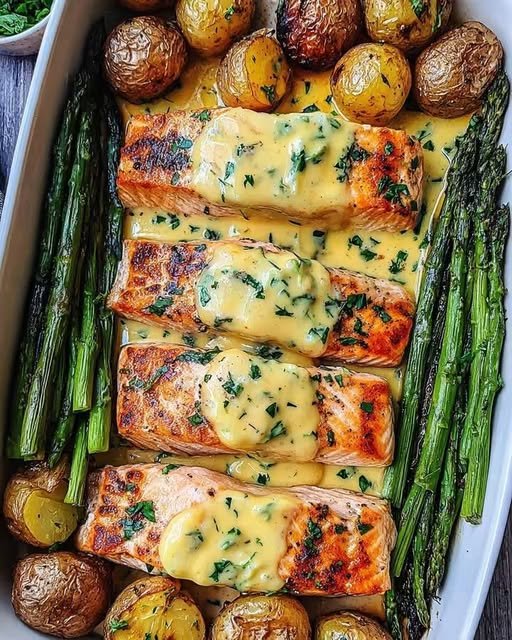
If you’re looking for a restaurant-quality dinner that feels elegant but is surprisingly easy to make at home, this Heavenly Pan-Seared Salmon with Velvety Lemon-Garlic Cream, Golden Potatoes, and Asparagus is a recipe worth trying. It combines beautifully seared salmon, crispy golden potatoes, tender asparagus, and a silky lemon-garlic cream sauce for a meal that feels special without requiring complicated cooking techniques.
The salmon develops a delicious golden crust while remaining moist and tender inside. The lemon-garlic cream sauce adds a rich, tangy finish that complements the natural flavor of the fish without overpowering it. Meanwhile, roasted potatoes provide a satisfying crunch, and asparagus brings freshness and color to the plate.
This dish is ideal for a cozy weekend dinner, a date night at home, a family meal, or a special occasion when you want something impressive. Although the finished plate looks sophisticated, each component uses simple ingredients and straightforward cooking methods.
Serve everything together with extra lemon wedges and a spoonful of the creamy sauce, and enjoy a delicious seafood dinner that balances rich flavors with fresh vegetables.
Why You’ll Love This Salmon Dinner
- Restaurant-quality flavor: Golden salmon and a creamy lemon-garlic sauce make an elegant combination.
- Crispy potatoes: Roasting creates golden edges and a fluffy interior.
- Fresh asparagus: A quick sauté or roast adds color, flavor, and a tender-crisp texture.
- Easy-to-follow method: Each component can be prepared with everyday kitchen equipment.
- Balanced flavors: Lemon brightens the cream sauce, while garlic and herbs add depth.
- Perfect for special occasions: The colorful presentation makes this meal suitable for guests or a romantic dinner.
Ingredients You’ll Need
This recipe serves 4 people.
For the Pan-Seared Salmon
- 4 salmon fillets, approximately 5–6 ounces (140–170 g) each
- 1 tablespoon olive oil
- 1 tablespoon unsalted butter
- 3 cloves garlic, minced
- ½ teaspoon paprika
- ½ teaspoon salt, or to taste
- ¼ teaspoon freshly ground black pepper
- 1 tablespoon fresh lemon juice
- 1 teaspoon chopped fresh parsley, optional
For the Golden Roasted Potatoes
- 1½ pounds (680 g) baby potatoes or Yukon Gold potatoes
- 2 tablespoons olive oil
- ½ teaspoon garlic powder
- ½ teaspoon paprika
- ½ teaspoon dried Italian seasoning
- ½ teaspoon salt, or to taste
- ¼ teaspoon black pepper
For the Asparagus
- 1 pound (450 g) fresh asparagus
- 1 tablespoon olive oil
- 1 clove garlic, minced
- 1 tablespoon lemon juice
- Salt and black pepper, to taste
For the Velvety Lemon-Garlic Cream Sauce
- 1 tablespoon unsalted butter
- 3 cloves garlic, finely minced
- 1 cup heavy cream
- ½ cup chicken broth or vegetable broth
- ⅓ cup freshly grated Parmesan cheese
- 1 tablespoon fresh lemon juice, plus more to taste
- 1 teaspoon finely grated lemon zest
- ½ teaspoon Dijon mustard, optional
- ¼ teaspoon black pepper
- Salt, to taste
- 1 tablespoon chopped fresh parsley
Ingredient note: Use heavy cream for the richest, smoothest sauce. Freshly grated Parmesan generally melts more smoothly than pre-grated cheese. If your salmon fillets are especially thick, allow extra cooking time and check the center with a food thermometer.
How to Make Heavenly Pan-Seared Salmon
Step 1: Prepare the Potatoes
Preheat your oven to 425°F (220°C).
Wash the potatoes thoroughly and cut them into halves or bite-sized pieces. Try to keep the pieces similar in size so they cook evenly.
Place them in a large bowl and toss with olive oil, garlic powder, paprika, Italian seasoning, salt, and black pepper.
Spread the potatoes on a baking sheet in a single layer, with the cut sides facing down where possible.
Roast for approximately 25–35 minutes, turning once halfway through, until the potatoes are golden brown on the outside and tender in the center.
For crispier potatoes, avoid overcrowding the pan. If necessary, use two baking sheets so the potatoes roast instead of steam.
Step 2: Prepare the Salmon
While the potatoes roast, pat the salmon fillets dry with paper towels. Removing surface moisture helps the fish develop a golden crust.
Season both sides with salt, black pepper, and paprika.
If the fillets have skin, leave it on during cooking. Properly seared salmon skin can become deliciously crisp and helps protect the flesh from direct heat.
Allow the salmon to sit for a few minutes while you prepare the other ingredients. Avoid leaving raw fish at room temperature for an extended period.
Step 3: Make the Lemon-Garlic Cream Sauce
Heat 1 tablespoon of butter in a small saucepan over medium-low heat.
Add the minced garlic and cook for about 30–45 seconds, stirring frequently, until fragrant. Do not allow it to brown deeply, as burnt garlic can make the sauce bitter.
Pour in the broth and simmer for 2–3 minutes to reduce it slightly.
Lower the heat and add the heavy cream, Dijon mustard if using, black pepper, and lemon zest. Stir gently and let the sauce simmer for approximately 3–5 minutes, until it begins to thicken.
Add the Parmesan gradually, stirring until melted and smooth.
Remove the saucepan from the heat and stir in the lemon juice and parsley. Taste and adjust the salt, pepper, and lemon juice as needed.
If the sauce becomes too thick, add a small splash of broth. If it is too thin, simmer gently for another minute or two.
Keep the sauce warm over very low heat, stirring occasionally. Avoid a vigorous boil, which can affect the creamy texture.
Step 4: Pan-Sear the Salmon
Heat a large skillet over medium-high heat. Add the olive oil and allow it to become hot but not smoking.
Place the salmon fillets in the skillet, skin-side down if using skin-on fillets.
Cook for approximately 4–5 minutes on the first side, depending on thickness, until a golden crust develops. Resist the urge to move the fish too early, as it may stick before the crust forms.
Carefully turn the fillets and add 1 tablespoon of butter and the minced garlic.
Continue cooking for another 2–4 minutes, spooning some of the melted butter over the fish. Add the lemon juice near the end of cooking.
Cooking time depends on the thickness of the fillets. Check the thickest part with a food thermometer; the FDA recommends cooking fish to an internal temperature of 145°F (63°C).
Transfer the salmon to a clean plate and allow it to rest briefly while you finish the vegetables.
Tip: If your skillet is too small to hold all four fillets comfortably, cook the salmon in batches. Crowding the pan can prevent proper browning.
Step 5: Cook the Asparagus
Trim the woody ends from the asparagus.
You can roast the asparagus alongside the potatoes during the final 10–12 minutes of cooking, or sauté it in a skillet.
For the skillet method, heat 1 tablespoon of olive oil over medium heat. Add the asparagus and cook for approximately 4–6 minutes, turning occasionally.
Add the minced garlic during the final minute, then finish with lemon juice, salt, and black pepper.
The asparagus should be bright green and tender while retaining a slight bite. Very thin spears may cook faster, while thicker ones may need a few extra minutes.
Step 6: Bring Everything Together
Check the potatoes for tenderness and crispness. If they need extra color, return them to the oven for a few more minutes.
Arrange the golden potatoes and asparagus on serving plates, then place a salmon fillet beside the vegetables.
Spoon the warm lemon-garlic cream sauce over the salmon or serve it in a small bowl alongside the fish. Garnish with chopped parsley, a little lemon zest, and fresh lemon wedges.
Serve immediately while the salmon is warm, the potatoes are crisp, and the sauce is silky.
Tips for Perfect Pan-Seared Salmon
Dry the Salmon Before Cooking
Moisture on the surface of the fish creates steam and can prevent browning. Pat the fillets thoroughly dry before seasoning.
Use a Properly Heated Skillet
A hot skillet helps form a flavorful crust. Add the salmon once the oil is hot, but lower the heat if the fish begins browning too quickly.
Avoid Overcooking
Salmon can become dry when cooked for too long. Cooking time varies with thickness, so use a food thermometer and check the thickest part.
Don’t Rush the Cream Sauce
Keep the sauce at a gentle simmer rather than a rolling boil. Add the Parmesan gradually and stir until smooth.
Add Lemon Juice at the End
Adding the lemon juice after the cream sauce has thickened helps preserve its fresh flavor. Taste gradually to avoid making the sauce too sharp.
Give the Potatoes Enough Space
Potatoes need room for moisture to evaporate. A crowded tray can leave them soft instead of golden and crisp.
Cook Asparagus Until Just Tender
Bright green asparagus with a slight bite provides a refreshing contrast to the creamy sauce and rich salmon.
Delicious Variations to Try
Creamy Tuscan Salmon
Add a handful of chopped sun-dried tomatoes and a few cups of baby spinach to the cream sauce. Simmer until the spinach wilts, then add the Parmesan and lemon juice.
This version has a richer, savory flavor and pairs beautifully with the golden potatoes.
Garlic Butter Salmon
For a simpler option, skip the heavy cream sauce. Melt butter with garlic, lemon juice, and parsley, then spoon it over the freshly seared salmon.
This variation is ideal when you want a lighter-feeling sauce with the same classic flavors.
Cajun Salmon With Lemon Cream
Replace the paprika and Italian seasoning with Cajun seasoning. Check whether the blend contains salt before seasoning the fish, and adjust accordingly.
The mild heat of Cajun spices works well with the cool, creamy sauce.
Parmesan Roasted Potatoes
Toss the potatoes with ¼ cup of grated Parmesan during the final 5 minutes of roasting. Watch carefully to prevent the cheese from burning.
The Parmesan forms a savory crust that complements the fish.
Lemon Herb Asparagus
Add fresh dill, thyme, or extra parsley to the asparagus after cooking. These herbs pair well with salmon and reinforce the fresh lemon flavor.
Spinach and Asparagus Side
For a variation, sauté a handful of baby spinach with the asparagus during the final minute of cooking. The spinach adds color and makes the vegetable side more substantial.
What to Serve With Lemon-Garlic Cream Salmon
Although this dish already includes potatoes and asparagus, you can add another side if you’re serving a larger group.
- Fresh green salad: A simple salad with cucumber, tomatoes, and a lemon vinaigrette balances the creamy sauce.
- Garlic bread: Crusty bread is perfect for enjoying any extra sauce.
- Steamed green beans: Their fresh texture complements the salmon.
- Roasted carrots: Naturally sweet carrots work well with the savory fish.
- Rice pilaf: Serve a small portion of seasoned rice instead of potatoes if preferred.
- Roasted broccoli: Broccoli adds color and a slightly crisp texture.
For an elegant presentation, serve the salmon on warm plates and drizzle the sauce just before bringing the meal to the table.
How to Store and Reheat Leftovers
Refrigeration
Allow leftovers to cool slightly and refrigerate them in airtight containers within 2 hours of cooking. Store at 40°F (4°C) or below and consume within 3–4 days.
For best results, store the sauce separately from the salmon and vegetables if possible.
Reheating Salmon
Preheat the oven to 275°F (135°C). Place the salmon in an oven-safe dish with a spoonful of broth or sauce, cover loosely, and heat until warmed through.
Reheat leftovers to an internal temperature of 165°F (74°C). Avoid prolonged heating, which can dry out the fish.
Reheating the Cream Sauce
Warm the sauce in a small saucepan over low heat, stirring frequently. Add a splash of broth or cream if it has thickened too much during refrigeration.
Avoid boiling the sauce vigorously, as the texture may become less smooth.
Reheating the Potatoes and Asparagus
Reheat the potatoes in an oven or air fryer at approximately 350°F (175°C) until hot and crisp. Warm the asparagus briefly in a skillet or microwave.
Can You Freeze This Dish?
Cooked salmon and roasted potatoes can be frozen, although their texture may change after thawing. The cream sauce is less suitable for freezing because dairy-based sauces can separate. For the best results, prepare the sauce fresh and refrigerate leftovers promptly.
Frequently Asked Questions
Can I use frozen salmon fillets?
Yes. Thaw the fillets safely in the refrigerator before cooking and pat them dry thoroughly. If cooking from frozen, follow the package directions and allow additional time, but thawing first generally makes it easier to achieve an even golden crust.
Can I use milk instead of heavy cream?
You can use whole milk, but the sauce will be thinner and less rich. For a creamier result, combine milk with a little cream cheese or use evaporated milk. Avoid boiling the sauce, especially when using lower-fat dairy.
How do I stop the cream sauce from separating?
Keep the heat low, add the Parmesan gradually, and avoid boiling the sauce. Stir gently and add the lemon juice after removing the saucepan from the heat.
How can I tell when salmon is cooked?
The thickest part should reach 145°F (63°C), measured with a food thermometer. The flesh should look opaque and separate easily with a fork.
Can I make the sauce ahead of time?
Yes. Prepare the sauce a few hours ahead and refrigerate it in a covered container. Reheat gently over low heat, adding a small splash of broth or cream if needed. For the freshest flavor, add a little extra lemon juice and parsley just before serving.
Can I use another fish?
Yes. Cod, haddock, or another firm fish can work with the lemon-garlic cream sauce. Cooking time will depend on the thickness and type of fish, so check the center with a thermometer.
What can I use instead of asparagus?
Broccoli, green beans, zucchini, or Brussels sprouts make excellent alternatives. Roast or sauté them until tender, adjusting the cooking time to suit the vegetable.
Is this recipe suitable for a special dinner?
Absolutely. The golden salmon, colorful vegetables, and creamy lemon sauce create an elegant plate without complicated techniques. It is an excellent choice for birthdays, date nights, family celebrations, or a weekend dinner at home.
Final Thoughts
Heavenly Pan-Seared Salmon with Velvety Lemon-Garlic Cream, Golden Potatoes, and Asparagus is a delicious combination of rich, fresh, and savory flavors. The salmon develops a golden crust, the potatoes become crisp around the edges, and the asparagus adds freshness to balance the creamy sauce.
The recipe may look restaurant-worthy, but each step is straightforward enough for a home cook. Prepare the potatoes first, make the sauce while they roast, and cook the salmon and asparagus near serving time for the best results.
Whether you’re preparing a special dinner for guests or simply upgrading your weeknight meal, this salmon recipe offers an inviting combination of comfort and elegance. Finish it with fresh lemon and parsley, serve it hot, and enjoy every bite.
SEO Details
SEO Title: Pan-Seared Salmon With Lemon Garlic Cream, Potatoes & Asparagus
Meta Description: Make pan-seared salmon with a velvety lemon-garlic cream sauce, crispy golden potatoes, and tender asparagus for an easy, restaurant-style dinner at home.
Focus Keyword: Pan-Seared Salmon with Lemon-Garlic Cream
Secondary Keywords: creamy lemon garlic salmon, pan-seared salmon recipe, salmon with roasted potatoes, salmon and asparagus dinner, garlic cream sauce for salmon, easy salmon dinner
Suggested URL Slug: pan-seared-salmon-lemon-garlic-cream-potatoes-asparagus
Excerpt: This pan-seared salmon dinner features tender salmon with a golden crust, a velvety lemon-garlic cream sauce, crispy roasted potatoes, and fresh asparagus. It’s an elegant yet easy meal for family dinners and special occasions.