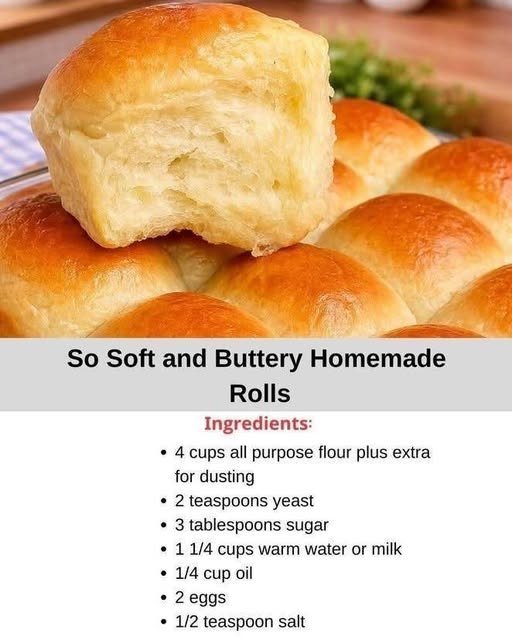
There is nothing quite like the smell of freshly baked homemade dinner rolls filling the kitchen. These soft and fluffy dinner rolls are light, buttery, tender, and golden on the outside, with a pillowy-soft center that practically melts in your mouth.
They are surprisingly easy to make with simple pantry ingredients. Serve them warm alongside soups, roasted chicken, mashed potatoes, holiday dinners, or simply spread them with butter for a comforting homemade treat.
Why You’ll Love These Dinner Rolls
- Incredibly soft and fluffy texture
- Lightly golden and buttery on top
- Simple everyday ingredients
- Perfect for holiday dinners and family meals
- Can be prepared ahead of time
- Delicious served warm with butter
- Great for sandwiches and sliders
Ingredients
For the Dough
- 1 cup warm milk — about 240 ml
- 2¼ teaspoons active dry yeast — 1 packet
- ¼ cup granulated sugar — 50 g
- 1 large egg
- ¼ cup unsalted butter, melted — 57 g
- 1 teaspoon salt
- 3 to 3½ cups all-purpose flour — about 375–440 g
For the Topping
- 2 tablespoons melted butter
How to Make Soft & Fluffy Homemade Dinner Rolls
1. Activate the Yeast
Pour the warm milk into a large mixing bowl.
The milk should feel warm but not hot. Stir in the sugar and active dry yeast.
Let the mixture sit for about 5–10 minutes.
The yeast should become foamy on the surface. This is a good indication that the yeast is active.
If there is no foam at all, your yeast may be expired or the milk may have been too hot or too cold.
2. Make the Dough
Add the egg, melted butter, and salt to the yeast mixture.
Stir until everything is combined.
Gradually add the flour, starting with about 3 cups. Mix until a soft dough begins to form.
Add additional flour a little at a time only if needed.
The dough should be soft and slightly tacky, but it shouldn’t be extremely sticky.
Avoid adding too much flour because this can make the finished rolls dense rather than light and fluffy.
3. Knead the Dough
Transfer the dough to a lightly floured work surface.
Knead for approximately 8–10 minutes, or until the dough becomes smooth and elastic.
You can also use a stand mixer fitted with a dough hook and knead on low to medium speed until the dough is smooth.
When properly kneaded, the dough should feel soft and spring back gently when pressed.
4. First Rise
Place the dough in a lightly greased bowl.
Turn it once so the surface is lightly coated with oil.
Cover the bowl with a clean kitchen towel or plastic wrap.
Place it in a warm, draft-free area and allow it to rise for approximately 1–1½ hours, or until it has doubled in size.
The exact rising time depends on the temperature of your kitchen.
5. Shape the Rolls
Once the dough has doubled, gently punch it down to release excess air.
Transfer it to a lightly floured surface and divide it into 12–15 equal pieces, depending on how large you want your rolls.
Shape each piece into a smooth ball by pulling the edges toward the bottom and gently rolling it between your palms.
Place the dough balls in a lightly greased 9 × 13-inch baking dish, leaving a little space between them.
6. Second Rise
Cover the shaped rolls loosely with a clean towel.
Let them rise again for approximately 30–45 minutes, or until they look noticeably puffy.
This second rise is important for achieving that soft, airy texture.
7. Bake
Preheat your oven to 375°F (190°C).
Bake the rolls for approximately 18–22 minutes, or until the tops are lightly golden brown and the rolls are cooked through.
Avoid overbaking them, as this can make the rolls dry.
8. Brush With Butter
Remove the rolls from the oven and immediately brush the tops with melted butter.
Allow them to cool for a few minutes before serving.
For the best experience, serve them warm and fresh.
Tips for the Softest Dinner Rolls
Don’t Use Excess Flour
One of the most common mistakes when making homemade rolls is adding too much flour.
The dough should be soft and slightly tacky. Add flour gradually rather than automatically using the entire amount.
Make Sure Your Milk Isn’t Too Hot
Very hot milk can kill the yeast.
Aim for milk that feels comfortably warm to the touch, not boiling or steaming hot.
Give the Dough Enough Time to Rise
The dough needs enough time to ferment and develop its structure. Don’t rely only on the clock; look for the dough to approximately double in size during the first rise.
Don’t Skip the Second Rise
The second rise helps create lighter, fluffier rolls. Shaped dough that goes directly into the oven can produce denser results.
Brush With Butter After Baking
A generous brushing of melted butter while the rolls are still hot gives the tops a soft, rich finish and adds extra flavor.
How to Store Homemade Dinner Rolls
Store completely cooled rolls in an airtight container or resealable bag at room temperature for up to 2–3 days.
To warm them, place them in a low oven for a few minutes or microwave individual rolls briefly.
Can You Freeze Dinner Rolls?
Yes.
Allow the baked rolls to cool completely, then place them in a freezer-safe bag or container.
Freeze for up to 2–3 months for best quality.
Thaw at room temperature and warm them in the oven before serving.
You can also freeze the shaped, unbaked rolls before the final rise. When ready to bake, allow them to thaw and rise until puffy, then bake according to the recipe.
Delicious Ways to Serve Dinner Rolls
These homemade rolls pair beautifully with:
- Roast chicken
- Turkey
- Beef roast
- Mashed potatoes and gravy
- Creamy soups
- Chicken soup
- Vegetable soup
- Pasta dishes
- Baked ham
- Holiday dinners
You can also slice them horizontally and use them for mini sandwiches or sliders.
Flavor Variations
Garlic Butter Rolls
Mix melted butter with minced garlic and chopped parsley, then brush it over the warm rolls.
Herb Dinner Rolls
Add dried Italian herbs, rosemary, or thyme to the dough for a fragrant savory variation.
Honey Butter Rolls
Replace part of the sugar with honey and serve the finished rolls with soft honey butter.
Cheesy Rolls
Add a small amount of shredded cheddar, Parmesan, or mozzarella to the dough for a cheesy twist.
Frequently Asked Questions
Why are my dinner rolls not fluffy?
Dense rolls can result from too much flour, inactive yeast, insufficient kneading, or not allowing the dough enough time to rise.
Can I make these without a stand mixer?
Absolutely. These rolls can easily be kneaded by hand. It may take around 8–10 minutes of kneading to develop a smooth, elastic dough.
Can I use instant yeast?
Yes. Instant yeast can generally be mixed directly with the flour instead of being activated separately. You can still use the same general quantity.
Why did my rolls spread instead of rising?
This can happen if the dough is too soft, the yeast is weak, or the rolls haven’t developed enough gluten. Proper kneading and accurate flour measurement help.
How do I know when the rolls are done?
The tops should be lightly golden and the rolls should feel set. If you have an instant-read thermometer, the center should generally reach around 190°F (88°C).
Final Thoughts
These Soft & Fluffy Homemade Dinner Rolls are the kind of recipe you’ll want to make again and again. With their tender centers, golden tops, and buttery finish, they’re perfect for everything from a simple family dinner to a special holiday feast.
The secret is simple: use active yeast, avoid adding too much flour, knead the dough properly, and give it enough time to rise. Once baked, brush the warm rolls generously with butter and enjoy them fresh from the oven.
SEO Details
SEO Title: Soft & Fluffy Homemade Dinner Rolls – Easy Recipe
Meta Description: Make soft, fluffy homemade dinner rolls with simple ingredients. These buttery, golden rolls are perfect for family dinners, holidays, soups, and sandwiches.
Focus Keyword: Soft & Fluffy Homemade Dinner Rolls
Secondary Keywords: homemade dinner rolls, soft dinner rolls, fluffy dinner rolls, easy dinner rolls recipe, homemade bread rolls, buttery dinner rolls
Suggested URL Slug: soft-fluffy-homemade-dinner-rolls
Excerpt:
These Soft & Fluffy Homemade Dinner Rolls are tender, buttery, golden, and incredibly easy to make. Perfect for family dinners, holidays, soups, sandwiches, and special occasions.