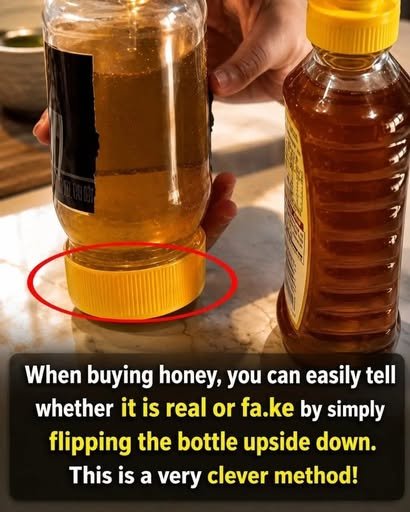
Honey has been treasured for centuries for its naturally sweet flavor, distinctive aroma, and versatility in everything from tea and toast to marinades and desserts. But when you pick up a jar labeled “pure honey,” how can you know you’re actually getting honey?
It is a reasonable question.
Honey is one of the foods that can be vulnerable to economically motivated adulteration, meaning cheaper sweeteners may be added to a product to reduce production costs while it is still presented as honey. The U.S. Food and Drug Administration has specifically tested honey for undeclared sweeteners derived from sources such as corn, sugarcane, rice, and sugar beets.
In 2025, the FDA tested 102 honey samples and found four samples containing undeclared added sweeteners. That does not mean most honey is fake—in fact, the majority of samples tested were compliant—but it shows why paying attention to labeling and sourcing matters.
So, what should you actually look for?
What Is Real Honey?
Real honey is produced by honeybees from nectar or plant secretions and stored in honeycombs.
Its appearance can vary considerably depending on the flowers visited by the bees, geographic region, processing, moisture content, and other natural factors.
That means there is no single color, thickness, smell, or texture that proves honey is authentic.
Real honey may be:
- Pale yellow
- Golden
- Amber
- Dark brown
- Thick and creamy
- Smooth and liquid
- Naturally crystallized
This variation is completely normal.
1. Start With the Label
The label is one of the easiest things you can check before buying.
Look at the ingredient list.
If the product is being sold as honey, you generally want the ingredient list to identify honey rather than listing additional sweeteners.
Be particularly careful with products described as:
- Honey blend
- Honey-flavored syrup
- Honey syrup
- Honey product
- Honey and corn syrup
- Honey with added sugar
A product containing additional sweeteners isn’t necessarily illegal or unsafe simply because it is a blend. The problem occurs when added sweeteners are not properly disclosed and a mixture is deceptively sold as pure honey.
Check the Country of Origin
Look for information about where the honey was produced, packed, or sourced.
A transparent producer should provide meaningful information about the product rather than relying entirely on vague marketing language such as “natural” or “premium.”
2. Don’t Assume Expensive Honey Is Automatically Better
Price can provide clues, but it isn’t a laboratory test.
A very expensive jar isn’t automatically authentic, and an inexpensive jar isn’t automatically fake.
Different types of honey naturally have different prices because of:
- Floral source
- Geographic origin
- Harvesting methods
- Production scale
- Processing
- Packaging
- Brand positioning
Instead of judging authenticity by price alone, consider the label, producer, traceability, packaging, and reputation of the seller.
3. Look at the Texture—But Don’t Treat It as Proof
Honey can naturally be thick, thin, creamy, or crystallized.
This is important because many viral “honey tests” assume that real honey must behave in one particular way.
That’s not true.
Honey’s consistency can vary naturally, so thickness alone cannot tell you whether a jar has been adulterated.
A very runny honey isn’t automatically fake.
Likewise, extremely thick honey isn’t automatically pure.
4. What About Honey Crystallization?
This is one of the biggest misconceptions.
Some people believe:
“If honey crystallizes, it’s real.”
Others believe:
“If honey stays liquid, it’s fake.”
Neither statement is reliable.
Crystallization is a natural process that occurs when glucose separates from the water in honey and forms crystals. Different honey varieties crystallize at different rates, and some remain liquid for much longer than others.
Therefore:
Crystallization does not prove purity.
And the absence of crystallization does not prove adulteration.
The National Honey Board specifically identifies crystallization as one of the commonly misunderstood home “tests” for honey authenticity.
5. The Water Test Is Not Reliable
You’ve probably seen this viral test:
Drop honey into a glass of water.
The claim is that pure honey supposedly sinks without dissolving while fake honey quickly mixes into the water.
Sounds convincing—but it isn’t a dependable authenticity test.
Honey is naturally water-soluble. The speed at which it dissolves can depend on factors including temperature, concentration, and the characteristics of the honey.
So:
Dissolving quickly does not prove that honey is fake.
And remaining intact for a while does not prove that it is pure.
6. Forget the Flame Test
Another popular internet trick involves dipping a match or cotton wick into honey and trying to light it.
The theory is that pure honey will burn while honey containing added water will not.
But this isn’t a reliable way to identify adulterated honey.
Honey naturally contains some water, and moisture varies between honeys. Whether a wick or match ignites can depend on several factors unrelated to whether the honey contains undeclared sweeteners.
It’s also unnecessary to handle an open flame just to judge the quality of a food.
7. The Thumb Test Doesn’t Prove Purity Either
Another common trick says to put a drop of honey on your thumb.
According to the myth:
- If it stays in place → pure
- If it spreads → fake
But honey naturally comes in different consistencies.
A thinner, completely genuine honey may spread more readily than a thick variety.
Therefore, the thumb test cannot establish whether honey is authentic.
8. The Bread Test Has the Same Problem
You may also hear that real honey supposedly sits on top of bread while fake honey soaks into it.
Again, this isn’t dependable.
How honey behaves on bread depends partly on its moisture content and consistency.
Different genuine honeys can behave differently.
So don’t throw away a jar simply because it absorbs into your toast.
9. Pay Attention to the Aroma
Although smell cannot prove authenticity, genuine honey often has a recognizable floral, fruity, herbal, woody, or caramel-like aroma depending on its floral source.
If the product smells strongly artificial or unusually chemical-like, that’s a reason to pause and examine the product more carefully.
However, smell alone cannot confirm purity.
Think of it as one observation—not a laboratory test.
10. Taste Can Give You Clues, Not Certainty
Real honey can have surprisingly complex flavors.
Depending on the variety, you may notice:
- Floral notes
- Caramel
- Citrus
- Herbs
- Fruit
- Molasses-like flavors
- Mild bitterness
- Earthy notes
Honey from different flowers can taste dramatically different.
But taste is subjective, and sweetened syrups can also be formulated to taste similar to honey.
Therefore, tasting a spoonful cannot conclusively prove authenticity.
11. Buy From a Traceable Source
One of the most practical ways to reduce your risk is to buy honey from a producer or retailer that provides useful information about its source.
Look for:
- Clearly printed labeling
- Ingredient information
- Producer or company details
- Country or region of origin
- Batch or lot information where applicable
- Properly sealed packaging
- Reputable retailers
If you’re buying directly from a beekeeper, ask simple questions:
Where was the honey harvested?
What floral source is it from?
Was anything added to it?
A trustworthy producer should be able to explain what you’re buying.
12. Don’t Be Fooled by Words Like “Natural” or “Pure”
Marketing words can sound reassuring.
You may see phrases such as:
- 100% natural
- Pure
- Farm fresh
- Raw
- Organic
- Premium
- Mountain honey
- Wild honey
These descriptions may provide useful information, but they aren’t a substitute for reliable authenticity testing.
A beautiful label doesn’t prove what’s inside the jar.
So, What Is the Best Way to Know?
Here’s the most important point:
Home Tests Cannot Reliably Prove Honey Is Pure
Water tests, flame tests, thumb tests, bread tests, and crystallization tests are popular online, but they cannot conclusively determine whether honey contains undeclared added sweeteners.
Professional laboratories use analytical techniques that can detect adulteration that your kitchen cannot.
For example, the FDA’s recent honey testing used Stable Carbon Isotope Ratio Analysis (SCIRA) to examine samples for certain undeclared sweeteners.
That is very different from dropping a spoonful of honey into water.
Why Honey Adulteration Happens
Honey is relatively valuable compared with some inexpensive sweeteners.
That creates an economic incentive for dishonest producers to stretch honey with cheaper ingredients.
Potential adulterants can include syrups derived from:
- Corn
- Sugarcane
- Rice
- Sugar beets
The FDA describes this as economically motivated adulteration or food fraud.
Importantly, the presence of occasional adulterated products doesn’t mean you should assume every jar of honey is fake.
It means consumers should be sensible about where their food comes from.
A Simple Honey-Buying Checklist
Before buying your next jar, ask:
✓ Is the ingredient list clear?
Ideally, you want to know exactly what you’re purchasing.
✓ Is the producer identifiable?
Look for a real company, beekeeper, or supplier rather than an anonymous seller.
✓ Is the packaging properly sealed?
Avoid products with damaged, leaking, opened, or suspicious packaging. FDA food-safety guidance recommends avoiding products with damaged packaging or unusual signs of spoilage or tampering.
✓ Is the origin disclosed?
More transparency is generally better.
✓ Does the seller have a good reputation?
A reputable source gives you greater confidence than an unknown seller making extraordinary claims.
✓ Are you relying on a viral “purity test”?
Don’t.
No kitchen trick can replace laboratory analysis.
What About Raw Honey?
“Raw honey” is often marketed as minimally processed honey.
However, raw does not automatically mean authenticated.
A product can be described using appealing marketing language while still requiring appropriate verification of its composition.
So don’t assume:
Raw = guaranteed pure.
Instead, consider the entire picture—source, labeling, handling, reputation, and traceability.
What About Crystallized Honey?
Don’t throw it away just because it has become grainy.
Crystallization is a natural characteristic of many honeys.
If you prefer liquid honey, the jar can generally be gently warmed to soften the crystals. Avoid overheating it unnecessarily.
And remember:
Crystallized honey isn’t automatically fake.
One Important Safety Note About “Honey” Products
There’s another issue that deserves attention.
Not every product marketed with the word “honey” is simply food honey.
Some honey-based products marketed for sexual enhancement have been found by the FDA to contain undeclared pharmaceutical ingredients such as sildenafil or tadalafil. These products can pose serious risks, particularly because the consumer may not know the medication is present.
So be especially cautious with products making dramatic claims such as:
“Instant male enhancement.”
“Natural Viagra.”
“Guaranteed performance.”
Food honey and unregulated sexual-enhancement products are not the same thing.
Final Thoughts
If you want real honey, don’t rely on a viral kitchen trick.
The water test, flame test, thumb test, bread test, and crystallization test cannot reliably prove that honey is pure. Genuine honey naturally varies in thickness, color, aroma, and crystallization behavior.
Instead, make smarter purchasing decisions:
Read the label.
Check the ingredients.
Look for a traceable source.
Choose reputable sellers.
Pay attention to packaging.
And if absolute authenticity matters—for example, when testing a commercial product—the answer is professional laboratory analysis, not a home experiment.
Honey can be a wonderful food, but the best way to enjoy it is to know what you’re actually buying.
Frequently Asked Questions
Does real honey dissolve in water?
Yes. Honey is naturally water-soluble. How quickly it dissolves is not a reliable way to determine whether it is authentic.
Does real honey crystallize?
It can. Crystallization is a natural process, and different varieties crystallize at different rates.
Does fake honey burn?
The flame test is not a dependable authenticity test. Moisture and other factors can affect whether a match or wick burns.
Can I test honey at home?
You can observe its color, aroma, texture, and crystallization, but these observations cannot conclusively prove purity. Reliable authentication requires appropriate laboratory analysis.
Is expensive honey always better?
No. Price alone does not establish authenticity or quality.
What should I look for when buying honey?
Look for clear labeling, an identifiable producer, ingredient information, origin details, intact packaging, and a reputable source.
SEO Details
SEO Title: Think You’re Buying Real Honey? Here’s How to Tell
Meta Description: Think your honey is pure? Learn how to spot quality honey, why viral water and flame tests don’t work, and what really proves honey authenticity.
Focus Keyword: how to tell if honey is real
Slug: how-to-tell-if-honey-is-real
Category: Food Tips & Kitchen Guides
Tags: real honey, pure honey, honey test, fake honey, honey adulteration, how to test honey, honey purity, natural honey, food tips, kitchen tips