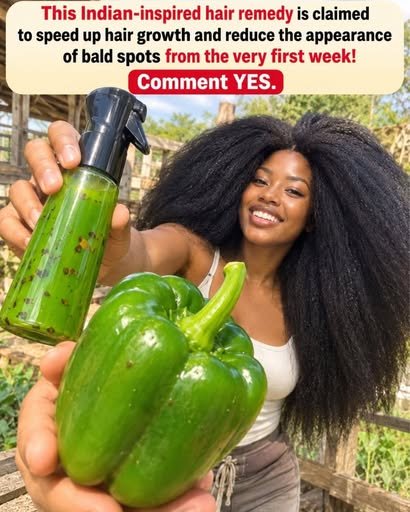
Hair thinning and visible scalp can be frustrating, especially when you begin noticing more hair in your brush, shower drain, or pillow. That is why traditional hair-care practices from India and other South Asian cultures continue to attract attention.
One popular approach combines coconut oil, fenugreek, amla, and curry leaves—ingredients traditionally used in scalp and hair care. These ingredients can provide conditioning and may help reduce dryness and breakage, but it is important to separate traditional beauty practices from proven medical treatments.
Despite online claims, no homemade oil can reliably regrow bald spots in one week. Hair grows slowly, and the cause of hair loss matters greatly. For hereditary hair loss, evidence-based treatments such as minoxidil may help some people, but noticeable results generally take months rather than days.
Still, this gentle oil blend can be a simple addition to a healthy hair-care routine.
Why These Ingredients Are Traditionally Used
Coconut Oil
Coconut oil is widely used as a hair-conditioning oil. Applying oil to the hair shaft can help reduce dryness and improve the feel and appearance of the hair.
It is best thought of as a conditioning treatment, rather than a proven cure for baldness.
Fenugreek Seeds
Fenugreek, also known as methi, has a long history of traditional use in South Asian hair care.
Fenugreek can be incorporated into an oil preparation for scalp massage, although evidence that it can independently regrow bald areas is limited.
Amla
Amla, or Indian gooseberry, is another traditional ingredient commonly found in South Asian hair oils.
It contains naturally occurring plant compounds and is frequently used in traditional hair-care preparations. However, more research is needed before amla can be considered a proven treatment for pattern hair loss.
Curry Leaves
Curry leaves are traditionally used in Indian hair-care routines and can add plant compounds to a homemade oil infusion.
They may make a pleasant traditional scalp treatment, but they should not be presented as a medically proven bald-spot treatment.
Indian-Inspired Hair Oil Recipe
Ingredients
- ½ cup coconut oil
- 1 tablespoon dried fenugreek seeds
- 8–10 fresh curry leaves, thoroughly washed and dried
- 1 tablespoon dried amla pieces or 1 teaspoon amla powder
- 1 small piece of fresh ginger, optional
- 1 small clean glass jar or bottle
How to Make It
1. Prepare the Ingredients
If you’re using fresh curry leaves, wash them thoroughly and allow them to dry completely.
This is important: introducing water into homemade oil can increase the risk of spoilage.
For a longer-lasting preparation, use completely dry ingredients.
2. Warm the Coconut Oil
Place the coconut oil in a small saucepan over very low heat.
You want the oil gently warmed—not smoking or boiling.
3. Add the Fenugreek and Curry Leaves
Add the fenugreek seeds and dried curry leaves.
Warm the mixture gently for approximately 5–8 minutes, stirring occasionally.
Avoid frying the ingredients at high temperatures.
4. Add Amla
Add the dried amla and continue warming the mixture for another few minutes.
Turn off the heat and allow the oil to cool completely.
5. Strain
Once completely cool, strain the oil through a clean, fine strainer or cheesecloth.
Transfer the finished oil into a clean, completely dry bottle.
6. Store Properly
Keep the bottle tightly closed and store it away from direct sunlight and moisture.
Because homemade infused oils do not undergo laboratory stability or microbial testing, prepare small batches and discard them if you notice an unusual smell, cloudiness, mold, or other signs of spoilage.
How to Use the Hair Oil
Start with a small amount rather than saturating your entire scalp.
- Part your hair into several sections.
- Apply a small amount of oil directly to the scalp.
- Massage gently with your fingertips for about 5 minutes.
- Spread any remaining oil through the lengths of your hair.
- Leave it on for 30–60 minutes.
- Wash thoroughly with a gentle shampoo.
- Repeat 1–2 times per week if your scalp tolerates it.
Avoid aggressive scratching or vigorous massage, especially if your scalp is irritated.
Can It Really Reduce Bald Spots in One Week?
This is where viral hair-care claims need a reality check.
There is no good evidence that this homemade oil can regrow a bald spot within seven days.
Hair follicles operate through growth cycles, and visible changes in hair density generally take considerably longer than a week. Even established treatments for pattern hair loss require consistent use over months. The American Academy of Dermatology notes that minoxidil may stimulate growth and reduce further hair loss, but results can take around 6–12 months to become apparent.
So if you try this traditional oil, judge it by more realistic goals:
- Softer-feeling hair
- Reduced dryness
- Better scalp and hair conditioning
- Less breakage from rough handling
- A healthier-looking appearance
Rather than expecting a completely bald area to suddenly fill with hair.
What Actually Causes Bald Spots?
A bald spot isn’t always caused by the same condition.
Hair loss can occur because of:
- Hereditary or pattern hair loss
- Alopecia areata
- Certain medications
- Nutritional deficiencies
- Thyroid problems
- Significant physical or emotional stress
- Scalp infections
- Tight hairstyles or repeated pulling
- Excessive chemical or heat damage
The American Academy of Dermatology emphasizes that determining the cause of hair loss is important because different types of hair loss require different approaches.
For example, a round, suddenly appearing bald patch could have a different cause from gradually receding temples.
When You Should See a Dermatologist
Don’t rely solely on homemade remedies if you notice:
- A bald patch appearing suddenly
- Rapidly increasing hair loss
- Significant scalp itching or inflammation
- Scaling, redness, or pain
- Broken hairs in specific areas
- Eyebrow or eyelash loss
- Hair loss accompanied by other unexplained symptoms
- A rapidly receding hairline or expanding thinning area
A dermatologist can examine your scalp and determine whether you have pattern hair loss, alopecia areata, an infection, nutritional issues, or another condition.
For some types of patchy hair loss, medical treatments can produce regrowth much more reliably than homemade oils.
Don’t Forget Nutrition
Healthy hair also depends on adequate nutrition.
Not getting enough protein, iron, or certain nutrients can contribute to hair loss. However, taking large amounts of supplements isn’t automatically better.
The American Academy of Dermatology specifically warns that excessive amounts of some nutrients—including selenium, vitamin A, and vitamin E—can actually contribute to hair loss.
A balanced diet containing protein, vegetables, fruits, legumes, whole grains, nuts, and other nutrient-rich foods is a better foundation than taking multiple hair supplements without knowing whether you have a deficiency.
Simple Hair-Care Habits That Can Help
Alongside your oil routine:
Be Gentle With Wet Hair
Wet hair is easier to damage. Handle it gently and avoid aggressive brushing.
Avoid Constant Pulling
Tight hairstyles that repeatedly pull on the roots can contribute to hair loss.
Limit Excessive Heat
Frequent high-temperature styling can damage the hair shaft and make hair appear thinner because of breakage.
Don’t Scratch Your Scalp
If your scalp is itchy, identify the underlying cause rather than repeatedly scratching it.
Eat Enough Protein
Hair is largely made of keratin, a protein, so adequate dietary protein is important for normal hair growth.
Avoid Random High-Dose Supplements
More vitamins do not necessarily mean more hair. If you suspect a nutritional deficiency, a healthcare professional can determine whether testing is appropriate.
A Simple Weekly Routine
For a gentle traditional hair-care routine:
1–2 times per week:
Apply a small amount of the infused oil and massage gently.
Regularly:
Wash your scalp according to how oily or dry it becomes.
Daily:
Handle your hair gently and avoid unnecessary pulling.
Long term:
Track your hairline and thinning areas with photographs taken under similar lighting.
This last step can be particularly useful because gradual changes are difficult to notice when you look at your hair every day.
Final Thoughts
This Indian-inspired fenugreek, amla, curry-leaf, and coconut-oil treatment can be a soothing traditional addition to a hair-care routine.
But don’t let an exciting internet claim create unrealistic expectations. It cannot be honestly guaranteed to regrow bald spots within one week.
If your goal is healthier-looking, better-conditioned hair, this simple oil treatment may be worth trying if your scalp tolerates it. If you’re experiencing genuine hair loss or bald patches, however, finding the underlying cause is much more important.
Evidence-based treatments can help certain types of hair loss, and starting appropriate treatment earlier can improve the chances of maintaining or regrowing hair.
Frequently Asked Questions
Can this oil regrow bald spots?
There is not enough evidence to say that this homemade oil can reliably regrow bald spots. Bald patches can have different causes and may require medical treatment.
How quickly does hair normally grow?
Hair growth is gradual, so a visible change in density generally cannot be expected after only a few days.
Can I leave the oil overnight?
You can, if your scalp tolerates it, but leaving oil on overnight isn’t necessary. A 30–60 minute treatment is sufficient for a simple conditioning routine.
Can I use this every day?
Daily application isn’t necessary. Start with once or twice a week and adjust according to how your scalp and hair respond.
What if the oil makes my scalp itchy?
Stop using it and wash your scalp. A reaction to an ingredient is possible. If irritation persists, seek medical advice.
What is a proven treatment for pattern hair loss?
Minoxidil is an evidence-based option for several forms of pattern hair loss. Treatment should be selected according to the type of hair loss and individual circumstances.
SEO Details
SEO Title: Indian-Inspired Hair Oil for Healthier Hair & Fuller-Looking Hair
Meta Description: Discover an Indian-inspired fenugreek, amla, curry leaf and coconut oil hair treatment, plus realistic tips for thinning hair and bald spots.
Focus Keyword: Indian-inspired hair remedy for hair growth
Slug: indian-inspired-hair-remedy-hair-growth
Category: Hair Care & Beauty
Tags: hair growth, Indian hair remedy, fenugreek hair oil, amla hair care, curry leaves for hair, coconut oil for hair, natural hair care, thinning hair, scalp care