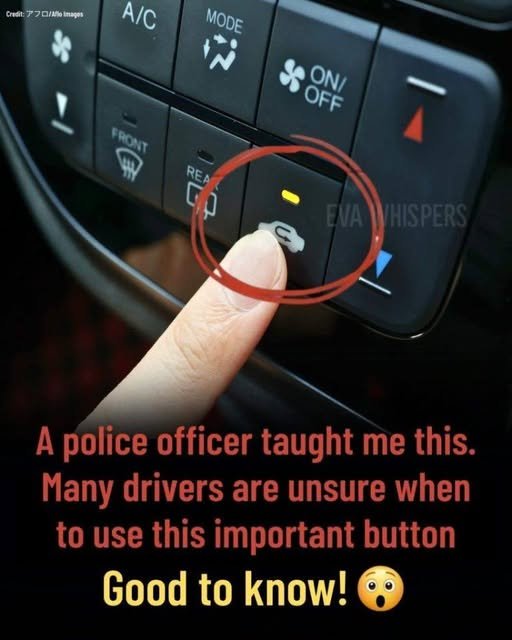
There is a small button on many car dashboards that drivers often overlook until they suddenly need it.
It usually shows a rectangle or rear window with three wavy lines. This is the rear-window defogger, and despite its simple appearance, it can be extremely useful when rain, humidity, frost, or condensation reduces your view through the rear glass.
The button doesn’t make the car’s interior warmer or cool the engine. Instead, it activates electrical heating elements built into the rear window. These thin wires warm the glass and help clear moisture, frost, or fog so you can see what’s behind the vehicle.
Toyota and other manufacturers describe the rear defogger specifically as a system for clearing the rear window, while some vehicles also connect it to heated exterior mirrors.
What Does the Rear Defogger Button Look Like?
The symbol varies slightly by vehicle, but it commonly looks like:
A rectangular window with three curved or wavy upward lines.
Don’t confuse it with the front windshield defogger.
The front defogger typically shows a windshield-shaped symbol with arrows or wavy lines pointing upward, while the rear defogger symbol represents the rear window.
Some vehicles combine the rear-window defogger with heated outside mirrors.
Because dashboard layouts vary between makes and models, your owner’s manual is the best source for identifying the exact button in your vehicle.
What Actually Happens When You Press It?
When you press the rear defogger button, electrical current passes through thin heating elements incorporated into the rear glass.
These elements warm the glass and help remove condensation, frost, or other moisture.
You may notice the symbol illuminate on the dashboard to show that the system is operating.
Many vehicles also switch the system off automatically after a certain period. For example, Toyota manuals describe automatic shutoff after a period of operation, while one Honda owner’s manual available through NHTSA describes automatic shutoff depending on conditions.
The exact operating time is vehicle-specific, so don’t assume every car behaves the same way.
When Should You Use the Button?
The rear defogger is particularly useful when the rear window becomes difficult to see through.
1. Rainy Weather
Rain and high humidity can increase condensation inside a vehicle.
If the rear glass becomes hazy, activating the rear defogger can help clear the moisture.
2. Cold Mornings
In colder climates, frost can form on the rear window.
The heating elements can help warm the glass and remove the frost.
3. High Humidity
When warm, humid air comes into contact with cooler glass, condensation can form.
The defogger helps by warming the glass surface.
4. Foggy Windows
If condensation is developing on the rear glass, the defogger can improve visibility.
Remember that the rear defogger is different from the climate-control settings used to clear the windshield.
Why Does Rear Visibility Matter So Much?
Your rear window provides important information about traffic behind you.
A fogged or frosted rear window can make it harder to identify:
- Vehicles approaching from behind
- Motorcycles
- Pedestrians or cyclists
- Lane positions
- Traffic conditions
- Vehicles when reversing
Clear windows and properly adjusted mirrors are important parts of maintaining a good view around the vehicle.
That’s why a seemingly insignificant dashboard button can become very useful during poor weather.
What About Heated Side Mirrors?
On some vehicles, the same button also activates heating elements in the exterior mirrors.
This can help remove condensation, frost, and sometimes raindrops from the mirror surfaces.
Toyota, for example, documents systems in which the rear-window defogger switch also operates outside rear-view mirror defoggers on equipped vehicles.
However, not every vehicle has heated mirrors, so check your owner’s manual.
Don’t Leave It Running Unnecessarily
The rear defogger uses electrical power.
That doesn’t mean you should be afraid to use it. It means you generally don’t need to leave it running after the window has cleared.
Vehicle manuals commonly advise switching the system off when it is no longer needed because prolonged operation consumes electrical power and can contribute to battery discharge, particularly under certain conditions.
If your vehicle has an automatic shutoff, it may turn itself off after a predetermined period.
Still, if the glass is already clear, switching it off manually is a sensible habit.
Can the Rear Defogger Damage the Glass?
Under normal operation, the system is designed to heat the rear window safely.
However, the heating elements are relatively delicate.
When cleaning the inside of the rear window, avoid aggressively scraping or damaging the thin heating wires.
A damaged heating element may stop working properly.
Manufacturer instructions specifically warn drivers to take care when cleaning the inside of the rear glass so the heater wires and connectors aren’t damaged.
What If Only Part of the Window Clears?
If you notice that certain sections of the rear window remain foggy while other areas clear, there could be an issue with one or more heating elements.
Possible causes include:
- Damaged heating lines
- A blown fuse
- Electrical connection problems
- A faulty switch
- A relay or control-system problem
If the system consistently fails to clear the glass, consult the vehicle’s owner’s manual or have the system inspected.
Avoid attempting electrical repairs yourself unless you have the appropriate knowledge and equipment.
Rear Defogger vs. Front Defogger
These two buttons are easy to confuse.
Rear Defogger
Uses heating elements built into the rear glass to help clear condensation, frost, or moisture.
Front Windshield Defogger
Uses the vehicle’s climate-control system to direct air toward the windshield and front side windows.
Modern climate-control systems may also use air conditioning to remove moisture from the air and help clear the windshield. Toyota’s owner’s information, for example, recommends using the windshield defogger and appropriate outside-air settings to clear the windshield.
So if your windshield is fogging up, don’t simply press the rear-window defogger button.
Use the appropriate front defogging setting.
What About the Recirculation Button?
Another dashboard button that drivers sometimes misunderstand is the air-recirculation button.
This setting changes whether the climate-control system primarily recirculates cabin air or brings in outside air.
In humid conditions, prolonged recirculation can sometimes contribute to window fogging because moisture from occupants remains inside the cabin. Vehicle systems differ, and some automatically change the air mode under certain conditions.
Toyota documentation notes that using cooling and dehumidification can help clear a fogging windshield.
If your windshield is fogging, use your vehicle’s recommended defogging procedure rather than relying on one button alone.
A Simple Visibility Routine for Drivers
When weather conditions reduce visibility, take a few seconds to check:
Before Driving
- Clean the windshield
- Clean the rear window
- Check the side mirrors
- Make sure the windshield isn’t fogged
- Turn on the appropriate defogger if necessary
- Check that the wipers work properly
- Make sure headlights and other exterior lights are clean
While Driving
If visibility suddenly becomes poor, reduce speed appropriately and use the vehicle’s climate and defogging controls.
Never continue driving simply because you can see “well enough” through a partially obscured window.
Common Mistakes Drivers Make
Mistake 1: Confusing the Front and Rear Defogger
Learn both symbols before you actually need them.
Mistake 2: Leaving the Defogger On
If the window is already clear, there is usually no reason to keep the system operating.
Mistake 3: Scraping the Heating Lines
Be careful when cleaning the inside of the rear glass.
Mistake 4: Assuming Every Car Works the Same Way
Automatic shutoff times, heated mirrors, and control layouts differ between vehicles.
Mistake 5: Ignoring a Defogger That No Longer Works
If the system suddenly stops clearing the rear window, it may need inspection.
The Bottom Line
That little dashboard button with the rear-window symbol and wavy lines isn’t just another button you can ignore.
The rear-window defogger is designed to improve visibility by heating the rear glass and helping clear condensation, frost, and moisture. On some vehicles, it also operates heated exterior mirrors.
It won’t solve every visibility problem, and the exact operation varies from vehicle to vehicle. But knowing what it does—and recognizing the symbol before you need it—can make driving in wet, cold, or humid conditions much easier.
The next time your rear window starts becoming cloudy, you won’t have to guess what that button is for.
SEO Details
SEO Title: The Dashboard Button Most Drivers Ignore — What It Really Does
Meta Description: Learn what the rear-window defogger button does, when to use it, how it clears fog and frost, and why it matters for driving visibility.
Focus Keyword: dashboard button rear defogger
Slug: dashboard-button-rear-defogger
Category: Car Tips & Maintenance
Tags: dashboard buttons, rear defogger, car defogger, rear window defogger, car safety tips, driving tips, dashboard symbols, car maintenance, windshield fog, vehicle visibility