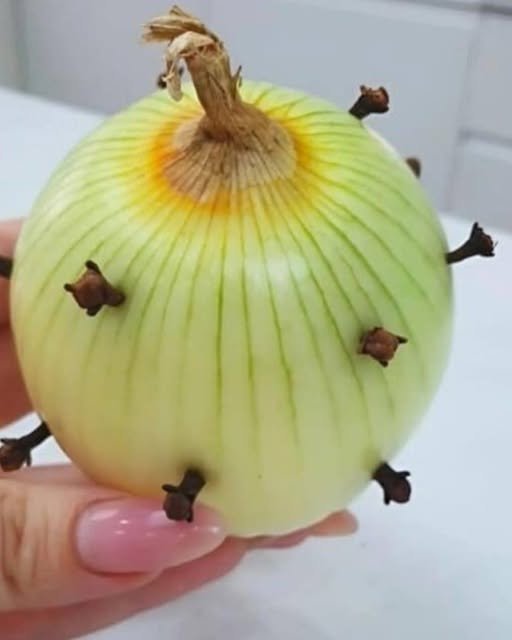
For generations, people have turned to simple kitchen ingredients when looking for traditional ways to support everyday wellness. One old-fashioned combination that continues to attract attention is onion with cloves.
Both ingredients have a long history in traditional food and household practices. Onions are commonly used in cooking and contain naturally occurring sulfur compounds and antioxidants, while cloves are an aromatic spice rich in plant compounds such as eugenol.
You may find recipes online claiming that placing cloves inside an onion or preparing an onion-and-clove mixture can cure infections, eliminate parasites, treat respiratory illnesses, or solve a variety of health problems. Those claims should be approached cautiously.
There is not enough clinical evidence to say that an onion-and-clove remedy can treat or cure a specific disease.
However, the combination can be an interesting traditional preparation and can be incorporated into a healthy diet when used appropriately.
Why Do People Combine Onion and Cloves?
The combination is largely rooted in traditional household practices.
Onions and cloves both have strong aromas and distinctive plant compounds. Cloves, in particular, contain eugenol, a compound that has been studied for its antioxidant and antimicrobial properties in laboratory research.
Onions contain compounds such as quercetin and sulfur-containing substances that have also been investigated for their biological activity.
Laboratory findings, however, don’t automatically mean that eating or applying these ingredients will treat an illness in humans.
That’s an important distinction when evaluating traditional remedies.
The Traditional Onion-and-Clove Preparation
There are several versions of this remedy.
One simple approach is to use a whole onion and cloves as an aromatic preparation.
Ingredients
- 1 medium onion
- 4–6 whole cloves
- Optional: a small amount of honey for flavor
- Optional: warm water or tea
How to Prepare It
- Peel the onion and rinse it thoroughly.
- Make several small openings in the onion using a clean knife.
- Insert the whole cloves into the openings.
- Place the onion in a small covered dish.
- Allow the cloves and onion to sit together for a short period if you’re using them primarily as an aromatic preparation.
- Alternatively, chop the onion and cloves and incorporate them into cooked food.
For eating, cooking the ingredients as part of a normal meal is the simplest and most practical approach.
A Warm Onion and Clove Drink
Some traditional recipes use onion and cloves to prepare a warm drink.
Ingredients
- ½ small onion, thinly sliced
- 2–3 whole cloves
- 1½ cups water
- 1 teaspoon honey, optional
Directions
- Add the water to a small saucepan.
- Add the onion and cloves.
- Bring the mixture to a gentle boil.
- Reduce the heat and simmer for approximately 5–10 minutes.
- Strain the liquid.
- Allow it to cool until comfortably warm.
- Add a small amount of honey if desired.
This drink has a strong flavor, so you may prefer to use a smaller amount of onion.
Honey should not be given to children under 12 months of age.
What Are the Potential Benefits?
It’s important to distinguish between nutritional benefits and claims that a remedy can treat disease.
Onions Provide Plant Compounds
Onions contain flavonoids, including quercetin, along with sulfur-containing compounds.
Including onions in a varied diet can contribute antioxidants and other nutrients.
Eating onions as part of a balanced diet is a more evidence-based approach than relying on onion preparations as medicine.
Cloves Contain Eugenol
Cloves are particularly notable for their eugenol content.
Eugenol has antioxidant and antimicrobial activity in laboratory studies, which helps explain why cloves have traditionally been used in food preservation, oral-care products, and various household preparations.
However, laboratory activity doesn’t establish that cloves can cure an infection or disease when consumed as a home remedy.
The Warm Liquid May Be Comforting
If onion and cloves are prepared as a warm drink, the warmth itself may feel soothing, particularly when you have a dry or irritated throat.
But feeling temporarily soothed isn’t the same as treating the underlying cause of an illness.
Can Onion and Cloves Treat a Cold?
This is one of the claims commonly associated with traditional onion remedies.
A warm drink may help you stay hydrated and can feel comforting when you’re experiencing a cold.
However, there is no strong evidence that an onion-and-clove drink eliminates the viruses responsible for ordinary colds.
For a typical cold, rest, fluids, and appropriate symptom management are generally more useful than relying on a single home remedy.
If symptoms are severe, persistent, or unusual, seek medical advice.
Can It Treat a Cough?
The ingredients may be used traditionally in homemade cough preparations, but that doesn’t mean the combination treats the cause of a cough.
Coughs can result from:
- Viral infections
- Allergies
- Asthma
- Acid reflux
- Postnasal drainage
- Smoking
- Respiratory infections
- Other medical conditions
If you have a persistent cough, it’s important to determine the cause rather than repeatedly treating the symptom with homemade mixtures.
Honey may help soothe cough symptoms in some adults and children over one year old, but it should not be given to infants under 12 months.
Can It Kill Parasites?
Online posts sometimes claim that onion and cloves can eliminate intestinal parasites.
These claims are not a substitute for proper diagnosis and treatment.
If you suspect a parasitic infection, a healthcare professional can determine whether testing is appropriate and recommend an effective treatment.
Do not rely on large amounts of cloves, concentrated herbal preparations, or raw onion mixtures as a replacement for medical care.
Can You Apply Onion and Cloves Directly to the Skin?
It’s better to be cautious.
Raw onion and concentrated clove preparations can irritate the skin. Clove oil in particular is highly concentrated and should not be casually applied directly to the skin.
If you’re interested in using a traditional preparation topically, dilute products appropriately and perform a patch test first. Avoid broken or irritated skin.
Never put concentrated clove oil in the eyes, nose, or other sensitive areas.
What Makes Clove Oil Different From Whole Cloves?
This distinction is important.
Using a few whole cloves in food is very different from using concentrated clove essential oil.
Essential oils contain highly concentrated plant compounds and can cause irritation or other adverse effects if misused.
More concentrated does not mean more effective or safer.
For ordinary home cooking, whole cloves are the simpler and safer option.
How to Include Onion and Cloves in Your Diet
You don’t need to prepare a special medicinal drink to benefit nutritionally from these foods.
Try using onions in:
- Soups
- Stews
- Stir-fries
- Omelets
- Rice dishes
- Salads
- Roasted vegetables
- Sauces
Cloves can be used in:
- Tea
- Rice dishes
- Curries
- Baked goods
- Spice blends
- Warm beverages
Using them as culinary ingredients allows you to enjoy their flavor and naturally occurring plant compounds without making exaggerated health claims.
Who Should Be Careful?
Even natural ingredients aren’t suitable for everyone in unlimited amounts.
Be cautious with concentrated clove preparations if you:
- Take blood-thinning medication
- Have a bleeding disorder
- Have significant liver disease
- Are preparing a concentrated herbal product
- Are pregnant or breastfeeding and considering medicinal amounts
- Have allergies to either ingredient
If you take prescription medications, ask your doctor or pharmacist before using concentrated herbal preparations regularly.
Don’t Overdo Cloves
Cloves are powerful in flavor, which is one reason only small quantities are normally used in cooking.
There’s no evidence that consuming large amounts provides extra health benefits.
High-dose or concentrated clove products can have different safety considerations than ordinary culinary use.
More is not necessarily better.
A Simple Way to Use This Traditional Remedy
If you enjoy the combination, keep it simple.
Add a few cloves to an onion-based soup or stew, or prepare a mild warm drink occasionally.
Think of it as a traditional food preparation, not a cure.
A healthy lifestyle built around nutritious foods, adequate hydration, sleep, physical activity, and appropriate medical care has a much stronger foundation than relying on one kitchen remedy.
Frequently Asked Questions
What is onion with cloves traditionally used for?
Onion and cloves have been used in various traditional household preparations, particularly warm drinks and aromatic mixtures. Traditional use does not prove that the combination treats a specific disease.
Can onion and cloves cure infections?
There isn’t sufficient clinical evidence to conclude that an onion-and-clove remedy cures infections. Suspected bacterial or other infections may require appropriate medical treatment.
Can I drink onion and clove tea every day?
A mild culinary-style preparation may be tolerated by many healthy adults, but there is no established medical benefit requiring daily consumption. Avoid concentrated preparations.
Is clove oil safe to drink?
Concentrated clove oil should not be treated like a culinary spice. Swallowing essential oils can be harmful, particularly in large amounts. Follow product-specific safety instructions and seek professional advice before internal use.
Can this remedy cure a cough?
It may provide a warm, soothing drink, but it isn’t proven to cure the underlying cause of a cough.
Can children drink onion and clove tea?
Children can have different safety considerations. Avoid medicinal-style herbal preparations for young children without guidance from a pediatric healthcare professional. Never give honey to a child under 12 months.
Does onion with cloves remove mucus?
A warm drink may feel soothing and help with fluid intake, but there is no good evidence that onion and cloves directly remove mucus from the respiratory tract.
When a Home Remedy Isn’t Enough
Traditional remedies can be comforting, but don’t let them delay appropriate medical care.
Seek medical attention if you experience:
- Difficulty breathing
- Chest pain
- Severe or worsening symptoms
- Persistent high fever
- Confusion
- Dehydration
- Coughing up blood
- Symptoms that aren’t improving as expected
- A serious allergic reaction
A kitchen remedy should complement sensible self-care—not replace medical evaluation when it’s needed.
Final Thoughts
The traditional combination of onion and cloves is an interesting example of how everyday kitchen ingredients have been used in home wellness practices for generations.
Onions provide plant compounds such as quercetin and sulfur-containing substances, while cloves contain eugenol and other naturally occurring compounds. These ingredients can certainly have a place in a balanced diet.
But it’s important not to confuse traditional use or laboratory research with proven medical treatment.
If you enjoy the flavor, use onion and cloves in soups, meals, or a mild warm drink. Keep concentrated preparations to a minimum, and don’t rely on the mixture to treat infections, parasites, chronic illnesses, or other medical conditions.
Sometimes the most sensible way to appreciate a traditional remedy is simply to enjoy it as food while keeping realistic expectations about what it can—and cannot—do.
Important: This article is for educational purposes only and does not diagnose, treat, or cure any medical condition. Consult a qualified healthcare professional before using concentrated herbal preparations, especially if you take medication or have an underlying health condition.
SEO Details
SEO Title: Onion With Cloves: Traditional Uses, Benefits & Safety
Meta Description: Discover the traditional uses of onion with cloves, how to prepare this simple remedy, potential benefits, safety considerations, and what science says.
Focus Keyword: onion with cloves
Slug: onion-with-cloves-traditional-remedy
Category: Natural Wellness
Tags: onion with cloves, traditional remedies, natural wellness, cloves benefits, onion benefits, home remedies, herbal drinks, healthy ingredients