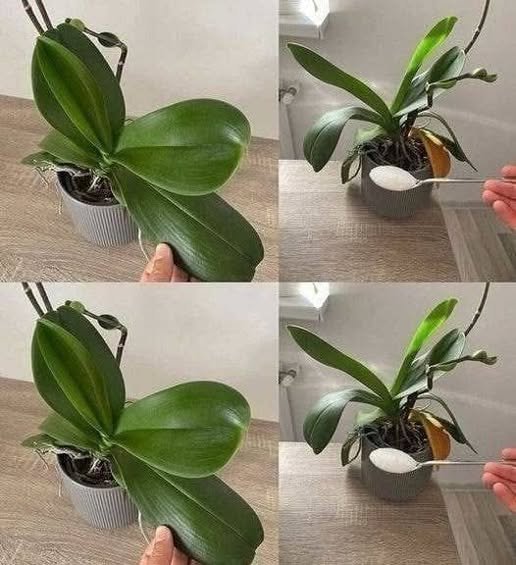
Orchids: Why a Small Amount of Fertilizer Can Make a Big Difference
Orchids are often considered delicate plants, but one of the biggest secrets to keeping them healthy is surprisingly simple: don’t overfeed them. Unlike many garden plants, orchids can respond very well to small, regular amounts of fertilizer rather than large doses.
The goal isn’t to give your orchid as much fertilizer as possible. It’s to provide the nutrients it needs without damaging its roots or interfering with healthy growth.
Why Orchids Need Fertilizer
Like all plants, orchids need nutrients to produce new leaves, roots, and flowers. In nature, many orchids grow attached to trees rather than directly in rich soil. They receive nutrients in small amounts from rainwater, decaying plant material, and surrounding organic matter.
Because of this natural growing environment, orchids generally do well with light and consistent feeding.
Fertilizer can provide important nutrients such as:
- Nitrogen: Supports healthy leaf and stem growth.
- Phosphorus: Plays a role in root development and flowering.
- Potassium: Supports overall plant health and helps with water regulation.
- Calcium and magnesium: Help support strong plant tissues and healthy growth.
- Trace minerals: Needed in smaller quantities for normal plant functions.
Why a Small Amount Is Better
More fertilizer doesn’t necessarily mean more flowers.
Using fertilizer at a high concentration can cause salts to build up around the orchid’s roots. Over time, this can damage delicate roots, resulting in brown or dry root tips, poor growth, or leaf problems.
A weaker fertilizer solution gives the plant access to nutrients without overwhelming the roots.
For many commonly grown orchids, such as Phalaenopsis, a diluted orchid fertilizer used regularly during active growth can be more beneficial than occasional heavy applications.
When to Fertilize Orchids
Orchids generally benefit most from fertilizer when they are actively growing.
Look for signs such as:
- New leaves appearing
- New roots developing
- New flower spikes forming
- Increased overall growth
During periods of active growth, you can generally fertilize according to the instructions on your orchid fertilizer, often using a diluted solution.
When growth slows significantly, particularly during cooler or darker periods, the plant usually needs less fertilizer.
Water Before Fertilizing
One helpful practice is to water the orchid before applying fertilizer.
Dry orchid roots can be more vulnerable to concentrated fertilizer solutions. Watering first helps moisten the roots and reduces the chance of fertilizer salts causing damage.
After watering, apply the diluted fertilizer according to the product’s directions.
Avoid allowing fertilizer solution to sit heavily in the crown or leaf joints.
Don’t Fertilize a Sick or Stressed Orchid Heavily
If an orchid is severely dehydrated, suffering from root damage, or otherwise stressed, adding extra fertilizer isn’t necessarily the solution.
First address the underlying problem.
For example, if the roots are damaged because the plant has been sitting in waterlogged growing medium, adding fertilizer won’t fix the root problem. The plant needs proper drainage and appropriate watering conditions first.
Flush the Growing Medium
Fertilizer salts can accumulate in orchid potting media over time.
Occasionally flushing the potting medium thoroughly with plain water can help wash away excess mineral buildup.
Allow plenty of water to drain through the pot, and never leave the orchid sitting in standing water.
This is especially useful for orchids grown in bark-based or other well-draining media.
What Kind of Fertilizer Should You Use?
A fertilizer specifically formulated for orchids is a convenient choice because it provides nutrients in proportions intended for orchid cultivation.
A balanced fertilizer can work well for general growth, while some growers adjust their fertilizer depending on the plant’s growth stage.
However, there is no need to constantly change fertilizers or use multiple products. Consistency and correct dilution are usually more important than using an expensive fertilizer.
Common Fertilizing Mistakes
Using Too Much
This is perhaps the biggest mistake. Stronger fertilizer isn’t automatically better.
Fertilizing Every Time With a Strong Solution
Frequent heavy feeding can increase salt buildup and damage roots.
Fertilizing Completely Dry Roots
Water first, particularly if the orchid is noticeably dry.
Ignoring the Plant’s Growth Cycle
An orchid actively producing roots and leaves has different nutritional needs from one that is barely growing.
Forgetting to Flush
If you regularly fertilize, occasional flushing with plain water can help reduce fertilizer residue.
Can Fertilizer Make Orchids Bloom?
Fertilizer can support healthy growth, but fertilizer alone does not guarantee flowering.
Light, temperature, watering, humidity, root health, and the orchid’s natural growth cycle all influence blooming.
If an orchid isn’t flowering, increasing fertilizer dramatically may actually do more harm than good. Make sure the plant is receiving appropriate light and care before assuming it needs more nutrients.
A Simple Orchid Feeding Routine
A straightforward approach is:
- Check that the orchid is actively growing.
- Water the plant thoroughly.
- Use a quality orchid fertilizer diluted according to its label instructions.
- Apply the fertilizer to the growing medium rather than allowing it to collect in the crown.
- Allow excess water to drain completely.
- Occasionally flush the pot with plain water to reduce salt buildup.
- Reduce or pause feeding when the orchid’s growth naturally slows.
Final Thoughts
When it comes to orchids, more fertilizer isn’t necessarily better. These plants often thrive when nutrients are supplied gently and consistently.
A small amount of properly diluted fertilizer can support healthy roots, leaves, and flower development while reducing the risk of fertilizer burn and salt buildup.
The most important lesson is simple: feed your orchid lightly, water appropriately, provide good light and drainage, and pay attention to the plant’s growth rather than trying to force it with extra fertilizer.
Meta Description
Learn why orchids can benefit from small amounts of fertilizer, how to feed them safely, avoid root damage, prevent salt buildup, and encourage healthy growth and blooms.