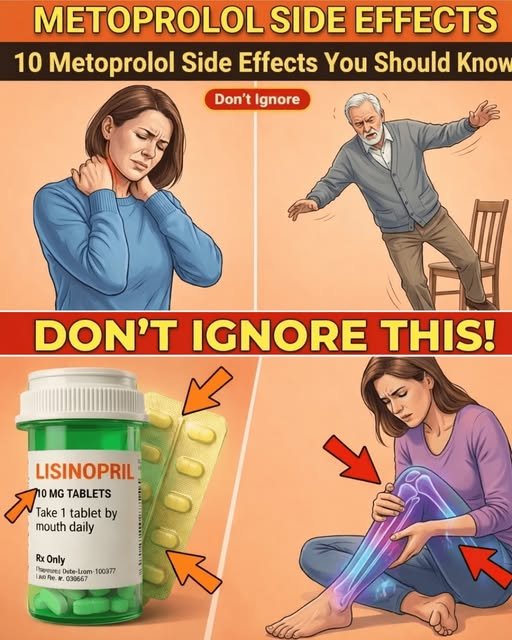
10 Overlooked Metoprolol Side Effects You May Not Realize Are Related
Metoprolol is a beta-blocker commonly prescribed for high blood pressure, angina, certain abnormal heart rhythms, heart failure, and after a heart attack. It works partly by slowing the heart rate and reducing the workload on the heart.
Many people tolerate it well, but some side effects can be subtle and may not immediately seem related to the medication.
1. 😴 Unusual Tiredness or Low Energy
One of the more commonly reported effects is fatigue or tiredness. Because metoprolol slows the heart rate and reduces the body’s response to adrenaline, some people may notice less energy, particularly when starting treatment or after a dose increase.
If tiredness is persistent or interferes with normal activities, discuss it with your doctor rather than changing the dose yourself.
2. 🥴 Dizziness or Lightheadedness
You may feel dizzy, particularly when standing up quickly.
This can occur because metoprolol can lower blood pressure and slow the heart rate. If dizziness is frequent or severe, your blood pressure and pulse should be checked.
3. 🧊 Cold Hands and Feet
Some people notice that their hands or feet feel unusually cold.
This is a recognized cardiovascular effect associated with beta-blockers, including metoprolol.
Keeping your extremities warm may help, but persistent or painful coldness should be discussed with your healthcare professional.
4. 😔 Changes in Mood
Depressive symptoms have been reported with metoprolol, although they don’t occur in everyone.
Older prescribing information also reports depression, confusion, and short-term memory problems among reported nervous-system effects.
Don’t assume that a significant mood change is simply part of getting older or being stressed—mention it to your doctor.
5. 🌙 Sleep Problems and Vivid Dreams
Some people may experience insomnia or unusual/vivid dreams while taking metoprolol. These effects have been reported in prescribing information.
If sleep problems began after starting or increasing metoprolol, tell your doctor.
6. 💭 Digestive Changes
Metoprolol can cause gastrointestinal symptoms, including diarrhea.
If diarrhea is persistent, severe, or accompanied by dehydration, contact your healthcare professional.
7. 👄 Dry Mouth
A surprisingly easy symptom to overlook is dry mouth.
MedlinePlus lists dry mouth among possible metoprolol side effects.
Drinking water regularly and maintaining good oral hygiene can help.
8. 🧴 Skin Rash or Itching
Some people develop rash or itching while taking metoprolol.
A mild rash should still be reported if it persists. If you develop facial swelling, difficulty breathing, or another sign of a severe allergic reaction, seek emergency medical attention.
9. ❤️ A Noticeably Slow Heartbeat
Because metoprolol intentionally slows the heart rate, some people may notice their pulse becoming unusually slow.
A slow pulse isn’t automatically dangerous—the appropriate heart rate depends on the individual and why the medication was prescribed. However, fainting, severe dizziness, weakness, or an irregular heartbeat warrants prompt medical evaluation.
10. 🩸 Low-Blood-Sugar Warning Signs May Be Less Obvious
This is particularly important for people with diabetes.
Metoprolol can increase the risk of hypoglycemia and may mask some warning signs of low blood sugar, making it harder to recognize an episode.
People with diabetes should discuss glucose monitoring and symptoms with their healthcare professional.
⚠️ Symptoms That Shouldn’t Be Ignored
Contact a healthcare professional promptly if you experience:
- Fainting
- Significant swelling of the feet, ankles, or legs
- Unexplained or sudden weight gain
- Shortness of breath or difficulty breathing
- A rapid, pounding, or irregular heartbeat
- Severe dizziness
These can sometimes indicate a more serious reaction or heart-related problem.
🚫 Don’t Stop Metoprolol Suddenly
One of the most important things to remember is not to abruptly stop metoprolol on your own. Sudden discontinuation can cause serious heart problems, particularly in people taking it for heart disease. Your doctor can determine whether the dose should be reduced gradually.
Bottom Line
Metoprolol can be an important and effective heart medication, and many people take it without significant problems. The key is recognizing persistent symptoms and discussing them with your doctor rather than stopping the medication yourself.
Important: Side effects can vary depending on whether you’re taking metoprolol tartrate or metoprolol succinate, your dose, other medicines, and the condition being treated.