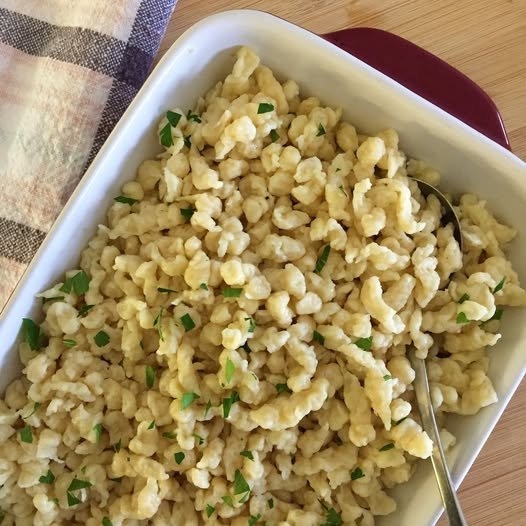
Hungarian Dumplings, often known as Nokedli or Galuska, are one of the simplest and most comforting side dishes in Hungarian cooking. These little rustic dumplings are soft, tender, and wonderfully chewy, making them perfect alongside rich stews, paprikash, and creamy sauces.
Made with just a handful of everyday ingredients—flour, eggs, water, and salt—Hungarian dumplings are inexpensive and surprisingly easy to prepare. The dough is traditionally dropped or pressed directly into simmering water, creating irregular little pieces that look homemade because they are.
They are especially delicious with Chicken Paprikash, beef stew, mushroom sauce, or any dish with plenty of flavorful gravy. Once you try them, they may become your favorite alternative to noodles, rice, or potatoes.
Why You’ll Love These Hungarian Dumplings
- Made with simple pantry ingredients
- Soft, tender, and slightly chewy
- Ready in about 20 minutes
- No rolling or complicated shaping required
- Perfect for soaking up sauces and gravies
- Delicious as a side dish or base for a hearty meal
- Easy enough for beginners
Ingredients
- 2 cups all-purpose flour
- 3 large eggs
- ½ teaspoon salt
- ¾ cup water, approximately
- 1 tablespoon butter, for serving
- 1 tablespoon chopped fresh parsley, optional
Optional Additions
For extra flavor, you can add:
- ¼ teaspoon black pepper
- ½ teaspoon garlic powder
- 1 tablespoon chopped fresh parsley
- A pinch of paprika
Keep in mind that traditional Hungarian nokedli are intentionally simple, so the basic version is often the best choice when serving them with a flavorful main dish.
How to Make Hungarian Dumplings
Step 1: Prepare the Dough
Add the flour and salt to a large mixing bowl.
Make a well in the center and add the eggs.
Begin mixing while gradually adding the water.
Stir until you have a thick, sticky dough.
The dough should be softer and wetter than typical pasta dough. It should not be kneadable like bread dough.
Don’t worry if it looks slightly uneven. That’s exactly what you want for rustic Hungarian dumplings.
Step 2: Bring Water to a Boil
Fill a large pot with water and add a generous amount of salt.
Bring the water to a steady boil.
Once boiling, reduce the heat slightly so the water maintains a strong simmer rather than an aggressive boil.
Step 3: Shape the Dumplings
Traditionally, nokedli are made using a nokedli spaetzle-style maker.
Place some of the dough onto the dumpling maker and press it over the simmering water. Small pieces of dough will fall directly into the water.
If you don’t have a dumpling maker, don’t worry.
You can use a large-holed colander, sturdy grater, or even a teaspoon. Drop small portions of dough into the water, working in batches.
Try not to make the dumplings too large because they will expand as they cook.
Step 4: Cook the Dumplings
Once the dumplings enter the water, they will initially sink.
After a short time, they will rise to the surface.
Continue cooking for approximately 2–4 minutes, depending on their size.
Cut one dumpling open to check that the center is cooked through.
Avoid overcooking them because they can become heavy or overly soft.
Step 5: Drain
Use a slotted spoon or colander to remove the cooked dumplings.
Drain thoroughly.
If you’re not serving them immediately, toss them with a tiny amount of butter or oil to prevent sticking.
Step 6: Finish With Butter
Transfer the dumplings to a serving bowl.
Add butter and gently toss until coated.
Sprinkle with fresh parsley if desired.
Serve immediately while warm.
Tips for Perfect Hungarian Dumplings
Don’t Make the Dough Too Thick
The consistency of the dough is one of the most important parts of the recipe.
It should be thick and sticky but still soft enough to press through a dumpling maker.
If it is extremely stiff, add water one tablespoon at a time.
If it is too thin and runny, add a little more flour.
Keep the Water Well Salted
Because the dumpling dough itself contains relatively little salt, properly salted cooking water helps season the dumplings throughout.
Cook in Batches
Avoid overcrowding the pot.
Adding too many dumplings at once can lower the water temperature and cause them to stick together.
Work in two or three batches if necessary.
Stir Gently
Once the dumplings enter the water, give them a gentle stir with a wooden spoon or slotted spoon.
This helps prevent them from sticking to the bottom of the pot.
Don’t Overwork the Dough
Mix the ingredients just until combined.
Overmixing can develop too much gluten and make the dumplings tougher than you want.
How to Serve Hungarian Dumplings
Hungarian dumplings are especially good with dishes that have rich sauces.
Try serving them with:
- Chicken paprikash
- Beef goulash
- Pork stew
- Mushroom paprikash
- Beef and onion gravy
- Creamy mushroom sauce
- Chicken stew
- Braised beef
- Roasted meats with gravy
The little dumplings are excellent at absorbing sauce, so don’t be shy about spooning plenty of gravy over the top.
Hungarian Dumplings With Paprikash
One of the most famous combinations is nokedli with chicken paprikash.
The creamy paprika sauce coats the dumplings beautifully, while their soft but slightly chewy texture provides a wonderful contrast to tender chicken.
For a complete meal, serve the dumplings directly underneath the chicken and spoon the paprika sauce generously over everything.
Variations
Buttered Nokedli
Keep things simple by tossing freshly cooked dumplings with butter, salt, and parsley.
Paprika Dumplings
Add a small amount of sweet Hungarian paprika to the dough for extra color and flavor.
Herb Dumplings
Add finely chopped parsley, dill, or chives to the dough.
Garlic Butter Dumplings
Toss cooked dumplings with butter and a little finely minced garlic for a flavorful side dish.
Cheesy Dumplings
Add grated cheese just after cooking while the dumplings are still hot.
Can You Make Hungarian Dumplings Ahead?
Yes.
Cook the dumplings according to the recipe, drain them well, and toss them lightly with butter or oil.
Allow them to cool and store them in an airtight container in the refrigerator.
When ready to serve, gently reheat them in a skillet with a little butter or in simmering water for a short time.
For the best texture, avoid repeatedly reheating them.
Storage
Store leftover Hungarian dumplings in an airtight container in the refrigerator for up to 3–4 days.
To reheat, place them in a skillet with a little butter and warm over medium-low heat.
You can also microwave them with a small splash of water, covering the container loosely to help retain moisture.
Can Hungarian Dumplings Be Frozen?
Yes.
Allow cooked dumplings to cool completely, then spread them on a baking sheet and freeze them separately.
Once firm, transfer them to a freezer-safe container or bag.
They can be frozen for approximately 2–3 months for best quality.
Reheat directly from frozen in simmering water or a buttered skillet until hot.
Frequently Asked Questions
Are Hungarian dumplings the same as spaetzle?
They are very similar. Hungarian nokedli and Central European spaetzle are both small dumplings made from a soft dough that is pressed or dropped into boiling water. Nokedli are particularly associated with Hungarian cuisine.
Why are my dumplings tough?
The dough may have been overmixed, too much flour may have been added, or the dumplings may have been overcooked.
Why are my dumplings falling apart?
The dough may be too wet. Add a little more flour and test one dumpling in the simmering water before cooking the entire batch.
Do I need a special dumpling maker?
No. A nokedli maker makes the process easier and produces more uniform dumplings, but you can use a large-holed colander or carefully drop small portions of dough into the water.
Can I use milk instead of water?
Water is the traditional simple choice, but a small amount of milk can make the dumplings somewhat richer and softer. Start with the traditional water-based recipe if you’re making them for the first time.
Recipe at a Glance
Prep Time: 10 minutes
Cook Time: 10 minutes
Total Time: About 20 minutes
Servings: 4–6
Cuisine: Hungarian
Course: Side Dish
Final Thoughts
Hungarian Dumplings are proof that delicious comfort food doesn’t need a long ingredient list. With flour, eggs, water, and salt, you can create soft, tender little dumplings that pair beautifully with rich sauces and hearty Hungarian dishes.
Their rustic appearance is part of their charm. They don’t need to be perfectly shaped—in fact, the irregular pieces are what make homemade nokedli so appealing.
Serve them warm with butter for a simple side dish, or pair them with chicken paprikash or goulash for a satisfying Hungarian-inspired meal.
SEO Title
Hungarian Dumplings Recipe (Nokedli) – Easy Homemade Hungarian Side Dish
Meta Description
Learn how to make soft and tender Hungarian Dumplings, also called nokedli, with simple ingredients. This easy homemade recipe pairs perfectly with paprikash, goulash, and rich sauces.