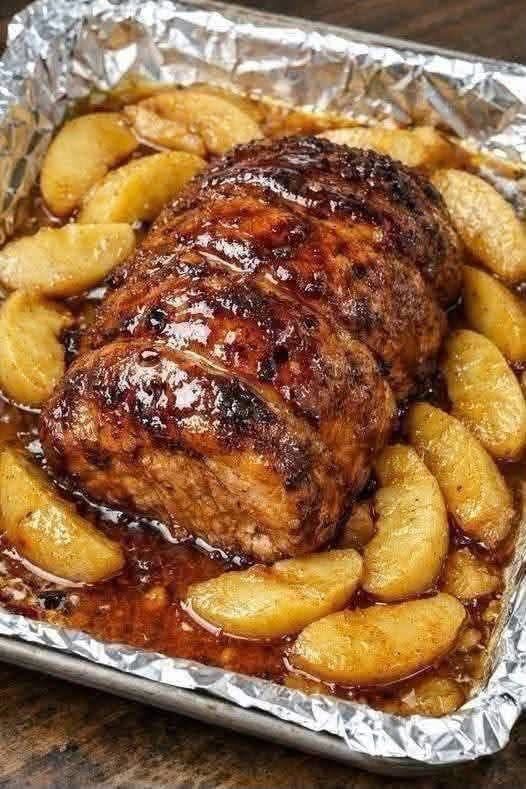
There is something wonderfully comforting about the combination of savory roasted pork and sweet, tender apples. This Glazed Roasted Pork Loin with Caramelized Apples brings both flavors together in one beautiful oven-roasted dish. The pork is seasoned generously, seared until golden, brushed with a glossy honey-Dijon glaze, and roasted until juicy and tender. Around it, apple wedges slowly soften and caramelize, absorbing the flavorful juices from the pork and creating a naturally sweet side dish.
This recipe looks impressive enough for a holiday dinner or special gathering, but it is simple enough to prepare for a cozy family meal. The glaze adds a delicious balance of sweetness, tanginess, and savory flavor, while the apples provide a soft, buttery texture and a subtle caramelized finish.
Why You’ll Love This Recipe
- Juicy and flavorful roasted pork loin
- Sweet and savory flavor combination
- Beautiful presentation straight from the roasting pan
- Caramelized apples cook alongside the pork
- Simple ingredients that are easy to find
- Perfect for Sunday dinner, holidays, or entertaining
- Can be prepared ahead of time
- Makes delicious leftovers
Ingredients
For the Pork
- 1 boneless pork loin roast, about 2½–3 pounds
- 2 tablespoons olive oil
- 1½ teaspoons salt
- 1 teaspoon freshly ground black pepper
- 1 teaspoon garlic powder
- 1 teaspoon paprika
- 1 teaspoon dried thyme
- ½ teaspoon dried rosemary
- ½ teaspoon onion powder
For the Glaze
- ⅓ cup honey or pure maple syrup
- 2 tablespoons Dijon mustard
- 1 tablespoon apple cider vinegar
- 1 tablespoon olive oil
- 2 cloves garlic, finely minced
- ½ teaspoon dried thyme
- ¼ teaspoon black pepper
- Pinch of salt
For the Caramelized Apples
- 3–4 firm apples
- 2 tablespoons butter
- 2 tablespoons brown sugar
- 1 tablespoon maple syrup or honey
- ½ teaspoon ground cinnamon
- Pinch of salt
- ¼ cup apple cider or unsweetened apple juice
- 1 teaspoon lemon juice
Choosing the Right Apples
Firm apples work best because they hold their shape during roasting.
Honeycrisp gives you a sweet, slightly crisp result, while Granny Smith provides a pleasant tart contrast to the sweet glaze. Gala, Fuji, Pink Lady, or Braeburn apples are also excellent choices.
For a more balanced flavor, you can even use a combination of sweet and tart apples.
Step 1: Prepare the Pork
Remove the pork loin from the refrigerator about 20–30 minutes before cooking. This takes some of the chill off the meat and helps it cook more evenly.
Pat the pork thoroughly dry with paper towels. Removing excess moisture is important because it allows the outside to brown properly.
In a small bowl, combine the salt, black pepper, garlic powder, paprika, thyme, rosemary, and onion powder.
Rub the pork with olive oil, then coat it generously with the seasoning mixture. Make sure all sides are covered.
Step 2: Prepare the Glaze
In a small bowl, whisk together the honey, Dijon mustard, apple cider vinegar, olive oil, minced garlic, thyme, black pepper, and salt.
The honey provides sweetness and helps create a beautiful glossy exterior. Dijon mustard adds sharpness, while apple cider vinegar keeps the glaze from becoming overly sweet.
Set aside about half of the glaze for brushing onto the pork during roasting.
Important: If you use the glaze on raw pork, keep that portion separate from any glaze you plan to serve at the table.
Step 3: Sear the Pork
Heat 2 tablespoons of olive oil in a large oven-safe skillet over medium-high heat.
Place the seasoned pork loin into the hot pan. Sear it for approximately 2–3 minutes per side, turning carefully until the exterior develops a deep golden-brown color.
Don’t rush this step. A good sear creates a flavorful crust and gives the finished pork a much more appetizing appearance.
Once browned, remove the pan from the heat.
Step 4: Prepare the Apples
Wash the apples well and cut them into thick wedges. You can peel them if you prefer, but leaving the skins on helps the wedges maintain their shape and adds attractive color.
Remove the cores and seeds.
Place the apple wedges in a bowl and toss them with melted butter, brown sugar, maple syrup, cinnamon, salt, and lemon juice.
The lemon juice adds a little brightness and prevents the apples from becoming overly sweet.
Step 5: Arrange Everything in the Roasting Pan
If you’re using a baking or roasting pan rather than an oven-safe skillet, line the pan with aluminum foil for easier cleanup.
Place the seared pork loin in the center.
Arrange the seasoned apple wedges around the pork, keeping them in a single layer as much as possible.
Pour the apple cider or apple juice around the apples rather than directly over the top of the pork. This creates moisture in the pan and helps develop flavorful juices as everything roasts.
Step 6: Add the Glaze
Brush the pork generously with the prepared glaze.
Place the pan in a preheated 375°F (190°C) oven.
Roast uncovered.
After approximately 20 minutes, carefully brush the pork with another layer of glaze.
Continue roasting until the thickest part of the pork reaches an internal temperature of 145°F (63°C).
The exact cooking time will vary depending on the size and shape of your pork loin, so using a meat thermometer is much more reliable than cooking strictly by the clock.
A 2½–3-pound pork loin will generally take around 45–65 minutes, but begin checking the temperature earlier.
Step 7: Caramelize the Apples
The apples can remain around the pork as it finishes roasting.
About halfway through cooking, gently turn the apple wedges with tongs or a spatula so that they brown more evenly.
If the apples begin becoming very soft before the pork is finished, remove them from the pan and return them during the final few minutes if desired.
The finished apples should be tender but still hold their shape, with golden-brown edges and a glossy caramelized coating.
Step 8: Rest the Pork
When the pork reaches 145°F (63°C), remove it from the oven.
Transfer the pork to a cutting board and loosely cover it with foil.
Allow it to rest for 10–15 minutes before slicing.
This resting period is important because it allows the juices to redistribute throughout the meat. Cutting immediately can cause more of the flavorful juices to escape onto the cutting board.
Step 9: Make a Quick Pan Sauce
Don’t throw away those delicious pan juices.
Place the roasting pan over low heat if it is suitable for stovetop use, or transfer the juices to a small saucepan.
Add about ¼ cup apple cider or chicken broth and scrape up the browned bits from the bottom.
Stir in 1 teaspoon Dijon mustard and a small drizzle of honey or maple syrup if desired.
Simmer for 2–4 minutes until slightly reduced.
Taste and adjust the seasoning with a little salt, pepper, or apple cider vinegar.
This quick sauce can be spooned over the sliced pork just before serving.
How to Slice the Pork
After resting, use a sharp carving knife to cut the pork loin into slices approximately ½ inch thick.
Arrange the slices on a serving platter and surround them with the caramelized apples.
Spoon some of the pan juices over the pork and serve the remaining sauce on the side.
The result should be tender slices of pork with a glossy golden exterior, surrounded by soft apples with caramelized edges.
Tips for Juicy Pork Loin
Don’t overcook it
Pork loin is lean, so overcooking can quickly make it dry. Use an instant-read thermometer and remove it from the oven when the thickest portion reaches 145°F (63°C).
Pat the pork dry
A dry surface browns much better than a wet one. Take a few seconds to thoroughly pat the pork with paper towels before seasoning.
Sear before roasting
Searing creates a flavorful browned exterior and adds depth to the pan juices.
Don’t cover the pork
Roast the pork uncovered so the glaze can caramelize and develop a beautiful crust.
Let it rest
Give the pork at least 10 minutes to rest before slicing. This simple step makes a noticeable difference in texture.
Watch the glaze
Because honey and maple syrup contain natural sugars, the glaze can darken quickly. If the exterior becomes too dark before the pork is cooked, loosely tent the roast with foil for the remainder of cooking.
Variations
Apple and Onion Pork Loin
Add sliced yellow onions alongside the apples. The onions become sweet and tender as they roast and pair beautifully with the pork.
Cranberry Apple Pork Loin
Add a handful of dried cranberries during the final 15 minutes of roasting for a festive sweet-tart flavor.
Garlic Herb Version
Increase the garlic and add fresh rosemary, sage, or thyme for a more savory herb-forward flavor.
Maple Dijon Version
Replace the honey completely with maple syrup for a deeper, more autumn-inspired flavor.
Spiced Apple Version
Add a small pinch of nutmeg or allspice to the apples along with the cinnamon.
What to Serve with Pork Loin
This dish already includes a sweet apple component, so simple savory sides work especially well.
Try serving it with:
- Creamy mashed potatoes
- Roasted baby potatoes
- Garlic green beans
- Steamed broccoli
- Roasted carrots
- Brussels sprouts
- Buttered noodles
- Simple green salad
- Dinner rolls
- Rice pilaf
For a holiday meal, mashed potatoes and roasted vegetables make particularly good companions.
Storage
Allow leftover pork and apples to cool before transferring them to airtight containers.
Refrigerate for up to 3–4 days.
To reheat, place the pork in a covered baking dish with a splash of broth or apple juice. Warm gently in a low oven until heated through.
For individual portions, microwave in short intervals to avoid drying out the pork.
The apples can also be reheated separately in a skillet over low heat.
Can You Freeze Pork Loin?
Yes. Cooked pork loin can be frozen for longer storage.
Slice the cooled pork and place it in an airtight freezer-safe container or freezer bag. Add a little pan sauce or cooking juices before freezing to help maintain moisture.
Freeze for up to about 2–3 months for best quality.
Thaw overnight in the refrigerator before reheating.
Frequently Asked Questions
Can I use pork tenderloin instead of pork loin?
Yes, but they are different cuts and require different cooking times. Pork tenderloin is much smaller and cooks considerably faster. If using tenderloin, begin checking the internal temperature much earlier.
Do I have to sear the pork first?
You can roast it without searing, but searing gives the exterior better color and adds extra flavor to the finished dish.
Can I use green apples?
Absolutely. Granny Smith apples are an excellent choice because their tart flavor contrasts nicely with the sweet glaze.
Can I prepare this ahead of time?
You can season the pork and prepare the glaze several hours ahead. Keep everything refrigerated until you’re ready to cook. The apples are best cut closer to cooking time.
Why are my apples too soft?
Apples vary considerably in texture. Softer varieties can break down during a long roast. Choose firm apples and cut them into relatively thick wedges. You can also add them halfway through the cooking process rather than at the beginning.
Can I make the glaze sweeter?
Yes. Add a little more honey or maple syrup. However, keep in mind that too much sugar can cause the glaze to brown or burn before the pork is finished.
How do I know when pork loin is done?
The most dependable method is an instant-read thermometer inserted into the thickest part of the meat. Pork loin should reach 145°F (63°C), followed by a resting period.
Recipe at a Glance
Prep Time: 20 minutes
Cook Time: 45–65 minutes
Resting Time: 10–15 minutes
Total Time: About 1 hour 20 minutes
Servings: 6–8
Course: Main Course
Cuisine: American-inspired
Cooking Method: Oven Roasted
Final Thoughts
Glazed Roasted Pork Loin with Caramelized Apples is the kind of recipe that turns simple ingredients into a centerpiece-worthy dinner. The savory, herb-seasoned pork develops a beautiful golden crust while the honey-Dijon glaze adds a glossy combination of sweet and tangy flavors.
The caramelized apples are what make this dish especially memorable. As they roast, their natural sweetness intensifies and their edges become beautifully golden. Served alongside juicy slices of pork and spoonfuls of the flavorful pan juices, every bite offers a delicious balance of savory, sweet, tangy, and buttery flavors.
Whether you’re preparing Sunday dinner, hosting guests, or simply looking for a comforting oven-roasted meal, this recipe brings an impressive presentation without requiring complicated techniques.
SEO Title: Glazed Roasted Pork Loin with Caramelized Apples Recipe
Meta Description: Make this juicy Glazed Roasted Pork Loin with Caramelized Apples featuring a honey-Dijon glaze, tender roasted pork, and beautifully caramelized apple wedges.