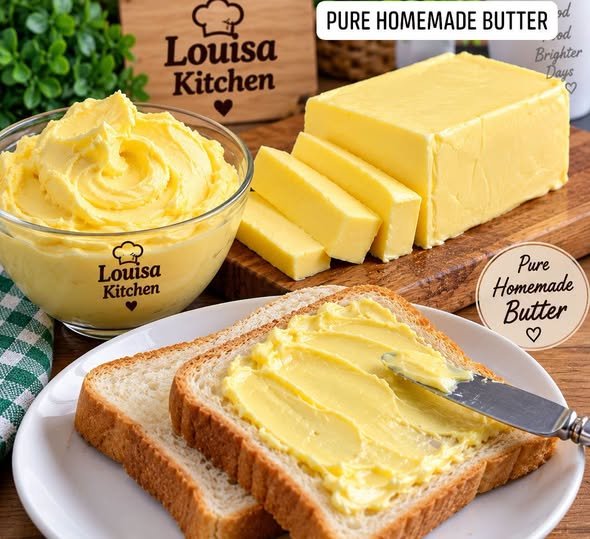
There is something wonderfully old-fashioned about making butter at home. With just one simple ingredient—heavy cream—you can make rich, creamy homemade butter that tastes fresher than anything from a package.
The process is surprisingly easy. All you need to do is whip the cream past the whipped-cream stage until the butterfat separates from the liquid buttermilk. After a little rinsing and kneading, you’ll have fresh butter ready to spread on warm bread, melt over vegetables, or use in your favorite recipes.
Ingredients
- 2 cups heavy whipping cream, preferably cold
- ¼ teaspoon salt, optional
- Ice-cold water, for rinsing
Equipment
- Stand mixer, hand mixer, or food processor
- Large bowl
- Fine-mesh strainer
- Spatula or wooden spoon
- Clean airtight container
How to Make Homemade Butter
1. Pour the Cream Into Your Mixer
Add the cold heavy cream to a large mixing bowl if using a hand mixer, or place it in the bowl of a stand mixer fitted with the whisk attachment.
Do not fill the bowl more than halfway because the cream will expand as it whips.
2. Whip the Cream
Begin mixing on medium speed.
The cream will first become liquid and foamy, then gradually turn into whipped cream. Keep mixing beyond this stage.
After several more minutes, the whipped cream will become thicker and begin to look grainy. Eventually, yellowish butter clumps will separate from a thin, milky liquid.
This liquid is fresh buttermilk.
3. Separate the Butter
Stop the mixer and pour the contents through a fine-mesh strainer placed over a bowl.
Press the butter gently with a spatula or clean spoon to remove as much liquid as possible.
Save the strained buttermilk for pancakes, biscuits, waffles, or other baking recipes.
4. Rinse the Butter
Place the butter in a bowl and cover it with very cold water.
Gently press and knead the butter with a spatula or clean hands. The water will become cloudy as more buttermilk is released.
Pour off the cloudy water and replace it with fresh ice-cold water.
Repeat until the water is mostly clear.
This step is important because removing as much remaining buttermilk as possible helps the homemade butter stay fresh longer.
5. Knead Out Excess Water
Gather the butter together and gently press it with a spatula or wooden spoon.
Continue pressing and folding until very little water comes out.
Avoid aggressively squeezing or warming the butter with your hands. You want to keep it cool and firm.
6. Add Salt
If you want salted butter, add about ¼ teaspoon of salt and knead it through evenly.
For unsalted butter, simply leave the salt out.
Taste and adjust the seasoning if desired.
7. Shape and Store
Shape the butter into a block, roll, or small portions.
Transfer it to a clean airtight container or wrap it tightly and refrigerate.
Your homemade butter is now ready to use.
How Long Does Homemade Butter Last?
Homemade butter contains fewer preservatives than commercial butter, so proper storage is important.
Keep it refrigerated in a clean, airtight container. Because homemade butter can retain small amounts of moisture and buttermilk, it’s best to use it relatively quickly.
For longer storage, wrap it tightly and freeze it in portions. Thaw only the amount you need.
How Much Butter Does 2 Cups of Cream Make?
The exact amount depends on the fat content of the cream and how thoroughly you remove the buttermilk.
As a general guide, 2 cups of heavy cream can produce roughly ¾ to 1 cup of butter, along with a quantity of fresh buttermilk.
Higher-fat cream generally produces more butter.
Helpful Tips for Homemade Butter
Use good-quality cream. Since cream is the only main ingredient, its quality makes a noticeable difference.
Keep everything cold. Cold water is particularly important when rinsing the butter.
Don’t stop at whipped cream. The cream must be whipped beyond the whipped-cream stage until the butterfat separates.
Don’t throw away the buttermilk. The liquid left behind can be used in pancakes, biscuits, muffins, cakes, and other baked goods.
Wash the butter thoroughly. Removing excess buttermilk helps improve its keeping quality.
Add salt gradually. You can always add more, but you can’t easily remove it.
Flavor Variations
Once you’ve mastered basic homemade butter, you can create flavored versions.
Garlic Herb Butter
Mix softened homemade butter with finely minced garlic, parsley, chives, and a pinch of salt.
Honey Butter
Combine softened butter with honey for a sweet spread that’s delicious on toast, biscuits, pancakes, and cornbread.
Cinnamon Butter
Mix softened butter with cinnamon and a little honey or maple syrup.
Herb Butter
Add finely chopped fresh herbs such as parsley, rosemary, thyme, or chives.
Spicy Butter
Mix in a small amount of chili flakes, smoked paprika, or your favorite seasoning for a savory spread.
Ways to Use Homemade Butter
Homemade butter can be used much like regular butter.
Spread it over:
- Toast and fresh bread
- Pancakes and waffles
- Cornbread and biscuits
- Baked potatoes
- Steamed vegetables
- Corn on the cob
You can also use it for sautéing, baking, sauces, cookies, cakes, and many other recipes.
Frequently Asked Questions
Can I make butter without a mixer?
Yes. A clean jar with a tight-fitting lid can work. Add cream, leaving plenty of room for movement, and shake vigorously until the cream first becomes whipped and eventually separates into butter and buttermilk. This can take considerable effort and time.
Why isn’t my cream turning into butter?
It may simply need more mixing. Cream passes through several stages before the butter separates. Keep mixing until you see distinct butter clumps and liquid.
Can I use milk instead of heavy cream?
Regular milk generally doesn’t contain enough fat to make butter efficiently. Heavy cream or whipping cream with a sufficiently high fat content is the practical choice.
Can I make unsalted butter?
Absolutely. Simply leave out the salt.
What should I do with the leftover buttermilk?
Use it in pancakes, biscuits, waffles, muffins, cakes, marinades, or other recipes that benefit from its mild tang.
Final Thoughts
Making butter from scratch is one of those simple kitchen projects that feels almost magical. A bowl of cream slowly transforms into rich, creamy butter and fresh buttermilk with nothing more than mixing, separating, and rinsing.
Once you try it, you may never look at a carton of cream quite the same way again.