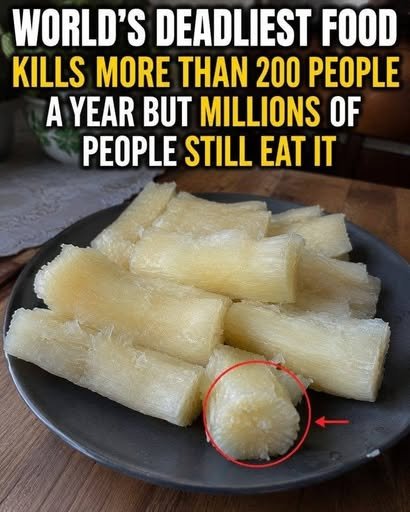
Cassava: The “Deadliest Food” That Millions Eat Safely
Cassava is one of the world’s most important staple crops. It is eaten in many forms across Africa, Asia, the Pacific, and South America, and has been estimated to be an important food source for hundreds of millions of people. But there is an unusual reason cassava sometimes appears in headlines as one of the world’s most dangerous foods: certain varieties naturally contain compounds that can release cyanide.
That sounds alarming, but there is an important distinction.
Cassava is not inherently a deadly food. Proper processing and cooking can greatly reduce its cyanogenic compounds, which is why cassava is safely eaten every day by millions of people.
The real danger comes from eating cassava that contains high levels of cyanogenic compounds and has not been properly processed.
Why Can Cassava Be Toxic?
Cassava contains naturally occurring compounds called cyanogenic glycosides, particularly linamarin. When cassava tissue is damaged, these compounds can break down and release hydrogen cyanide.
The amount varies considerably depending on the cassava variety and growing conditions. Some varieties, often referred to as bitter cassava, can contain substantially higher levels than sweeter varieties.
Hydrogen cyanide is toxic because it interferes with the body’s ability to use oxygen at the cellular level.
In severe cases, cyanide poisoning can become life-threatening.
How Dangerous Is It?
The risk should not be exaggerated.
There is no reliable evidence supporting the commonly repeated claim that cassava causes more than 200 deaths every year worldwide. WHO has specifically noted that although acute poisoning from cassava has been reported, the available data are inadequate for estimating its worldwide incidence accurately.
What is well documented is that improperly processed cassava has caused outbreaks of poisoning and a serious neurological condition known as konzo, particularly in parts of sub-Saharan Africa.
Konzo causes sudden, irreversible weakness and paralysis, especially affecting the legs. Outbreaks have been associated with diets heavily dependent on bitter cassava that has been inadequately processed, particularly during drought, famine, or other food shortages.
Why Do People Still Eat Cassava?
Because when properly prepared, cassava can be a valuable food.
Cassava is rich in carbohydrates and provides an important source of calories in regions where other staple crops may be difficult to grow. It is also versatile and can be processed into foods such as flour, meal, starch, and fermented products.
Its importance is particularly clear in tropical regions where cassava grows well under challenging agricultural conditions.
So the fact that cassava can contain cyanogenic compounds does not mean people should avoid it altogether.
Instead, proper preparation matters.
How Is Cassava Made Safer?
Traditional processing methods can dramatically reduce cyanogenic compounds.
Depending on the variety and the food being prepared, processing can include:
- Peeling
- Grating or crushing
- Soaking
- Washing
- Fermenting
- Drying
- Boiling
- Thorough cooking
WHO explains that appropriate processing can reduce the cyanogenic compounds in cassava and that inadequate processing is associated with cyanide exposure.
Different cassava products require different processing methods, so preparation should follow established food-safety practices rather than relying on a single cooking method for every variety.
What Happens If Someone Eats Toxic Cassava?
Acute cyanide exposure can cause symptoms relatively quickly.
Possible symptoms include:
- Headache
- Dizziness
- Weakness
- Nausea
- Vomiting
- Stomach pain
- Diarrhea
- Confusion
- Difficulty breathing
- Seizures
Severe cyanide poisoning can result in loss of consciousness, coma, and death.
Anyone who develops significant symptoms after eating improperly prepared cassava should seek urgent medical attention rather than trying to treat suspected poisoning at home.
Cassava and Konzo
One of the most unusual health problems associated with cassava is konzo, a neurological disorder linked to prolonged exposure to cyanogenic compounds from inadequately processed bitter cassava.
Konzo can cause sudden-onset, irreversible spastic weakness or paralysis of the legs. It has been reported particularly in rural communities in parts of Africa where people may depend heavily on cassava during periods of food insecurity.
Researchers have also identified nutritional factors, particularly low protein intake, as important in the circumstances surrounding konzo outbreaks.
This is very different from saying that ordinary, properly prepared cassava routinely causes neurological disease.
Why Are Outbreaks More Likely During Drought or Food Shortages?
During droughts, wars, or other food crises, people may have fewer food choices and become more dependent on cassava.
At the same time, communities may have less access to water, fuel, time, or other resources needed for traditional processing.
That combination can increase exposure to cyanogenic compounds.
Historical outbreaks in Mozambique, for example, have been associated with periods when populations relied heavily on insufficiently processed bitter cassava.
Is Cassava Safe to Eat?
Properly processed cassava can be safely eaten.
The important lesson isn’t that cassava is a “killer food.” It is that some foods that appear completely ordinary can contain naturally occurring toxins and therefore require appropriate preparation.
Cassava has been part of traditional diets for generations, and safe processing practices are an important part of making it suitable for consumption.
What About Raw Cassava?
Raw cassava should not be treated like a vegetable that can simply be peeled and eaten.
Because cyanogenic compounds are naturally present, cassava should be properly processed and cooked according to established preparation methods.
This is particularly important with bitter varieties, which can contain considerably higher levels of cyanogenic compounds.
The Bigger Picture
The dramatic phrase “world’s deadliest food” makes for an attention-grabbing headline, but it can give the wrong impression.
Cassava itself isn’t a poisonous food that millions of people are unknowingly risking their lives by eating.
The real issue is cyanogenic toxicity from inadequately processed cassava, particularly in vulnerable communities where bitter cassava may become a dietary staple during food shortages.
WHO recognizes cassava as an important dietary source of cyanogenic glycosides, while also emphasizing that proper processing can greatly reduce the risk.
Final Takeaway
Cassava is a fascinating example of how food preparation can be just as important as the food itself.
Certain cassava varieties contain natural compounds capable of releasing cyanide, and improperly processed cassava has caused documented poisoning and neurological disease outbreaks. But properly processed cassava is an important staple food consumed safely by millions of people.
So rather than fearing cassava, the key lesson is simple:
Know the food, prepare it correctly, and never consume cassava that has not been properly processed and cooked.