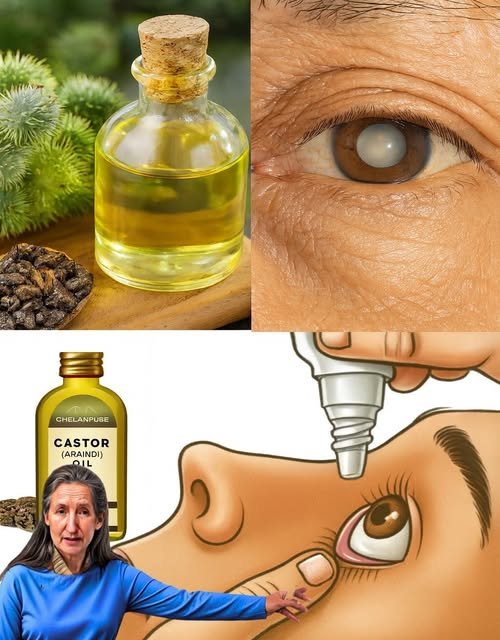
Castor oil has been used for generations in traditional beauty and home remedies, and you may have seen claims that putting castor oil around—or even directly into—the eyes can “soothe cataracts,” reduce inflammation, improve blurry vision, or restore eyesight.
But when it comes to eye health, it is important to separate traditional use from established medical evidence.
There is currently no good clinical evidence that castor oil can dissolve, reverse, or cure cataracts. Cataracts occur when the normally clear lens inside the eye becomes cloudy. Once a cataract significantly interferes with vision, cataract surgery is the established treatment.
That doesn’t mean castor oil has no place in personal care. It simply means we should be careful about what it can—and cannot—do.
What Are Cataracts?
A cataract is a clouding of the eye’s natural lens.
The lens sits behind the iris and helps focus light onto the retina. As cataracts develop, the lens becomes less transparent, which can gradually affect vision.
Common symptoms include:
- Blurry or cloudy vision
- Difficulty seeing at night
- Increased sensitivity to glare
- Halos around lights
- Faded or less vibrant colors
- Frequent changes in glasses prescription
- Difficulty reading or seeing distant objects clearly
Cataracts commonly develop with aging, although other factors can contribute, including diabetes, certain medications, previous eye injuries, and prolonged ultraviolet exposure.
Can Castor Oil Remove Cataracts?
No.
There is currently no reliable evidence that ordinary castor oil applied to or around the eyes can remove an existing cataract.
The American Academy of Ophthalmology’s EyeWiki notes that no medical treatment has been shown to effectively treat or prevent cataracts, and that cataract surgery is the primary treatment when a cataract becomes visually significant.
Therefore, claims that castor oil can “melt,” “dissolve,” or “clear” a cataract should not be presented as established medical facts.
What About Eye Inflammation?
Castor oil contains fatty acids, particularly ricinoleic acid, and castor-oil-derived ingredients are used in some cosmetic and pharmaceutical formulations.
However, that does not mean household castor oil is an appropriate treatment for eye inflammation.
Red, painful, swollen, or light-sensitive eyes can have many causes, including dry eye, allergies, infection, injury, uveitis, glaucoma, or other conditions that require specific treatment.
Treating an unexplained eye problem with an unapproved home remedy could delay appropriate care.
Why You Should Not Put Ordinary Castor Oil Directly Into Your Eyes
This is one of the most important safety points.
Do not put regular cosmetic, hair, or skin-grade castor oil directly into your eyes.
Products intended for skin are not necessarily sterile or formulated for ophthalmic use.
The FDA explains that products used in the eye have a heightened safety risk because they bypass some of the body’s natural defenses. Ophthalmic products need to meet appropriate sterility requirements because contaminated products can cause serious eye infections.
In fact, in 2023, the FDA reported a recall involving castor-oil eye drops after concerns about sterility; microbial contamination can cause infections that may threaten vision.
This is an important reminder that even a product specifically marketed as an eye drop needs appropriate manufacturing and sterility controls.
Can Castor Oil Be Used Around the Eyes?
Using castor oil on the skin around the eyes is different from putting it into the eye.
Some people use a small amount as a cosmetic moisturizer for dry skin around the eyes. However, the skin in this area is delicate, and castor oil can cause irritation or an allergic reaction in some people.
If you choose to use it cosmetically, keep it away from the eye itself and stop if you experience burning, redness, swelling, itching, or irritation.
Never use it on an injured or infected area.
What About Dry Eyes?
Dry eye is different from cataracts.
It occurs when the eyes do not produce enough tears or when tears evaporate too quickly. Symptoms can include burning, grittiness, fluctuating vision, redness, and discomfort.
There are specially formulated ophthalmic products designed to lubricate the eyes, including artificial tears.
If you have persistent dry-eye symptoms, an eye-care professional can help determine the cause and recommend an appropriate product.
Don’t substitute homemade oils for sterile ophthalmic preparations.
Can Castor Oil Improve Blurry Vision?
There is no established evidence that applying castor oil to the eyes restores vision lost because of a cataract, glaucoma, retinal disease, or other eye conditions.
Blurry vision has many possible causes, and some can be urgent.
For example, sudden vision loss is not something to treat with a home remedy. It requires prompt medical evaluation.
Safer Ways to Support Long-Term Eye Health
Although no home remedy can remove an established cataract, several habits can support overall eye health.
Protect Your Eyes From UV Exposure
Long-term ultraviolet exposure can contribute to eye damage.
When outdoors in strong sunlight, wear good-quality sunglasses that provide appropriate UV protection and consider a hat with a brim.
Don’t Smoke
Smoking is associated with several serious eye diseases and can increase the risk of cataracts.
Quitting smoking is beneficial for overall health as well as eye health.
Eat a Balanced Diet
A diet containing plenty of vegetables, fruits, legumes, whole grains, nuts, seeds, and fish can provide nutrients important for general health.
Leafy greens, colorful vegetables, and fruit are particularly useful components of a varied diet.
Control Blood Sugar
People with diabetes have an increased risk of several eye complications.
Keeping blood glucose under appropriate control and attending recommended eye examinations can help protect vision.
Have Regular Eye Examinations
An eye examination can identify cataracts and other conditions before symptoms become severe.
This is especially important as we get older or if vision changes.
When Is Cataract Surgery Considered?
Not every cataract requires immediate surgery.
If a cataract is mild and does not significantly interfere with daily activities, an eye specialist may simply monitor it.
As the cataract progresses, however, it can begin to interfere with activities such as:
- Reading
- Driving
- Working
- Watching television
- Recognizing faces
- Moving around safely
When the cataract significantly affects quality of life, an ophthalmologist can discuss surgery.
Cataract surgery removes the cloudy natural lens and replaces it with an artificial intraocular lens. It is one of the most common surgical procedures performed worldwide and generally has a high rate of successful visual improvement.
Warning Signs That Need Medical Attention
Don’t try to treat these symptoms at home with castor oil or other homemade remedies:
- Sudden loss of vision
- Severe eye pain
- Sudden flashes of light
- A sudden increase in floaters
- A dark curtain or shadow across your vision
- Significant eye redness with pain
- New double vision
- Severe light sensitivity
- Eye injury or chemical exposure
- Rapidly worsening vision
These symptoms can sometimes indicate an urgent eye condition.
The Bottom Line
Castor oil has traditional and cosmetic uses, but there is not enough clinical evidence to claim that castor oil cures cataracts or reverses cataract-related vision loss.
More importantly, ordinary castor oil should not be put directly into the eyes because products that are not manufactured and tested for ophthalmic use may be contaminated or otherwise unsuitable for the eye. The FDA has specifically highlighted the importance of sterility for eye products and has reported a recall involving castor-oil eye drops because of contamination concerns.
If you enjoy castor oil as a cosmetic skin product, keep it outside the eye. For cataracts, persistent inflammation, or changes in vision, an eye-care professional can determine the actual cause and recommend a treatment supported by evidence.
Natural does not automatically mean safe for the eyes—and protecting your vision is more important than trying an unproven remedy.