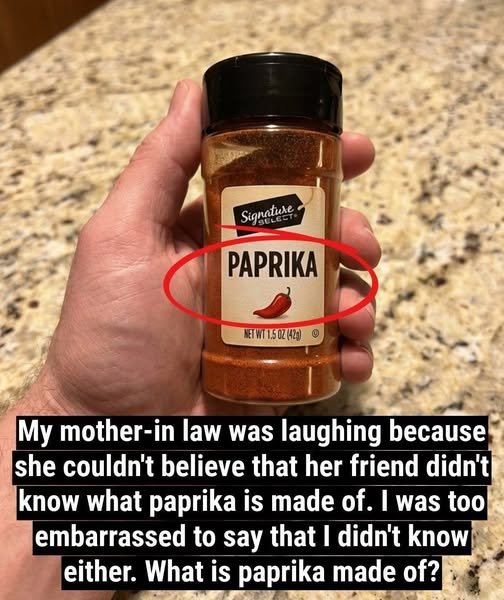
Paprika is one of those spices that appears in countless recipes, yet many people have never stopped to wonder what paprika is actually made from.
Is it chili powder? Is it made from black pepper? Is it some kind of seasoning blend?
The answer is surprisingly simple: paprika is made from dried and ground peppers.
But there’s more to the story because not all paprika tastes the same. Depending on the type of peppers used and how they are processed, paprika can range from mild and sweet to smoky, earthy, or noticeably hot.
So, What Is Paprika Made From?
Paprika is produced by drying certain varieties of Capsicum annuum peppers and grinding the dried peppers into a fine powder.
These peppers are related to the peppers used to make other familiar spices, including some varieties of chili powder. However, the specific pepper varieties and processing methods determine the flavor and heat level.
The peppers used for paprika are generally milder than the very hot chilies commonly associated with spicy chili powder.
Once harvested, the peppers are dried and then ground into the familiar bright red-orange powder we know as paprika.
Is Paprika the Same as Chili Powder?
Not necessarily.
This is one of the most common points of confusion.
Paprika is generally a ground spice made from dried paprika-type peppers.
Chili powder, particularly the seasoning blend commonly sold in the United States, may contain ground dried chilies along with other ingredients such as cumin, garlic powder, onion powder, oregano, and additional spices.
However, terminology varies from country to country, so a product labeled “chili powder” may sometimes refer simply to ground dried chili peppers.
That’s why it’s always worth checking the ingredient label.
Why Is Paprika Red?
The brilliant red color comes naturally from the pigments in the peppers.
Paprika contains naturally occurring carotenoid pigments that give the spice its characteristic red, orange, or reddish-brown appearance.
The exact shade can vary depending on the pepper variety, growing conditions, drying process, and storage.
A vibrant red paprika doesn’t automatically mean it is hot. Color and heat are not the same thing.
A bright red paprika can be very mild and sweet, while another paprika with a darker color can have a stronger or smokier flavor.
The Different Types of Paprika
When a recipe simply calls for paprika, it can be useful to know which type you have.
Sweet Paprika
Sweet paprika is one of the most common varieties.
It generally has a mild, slightly sweet, earthy flavor and little to no noticeable heat.
It’s excellent for:
- Chicken dishes
- Roasted vegetables
- Soups and stews
- Potato dishes
- Deviled eggs
- Rice dishes
- Homemade sauces
It also works beautifully as a finishing spice because it adds attractive color.
Hot Paprika
Hot paprika is made from hotter pepper varieties and provides considerably more heat than sweet paprika.
It’s useful when you want both the characteristic paprika flavor and some spiciness.
Use it in moderation until you know how hot your particular brand is.
Smoked Paprika
Smoked paprika is especially popular in modern cooking.
The peppers are exposed to smoke during the drying process, giving the finished spice a distinctive smoky aroma and flavor.
It’s excellent for adding a barbecue-like depth to dishes without actually cooking them over a fire.
Try it with:
- Roasted potatoes
- Grilled chicken
- Beans
- Burgers
- Eggs
- Soups
- Stews
- Roasted vegetables
Is Paprika Always Spicy?
No.
This is another common misconception.
Many people assume that anything made from peppers must be hot. But peppers come in an enormous range of flavors and heat levels.
Sweet paprika can have very little heat, while hot paprika can be significantly spicier.
If you’re unsure about a particular paprika, check the packaging rather than assuming that the bright red color means it’s spicy.
What Does Paprika Add to Food?
Paprika does more than simply make food look red.
Depending on the variety, it can contribute:
- Mild sweetness
- Earthy flavor
- Peppery notes
- Smokiness
- Warmth
- Rich color
That’s why paprika appears in so many different cuisines and recipes.
Even when a recipe uses only a teaspoon or two, it can help round out the overall flavor.
Is Paprika the Same as Cayenne Pepper?
No.
Both come from peppers in the Capsicum family, but they are typically made from different varieties and have very different heat levels.
Cayenne pepper is generally much hotter and is primarily used to add significant heat.
Paprika, particularly sweet paprika, is often used more for flavor and color than intense spiciness.
If you substitute cayenne for paprika, use considerably less unless you specifically want a much hotter dish.
Can You Use Paprika for Color?
Absolutely.
Paprika is often sprinkled over foods partly because of its beautiful color.
A light dusting can make dishes such as deviled eggs, potato salad, hummus, roasted vegetables, and creamy dips look more appealing.
However, don’t confuse paprika with food coloring. It is a real spice with its own flavor, so it can contribute both color and taste.
Does Paprika Go Bad?
Like other dried spices, paprika doesn’t necessarily become unsafe immediately after its best-by date, but its flavor and color can gradually weaken.
Over time, paprika may become:
- Less fragrant
- Less flavorful
- Duller in color
For the best results, store it in a tightly sealed container away from heat, moisture, and direct sunlight.
A spice drawer or cool, dark pantry is generally better than keeping paprika directly above a hot stove.
Can You Make Paprika at Home?
Technically, yes, provided you have suitable peppers and a reliable way to dry them completely.
The basic process involves:
- Selecting suitable peppers.
- Washing and preparing them.
- Drying them thoroughly.
- Removing stems and unwanted parts.
- Grinding the dried peppers into a fine powder.
- Storing the finished spice in an airtight container.
The peppers must be dried thoroughly before grinding and storing. Any remaining moisture can encourage spoilage.
For most home cooks, buying commercially prepared paprika is much easier and provides consistent flavor.
Final Thoughts
So, what is paprika made from?
Dried peppers that are ground into a powder.
That’s the simple answer—but the world of paprika is much more interesting once you realize how much the pepper variety and processing method can change the final spice.
Sweet paprika can add gentle flavor and beautiful color, hot paprika brings heat, and smoked paprika provides a deep smoky character.
The next time you reach for that familiar red jar in your spice cabinet, you’ll know exactly what’s inside—and why different types of paprika can taste so different.