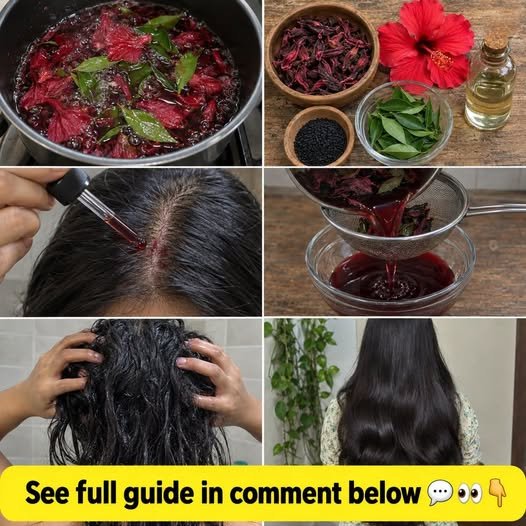
Hibiscus has been used in traditional beauty practices for generations, especially in South Asian hair-care routines. Its colorful flowers and leaves are often incorporated into homemade hair masks, oils, and rinses.
You may have heard claims that hibiscus can make hair grow faster, stop hair loss, or restore thinning areas. While these claims are popular, scientific evidence in humans is still limited. Hibiscus should be viewed as a traditional hair-care ingredient, not a proven treatment for hair loss.
That said, its natural plant compounds and moisturizing properties can make it an interesting addition to a gentle hair-care routine.
Why Do People Use Hibiscus for Hair?
Hibiscus contains naturally occurring plant compounds, including antioxidants and various organic acids. Traditional preparations use the flower or leaves to condition the hair and scalp.
Many people use hibiscus because they believe it may help:
- Make hair feel softer
- Improve the appearance of shine
- Reduce dryness
- Condition the scalp and hair
- Make hair easier to manage
- Support a healthy-looking scalp
These are primarily cosmetic and traditional uses rather than medically established treatments.
Hibiscus Hair Mask
One of the simplest ways to use hibiscus is as a homemade hair mask.
Ingredients
- 4–5 fresh hibiscus flowers, or approximately 2 tablespoons of dried hibiscus
- 2–3 tablespoons plain yogurt or aloe vera gel
- 1 tablespoon coconut or olive oil, optional
Directions
- Wash the hibiscus flowers thoroughly.
- Remove the stems and crush or blend the petals into a smooth paste.
- Add the yogurt or aloe vera gel.
- Mix in a small amount of oil if your hair tends to be dry.
- Apply the mixture primarily to the hair and scalp.
- Leave it on for about 15–20 minutes.
- Rinse thoroughly with lukewarm water.
- Follow with a gentle shampoo if necessary.
Avoid getting the mixture into your eyes.
Hibiscus and Coconut Oil
Another traditional combination is hibiscus with coconut oil.
You can blend a few hibiscus petals into a small amount of coconut oil to create a simple conditioning treatment.
Apply a small quantity to the lengths of your hair and leave it for 20–30 minutes before washing.
If your scalp is oily or prone to buildup, avoid applying large amounts of oil directly to the scalp.
Can Hibiscus Actually Make Hair Grow?
This is where it’s important to separate traditional beauty practices from scientific evidence.
Some laboratory and animal research has investigated hibiscus extracts and hair-growth-related effects, but there isn’t strong clinical evidence showing that applying hibiscus to the scalp reliably causes significant hair growth in humans.
Hair growth and hair loss are influenced by many factors, including:
- Genetics
- Hormones
- Age
- Nutrition
- Thyroid problems
- Certain medications
- Stress
- Scalp conditions
- Autoimmune disorders
- Iron or other nutrient deficiencies
A homemade hibiscus treatment cannot address all of these causes.
What Hibiscus May Do for Your Hair
Even if it doesn’t function as a proven hair-growth treatment, hibiscus may still have a place in a personal hair-care routine.
A well-prepared hair mask can help hair feel conditioned and smoother. Combined with other gentle ingredients, it may reduce the feeling of dryness and improve the appearance of dull hair.
Healthy-looking hair isn’t always the result of faster growth. Keeping existing hair moisturized and minimizing breakage can also make hair appear fuller and healthier.
Be Careful With Homemade Remedies
Natural doesn’t automatically mean risk-free.
Before applying hibiscus or any homemade preparation to your scalp, test a small amount on an inconspicuous area of skin.
Stop using it if you experience:
- Burning
- Significant itching
- Redness
- Swelling
- A rash
- Increased scalp irritation
Don’t apply homemade mixtures to broken or infected skin.
Also, prepare fresh treatments carefully and don’t store homemade mixtures for long periods, particularly when they contain water, yogurt, or other perishable ingredients.
When Hair Loss Needs More Than a Home Remedy
If you’re experiencing noticeable or persistent hair loss, don’t rely exclusively on herbal treatments.
See a healthcare professional or dermatologist if you notice:
- Sudden or rapid hair loss
- Large bald patches
- A widening part
- Significant recession of the hairline
- Scalp pain or inflammation
- Severe dandruff or scaling
- Hair loss accompanied by other unexplained symptoms
Finding the underlying cause is often more important than choosing a particular hair mask.
A Better Approach to Healthy Hair
A simple hair-care routine can include:
- Adequate dietary protein
- A varied, nutrient-rich diet
- Gentle washing based on your scalp type
- Conditioner for the hair lengths
- Limited use of excessive heat
- Avoiding very tight hairstyles
- Protecting hair from unnecessary chemical damage
- Treating scalp conditions appropriately
If a nutrient deficiency or medical condition is contributing to hair loss, treating that underlying problem is more likely to help than repeatedly applying cosmetic treatments.
Final Thoughts
Hibiscus has a fascinating history in traditional hair care and can be used as a gentle homemade conditioning treatment. It may help hair feel softer and look shinier, particularly when combined with moisturizing ingredients.
However, claims that hibiscus alone can dramatically regrow hair or permanently stop hair loss go beyond the available evidence.
Think of hibiscus as a traditional beauty ingredient rather than a miracle hair-growth cure. Used carefully as part of a broader hair-care routine, it can be an enjoyable natural addition while keeping expectations realistic.