For decades, colonoscopy has been one of the most important tests used to examine the inside of the large intestine. It can detect suspicious growths, inflammation, bleeding, and precancerous polyps—and, importantly, doctors can often remove polyps during the same procedure.
But colonoscopy isn’t the only option anymore.
Newer screening technologies and non-invasive tests are giving doctors additional ways to look for signs of colorectal cancer without immediately performing an invasive examination.
That doesn’t mean colonoscopy has become obsolete. Instead, the future of colorectal cancer screening is increasingly about choosing the right test for the right person.
Why Are Researchers Looking for Alternatives to Colonoscopy?
A colonoscopy is highly useful, but it requires preparation and involves inserting a flexible camera through the rectum into the colon.
Patients usually need to follow specific bowel-preparation instructions beforehand so that the doctor can clearly see the intestinal lining.
Depending on the circumstances, sedation may also be used.
For some people, these requirements make colonoscopy uncomfortable or inconvenient. Others may avoid screening altogether because they are worried about the procedure.
This is one reason researchers have continued developing less invasive screening methods.
Stool Tests Are Already an Important Alternative
One of the simplest approaches is testing a stool sample.
Certain stool-based screening tests can look for hidden blood or abnormal DNA associated with colorectal cancer.
The advantage is that the test can be performed without inserting an instrument into the colon.
However, stool tests have an important limitation: they are screening tools, not a complete replacement for colonoscopy in every situation.
If a stool-based screening test produces an abnormal result, a colonoscopy is generally needed to determine the cause.
CT Colonography: A Different Way to View the Colon
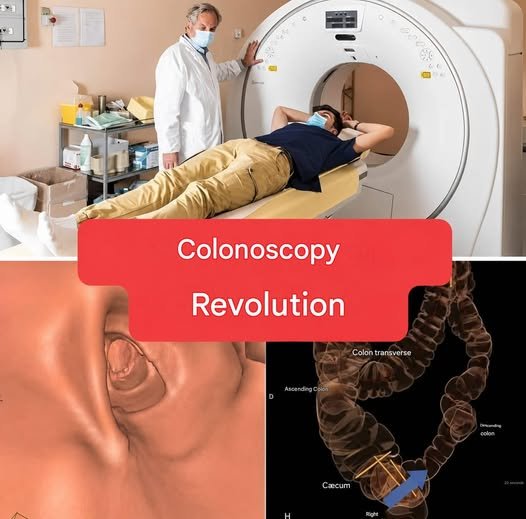
Another option is CT colonography, sometimes called a virtual colonoscopy.
Instead of inserting a camera through the entire colon, CT imaging is used to create detailed images of the large intestine.
A small tube may still be placed in the rectum to introduce air or carbon dioxide so the colon can be expanded for imaging, so it isn’t completely procedure-free.
One potential advantage is that no traditional colonoscope needs to travel through the entire colon.
However, CT colonography still requires bowel preparation, and if a suspicious polyp is found, a conventional colonoscopy may be necessary to remove it.
Capsule Technology Is Also Being Studied
Another fascinating development involves swallowing a small camera capsule.
The capsule travels through the digestive tract while taking images that can later be reviewed by specialists.
Capsule endoscopy is already used for certain parts of the digestive system, particularly the small intestine.
Capsule-based approaches for examining the colon have also been developed, but they aren’t a universal replacement for conventional colonoscopy.
Availability, accuracy, bowel preparation, and the ability to remove abnormal tissue are important considerations.
Why Colonoscopy Is Still Important
It may sound as though new technology will make traditional colonoscopy unnecessary, but that’s not currently the case.
One of colonoscopy’s major advantages is that it can be both diagnostic and therapeutic.
If a doctor discovers a polyp during the procedure, it can often be removed immediately.
A biopsy can also be taken when necessary.
Most non-invasive screening tests cannot perform these treatments.
That’s why an abnormal result from another screening method may still lead to a conventional colonoscopy.
What About Blood Tests?
Researchers are also developing blood-based approaches for colorectal cancer screening.
These tests look for biological signals that may be associated with colorectal cancer.
Blood tests are attractive because obtaining a blood sample is generally much easier for many patients than undergoing bowel preparation and an invasive examination.
However, a blood-based screening test should not automatically be interpreted as a complete replacement for colonoscopy.
Different tests have different levels of sensitivity and are designed for different purposes.
The Biggest Benefit May Be More People Getting Screened
One of the biggest problems in colorectal cancer prevention isn’t necessarily the absence of effective screening methods.
It’s that many eligible people don’t get screened.
Fear, inconvenience, embarrassment, cost, bowel preparation, and concerns about the procedure can all discourage people from participating.
If a person is more willing to complete a non-invasive screening test, that can potentially help doctors identify colorectal cancer or precancerous changes earlier.
Earlier detection can make a major difference because colorectal cancer can develop gradually from certain types of polyps.
Does a Non-Invasive Test Mean You Can Forget About Colonoscopy?
No.
This is one of the most important points to understand.
A non-invasive or minimally invasive screening test may reduce the need for some people to undergo immediate colonoscopy, but an abnormal screening result can still require further investigation.
Similarly, people with symptoms such as unexplained rectal bleeding, persistent changes in bowel habits, unexplained iron-deficiency anemia, or unexplained weight loss may need diagnostic evaluation rather than relying only on a routine screening test.
Screening Is Different From Diagnosing Symptoms
Screening generally refers to testing people who do not have symptoms in order to detect disease early.
Diagnostic testing is different.
If someone has concerning symptoms, a doctor may recommend colonoscopy or another appropriate investigation regardless of whether a routine screening test is available.
That’s why people shouldn’t use a home screening test as a reason to ignore persistent symptoms.
What the Future May Look Like
The future of colorectal cancer screening may not involve one single test replacing every other test.
Instead, doctors may increasingly use a combination of:
- Stool-based testing
- Blood-based screening
- CT colonography
- Capsule technology
- Conventional colonoscopy
- Risk-based screening strategies
- New molecular tests
The most appropriate choice can depend on a person’s age, risk factors, family history, previous screening results, symptoms, and local medical guidelines.
When Should You Talk to a Doctor?
Speak with a healthcare professional if you have concerning digestive symptoms, particularly:
- Blood in the stool
- Black or unusually dark stools
- Persistent changes in bowel habits
- Ongoing abdominal pain
- Unexplained weight loss
- Unexplained iron-deficiency anemia
- A strong family history of colorectal cancer or certain polyps
Don’t wait for symptoms if you’re in the recommended age group for routine colorectal cancer screening. Screening is intended to detect problems before symptoms appear.
The Bottom Line
Colonoscopy remains an important tool for detecting and treating problems inside the colon, but it is no longer the only approach to colorectal cancer screening.
Stool tests, CT colonography, capsule-based technologies, and emerging blood tests are expanding the choices available to patients and doctors.
The exciting development isn’t necessarily that “colonoscopy is disappearing.” It’s that colorectal cancer screening is becoming more diverse, potentially making screening easier and more acceptable for people who might otherwise avoid it.
The best screening method depends on the individual, and an abnormal result from a non-invasive test may still mean that a traditional colonoscopy is needed.
If you’ve been avoiding colorectal cancer screening because you’re worried about colonoscopy, talk with a healthcare professional about which screening options are appropriate for you.