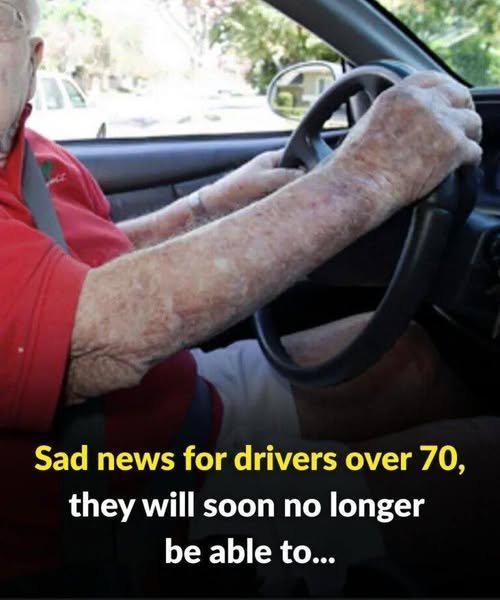
For many people, driving represents much more than simply getting from one place to another. It provides independence, makes everyday errands easier, and allows older adults to stay connected with family, friends, and their communities.
That’s why headlines suggesting that drivers over 70 will “soon no longer be able to drive” can cause understandable concern.
But the reality is more complicated.
In most places, reaching a particular age does not automatically mean that a person must stop driving altogether. Instead, older drivers may face additional requirements such as more frequent license renewals, vision checks, medical declarations, or driving assessments, depending on local laws.
Because driving regulations differ significantly between countries and can change over time, drivers should always check the rules that apply to their own location rather than relying on viral social-media claims.
Why Are Older Drivers Sometimes Subject to Additional Checks?
Age itself does not determine whether someone is a safe driver.
Many people continue driving safely well into their 70s, 80s, and beyond.
However, certain health and physical changes become more common with age and can potentially affect driving ability.
These may include:
- Changes in eyesight
- Reduced hearing
- Slower reaction times
- Reduced flexibility
- Difficulty turning the head
- Muscle weakness
- Problems with balance
- Medication side effects
- Cognitive changes
- Difficulty managing multiple situations at once
These changes don’t automatically mean someone should stop driving. They simply explain why some licensing authorities have additional safety requirements for older motorists.
Vision Is Especially Important
Good vision is essential for safe driving.
Drivers need to recognize road signs, judge distances, notice pedestrians and cyclists, see vehicles approaching from different directions, and respond to changing traffic conditions.
Age-related eye conditions can include cataracts, glaucoma, macular degeneration, and other vision problems.
Regular eye examinations can help identify problems early.
If your vision has changed recently, don’t wait until your next license renewal to have it checked.
Some Medications Can Affect Driving
Medication is another issue that deserves attention.
Certain medicines can cause:
- Drowsiness
- Dizziness
- Blurred vision
- Confusion
- Reduced alertness
- Slower reaction time
Older adults are also more likely to take multiple medications, increasing the importance of discussing possible side effects with a doctor or pharmacist.
Never stop a prescribed medication simply because you are concerned about driving. Instead, ask your healthcare professional whether the medication, dosage, or timing could affect your ability to drive safely.
Does Turning 70 Mean You Automatically Lose Your License?
Not necessarily.
The rules depend on the country, state, province, or licensing authority.
Some jurisdictions may require older drivers to renew their licenses more frequently. Others may introduce vision screening, medical forms, or additional testing after a certain age.
In some locations, restrictions may be placed on a driver’s license if a medical or driving assessment identifies a safety concern.
This is very different from saying that everyone over 70 will automatically be banned from driving.
Why Viral Headlines Can Be Misleading
A headline such as “Drivers over 70 will no longer be allowed to drive” is much more dramatic than the actual regulations in many situations.
A rule might instead say that drivers above a particular age must:
- Renew their license more frequently
- Complete a vision test
- Submit medical information
- Complete a driving assessment if required
- Report certain medical conditions
- Meet specific fitness-to-drive requirements
These are safety measures rather than an automatic ban on every older driver.
When Should an Older Driver Consider a Driving Assessment?
An assessment can be useful if you or your family have noticed changes such as:
- Frequent minor accidents
- New dents or unexplained damage to the vehicle
- Getting lost on familiar routes
- Missing traffic signs or signals
- Difficulty changing lanes
- Confusion at intersections
- Repeatedly forgetting where the vehicle is parked
- Difficulty judging distances
- Trouble controlling the vehicle
- Becoming unusually anxious while driving
One incident doesn’t necessarily mean someone needs to stop driving. However, repeated problems deserve attention.
A professional driving assessment can provide a more objective evaluation.
Family Members Should Approach the Conversation Carefully
Talking to an older parent or relative about driving can be emotionally difficult.
For many people, the ability to drive is closely connected with independence.
Instead of saying, “You’re too old to drive,” focus on specific safety concerns.
For example:
“I’ve noticed you’ve been having difficulty seeing at night. Would you be willing to have your eyes checked?”
This approach is more constructive than making age itself the reason for concern.
There Are Alternatives If Driving Becomes Difficult
If someone eventually decides to reduce or stop driving, losing access to a car doesn’t have to mean losing independence.
Depending on where they live, alternatives may include:
- Family transportation
- Public transportation
- Taxis
- Ride-hailing services
- Community transportation programs
- Grocery and prescription delivery
- Walking for nearby errands
Planning these alternatives before driving becomes unsafe can make the transition much easier.
Older Drivers Can Take Steps to Stay Safer
If you’re an older driver and want to continue driving, several habits can help:
Keep Your Eyes Checked
Follow recommended eye examinations and make sure your glasses or contact lenses are up to date.
Review Your Medications
Ask your doctor or pharmacist whether any medications could affect alertness or reaction time.
Avoid Driving When Extremely Tired
Fatigue can impair attention and reaction time at any age.
Reduce Difficult Driving Situations
If nighttime driving, heavy traffic, unfamiliar roads, or poor weather have become challenging, consider limiting those situations.
Keep the Vehicle Well Maintained
Good tires, working lights, functioning brakes, clean windows, and properly adjusted mirrors all contribute to safer driving.
Consider a Refresher Course
A defensive-driving or mature-driver course can help reinforce safe driving habits and introduce strategies for dealing with changing driving conditions.
The Bottom Line
There is no universal rule that simply says everyone over 70 must stop driving.
Driving regulations vary by jurisdiction, and some places do introduce additional requirements for older motorists. These may include more frequent renewals, vision checks, medical reviews, or driving assessments.
The important issue isn’t simply a driver’s age. It’s whether the person can operate a vehicle safely.
If you’re over 70 and still driving confidently and safely, don’t let a frightening headline automatically convince you that your license is about to disappear. Instead, check the current regulations where you live and keep up with your vision, health, medications, and driving ability.
For older drivers, the goal should not be to take away independence unnecessarily. It should be to help people remain safely behind the wheel for as long as they are genuinely fit to drive.