Scratched glasses can be incredibly frustrating. You clean the lenses, hold them up to the light, and those tiny lines are still there—sometimes right in the middle of your field of vision.
Before reaching for toothpaste, baking soda, or another DIY abrasive, there’s something important to know: most scratches cannot truly be removed from prescription eyeglass lenses at home. Rubbing an abrasive substance onto a lens may make it look different temporarily, but it can also create additional micro-scratches or damage anti-reflective, UV, or other protective coatings.
The good news is that many marks that look like scratches are actually fingerprints, dried residue, oil, or buildup. Proper cleaning can make lenses look dramatically clearer.
First, Determine Whether It’s Really a Scratch
Before trying anything, rinse the glasses under lukewarm running water.
Hold the lenses under a bright light and look at them from different angles.
If the marks disappear when the lens is wet or after careful cleaning, you’re probably dealing with residue rather than a permanent scratch.
If a line remains clearly visible after cleaning, especially when you view it from different angles, the lens may actually be scratched.
The Safest Homemade Cleaning Solution
For routine cleaning, you don’t need an aggressive DIY mixture.
You’ll Need
- Lukewarm water
- A small amount of mild dishwashing liquid
- A clean microfiber lens cloth
Step 1: Rinse the Glasses
Hold the glasses under lukewarm water to remove dust and loose particles.
This step is important because wiping dusty lenses while they’re dry can drag tiny particles across the surface and create additional marks.
Avoid hot water, which can potentially damage lens coatings or frames.
Step 2: Add a Tiny Amount of Dish Soap
Put a small drop of mild, lotion-free dishwashing liquid on your fingertips.
Gently rub both sides of the lenses and the frame with your fingertips.
You don’t need to scrub. The goal is simply to loosen oil, fingerprints, and other residue.
Step 3: Rinse Thoroughly
Rinse the glasses under lukewarm water until all soap has been removed.
Remaining soap can leave a film that makes the lenses appear cloudy.
Step 4: Dry With a Microfiber Cloth
Gently pat the lenses dry with a clean microfiber cloth.
Avoid paper towels, tissues, clothing, or rough fabric. These materials can contain fibers or particles that may contribute to fine surface damage.
What About Toothpaste?
Toothpaste is one of the most common internet suggestions for removing scratches from glasses.
It is sometimes claimed that gently rubbing non-gel toothpaste over a lens can polish away tiny scratches.
However, this isn’t a reliable or recommended method for modern prescription lenses.
Many eyeglass lenses have specialized coatings, including anti-reflective, scratch-resistant, and UV-related coatings. Abrasive toothpaste can damage these coatings and potentially leave the lens looking worse.
For this reason, don’t use toothpaste as a scratch-removal treatment for prescription glasses.
What About Baking Soda?
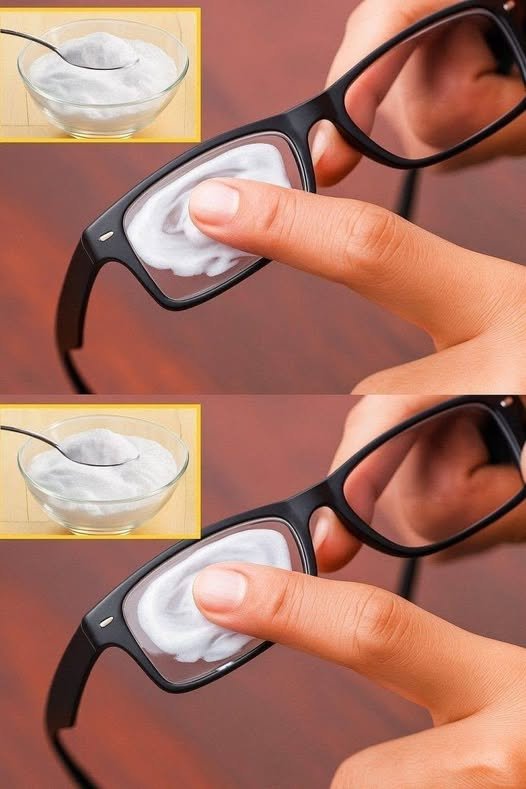
Baking soda is also sometimes recommended as a DIY lens polish.
The problem is similar: baking soda is mildly abrasive. Rubbing it against a coated lens can create further surface damage.
If your glasses are valuable prescription lenses, it’s better to avoid abrasive household powders altogether.
Don’t Use These on Your Lenses
Avoid trying to polish prescription lenses with:
- Toothpaste
- Baking soda
- Household glass cleaner
- Window cleaner
- Acetone or nail-polish remover
- Alcohol-based solvents unless specifically approved for your lenses
- Paper towels
- Rough clothing
- Abrasive cleaning pads
- Furniture polish
- Strong chemical cleaners
Some of these products can damage lens coatings or certain plastic frames.
Can Deep Scratches Actually Be Removed?
Unfortunately, there’s no dependable home recipe that can restore a genuinely scratched prescription lens to its original condition.
Polishing the surface would remove some lens material, potentially altering the optical properties of the lens. With coated lenses, polishing can also create uneven areas where the coating has been removed.
If the scratch is significant, the practical solution is usually professional assessment or replacement of the affected lens.
If you have expensive prescription glasses, an optician may be able to tell you whether the problem is a scratch, coating damage, or simply buildup.
How to Prevent Future Scratches
Prevention is much easier than trying to repair damaged lenses.
Always Use a Microfiber Cloth
Keep a clean microfiber cloth specifically for your glasses.
Wash the cloth regularly and replace it when it becomes dirty or worn.
Keep Glasses in a Case
Don’t toss your glasses into a pocket, purse, backpack, or drawer without protection.
A hard-sided case provides much better protection against keys, coins, dust, and other objects.
Never Place the Lenses Face Down
When putting your glasses on a table, keep the lenses facing upward.
This simple habit can prevent unnecessary contact between the lenses and rough surfaces.
Rinse Before Wiping
If the lenses have dust or grit on them, rinse them first. Dry rubbing can move those particles across the surface.
Don’t Clean Them With Your Shirt
It may be convenient, but clothing can carry dust and particles that aren’t ideal for delicate lens surfaces.
A Simple Daily Cleaning Routine
Keeping your glasses looking clear doesn’t require complicated ingredients.
- Rinse with lukewarm water.
- Apply a tiny amount of mild dish soap.
- Gently clean with your fingertips.
- Rinse thoroughly.
- Dry with a clean microfiber cloth.
- Store the glasses in their case when you’re not wearing them.
This routine removes the oils and residue that commonly make glasses look dull or cloudy.
When Should You Replace Scratched Glasses?
Consider visiting an optician if:
- A scratch is directly in your line of sight.
- Multiple scratches make vision noticeably blurry.
- You see glare or halos that weren’t present before.
- The lens coating is peeling or developing cloudy patches.
- Cleaning doesn’t improve the appearance.
- You frequently experience visual discomfort while wearing the glasses.
For prescription glasses, clear lenses aren’t just about appearance. Damage that interferes with your vision can make everyday activities such as driving, reading, or working more difficult.
Final Thoughts
There are plenty of viral DIY recipes claiming to make scratched glasses look brand new, but abrasive treatments such as toothpaste or baking soda can do more harm than good—especially on modern coated prescription lenses.
If the problem is simply fingerprints, oil, dust, or residue, a gentle wash with lukewarm water and mild dish soap followed by a clean microfiber cloth can restore a surprisingly clear, shiny appearance.
But if you’re dealing with a genuine scratch, the safest solution is usually professional advice or lens replacement rather than trying to polish it away at home. A little prevention—rinsing before wiping, using a microfiber cloth, and storing glasses in a protective case—can go a long way toward keeping your lenses clear and scratch-free.