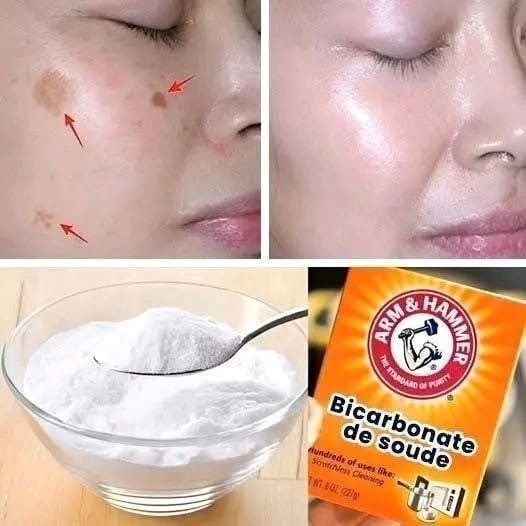
Age spots, also called solar lentigines, are flat brown or grayish patches that commonly develop on areas repeatedly exposed to sunlight, such as the hands, face, shoulders, and arms. They become more common with age, but long-term UV exposure is a major contributor.
You may see baking soda recommended online as a simple remedy for dark spots. However, baking soda is not a proven treatment for age spots and can irritate the skin because it is alkaline and may disrupt the skin barrier. Rather than scrubbing your skin with baking soda, there are safer ways to make uneven pigmentation less noticeable and gradually improve your overall skin tone.
Here are four practical approaches.
1. Use Sunscreen Every Day
If you’re trying to fade existing pigmentation, preventing additional sun exposure is one of the most important steps.
Choose a broad-spectrum sunscreen with SPF 30 or higher and apply it to exposed areas every morning. Don’t forget commonly overlooked areas such as the backs of your hands, neck, and ears.
If you’re outdoors for an extended period, reapply according to the product’s instructions and use protective clothing or shade when possible.
Without adequate sun protection, dark spots can become darker and new ones can develop.
2. Try Vitamin C for a Brighter-Looking Complexion
Vitamin C is a commonly used skincare ingredient for uneven pigmentation. Topical vitamin C may help support a more even-looking skin tone by reducing processes involved in melanin production.
For beginners, a properly formulated vitamin C serum can be applied according to the manufacturer’s instructions.
Start gradually if you have sensitive skin. Stop using it if you develop significant burning, swelling, or persistent irritation.
3. Consider Niacinamide
Niacinamide, a form of vitamin B3, is another ingredient frequently used in products designed for uneven skin tone.
It can help improve the appearance of hyperpigmentation while also supporting the skin barrier.
A moisturizer or serum containing niacinamide can be incorporated into a simple skincare routine. Consistency is more important than using large amounts.
4. Choose a Gentle Exfoliating Ingredient Instead of Baking Soda
If your goal is smoother, more even-looking skin, a properly formulated exfoliating product is generally a better choice than a homemade baking soda scrub.
Depending on your skin type, products containing ingredients such as lactic acid or glycolic acid may help remove excess dead skin cells and gradually improve the appearance of uneven pigmentation.
Start with a low-strength product once or twice a week rather than exfoliating aggressively every day.
Why Baking Soda Isn’t a Good Age-Spot Eraser
Baking soda is sometimes promoted as a natural skin-lightening treatment because its gritty texture can make the skin feel temporarily smoother.
But that doesn’t mean it safely removes pigmentation.
Using baking soda directly on the skin may cause:
- Dryness
- Irritation
- Burning or stinging
- Disruption of the skin’s protective barrier
- Increased sensitivity
- Inflammation that can potentially make pigmentation more noticeable
Adding lemon juice to baking soda doesn’t make the treatment safer. Citrus juices can also irritate the skin, and sun exposure after using certain citrus products can cause skin reactions.
A Simple Routine for More Even-Looking Skin
You don’t need a complicated routine.
Morning:
- Gentle cleanser
- Vitamin C or niacinamide
- Moisturizer
- Broad-spectrum SPF 30+ sunscreen
Evening:
- Gentle cleanser
- Niacinamide or another suitable treatment
- Moisturizer
If using an exfoliating acid, introduce it slowly and don’t combine multiple irritating products at once.
When a Dark Spot Should Be Checked
Not every brown spot is simply an age spot.
Have a new, changing, bleeding, crusting, itching, or unusually shaped dark spot examined by a dermatologist. In particular, a spot that changes in size, shape, or color shouldn’t be treated at home before its cause is established.
Final Thoughts
Baking soda may be inexpensive and easy to find, but there is no good evidence that rubbing it on your skin will erase age spots. It can actually irritate the skin and make your skincare routine harder to manage.
For a more even complexion, focus on daily sun protection, gentle skincare, and proven ingredients such as vitamin C, niacinamide, or appropriately formulated exfoliating acids. And if a pigmentation spot looks unusual or changes over time, professional evaluation is far more important than trying a DIY remedy.